I get asked this a lot, usually like this: "is it worth going in the rains to save money?" And the honest answer is, it depends on you, but you deserve real figures to decide, not vague talk of "great value." So this page puts numbers on both sides: what you actually save in April and May, and what you actually give up, park by park, plus who should take the deal and who should not. May is the better of the two months, and a crater-focused Northern Circuit trip is the smart way to do it. Let me show you why.
On this page
- What you save, in numbers
- What you miss, honestly
- What you gain that peak season does not have
- Where the migration is in April-May
- Off-season, park by park
- Is it worth it? Who should and should not go
- How to do an off-season safari well
- Ready to book: our multiday safaris
- Critical questions answered
What you save in April and May, in numbers
Let me start with the side everyone comes for: the savings. These are current 2026 market figures, so treat them as realistic ranges to plan with, not a fixed quote. The biggest saving is on where you sleep, because accommodation is the largest and most flexible cost on any safari.
| Cost | Peak season (Jul to Oct) | Off-season (Apr to May) | You save |
|---|---|---|---|
| Mid-range lodge, per night | ~US$300 to $500 | ~US$150 to $300 | ~40 to 50% |
| Luxury lodge or camp, per night | ~US$800 to $1,200 | ~US$400 to $600 | ~40 to 50% |
| Budget camp, per night | Lower base rate | Discounted | ~30 to 40% |
| Park fees (Serengeti, Ngorongoro) | ~US$82.60 per adult per day | ~US$70.80 per adult per day | ~14% |
| A 7-day Northern Circuit safari | Highest of the year | Several hundred dollars less per person | ~$300 to $800+ pp |
On top of the lower rates, off-season brings extra deals that peak season never does. Because lodges have empty beds to fill, you often find stay-four-pay-three offers, reduced rates, and no single supplement for solo travellers, which is a real saving on its own. The most striking effect is that the discount can lift you a whole tier: a luxury camp that is out of reach at $1,000 a night in August can sit at a mid-range budget in April. For how these costs fit together across a whole trip, see our safari costs and park fees guide.
What you miss, honestly
Now the other side, because a page that only sells you the savings is not doing its job. Here is what you genuinely give up in April and May, and I will not soften it.
- Reliable dry weather. These are the long rains. April is the wettest month, averaging around 280mm over roughly 18 rainy days in some areas, and late April is the period most operators, including me, suggest avoiding. May is much improved.
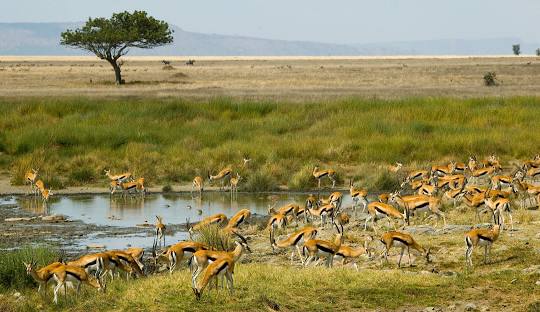
- Concentrated, easy game viewing. In the dry season animals gather at shrinking waterholes and the grass is short, so they are easy to see. In the rains, water is everywhere, so the wildlife spreads out, and the long grass hides it. You still see plenty, you just work harder for it.
- The Mara River crossings. The famous crossings only happen in the far northern Serengeti from July to October. They are simply not on in April and May, so if that is your dream, this is the wrong season.
- Some camps and roads. Many remote camps in southern and western Tanzania, in Ruaha and Nyerere, close during the heaviest rains, and some roads there become difficult or impassable. The Northern Circuit copes far better.
What you gain that peak season does not have
It is not only about paying less for the same thing. The off-season gives you a few things the crowded dry season cannot, and for some travellers these are the real reason to go.
The upsides
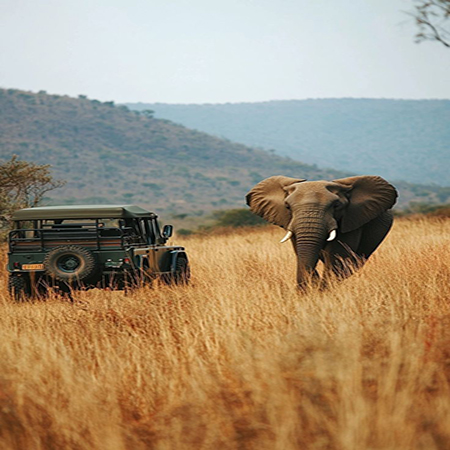
- Near-empty parks. Few vehicles at sightings, so when you find something you often have it to yourselves, and drives are unrushed.
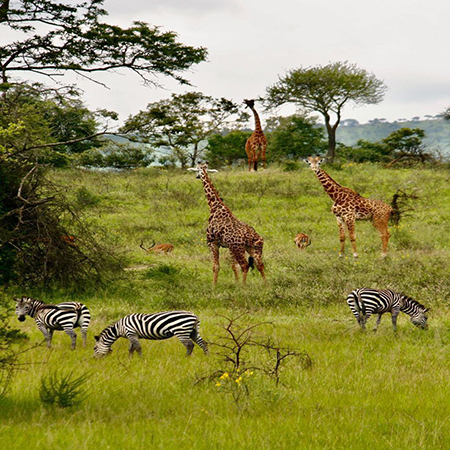
- Green, dramatic scenery. The dust of the dry season is gone. The land is lush and the skies are moody and photogenic.
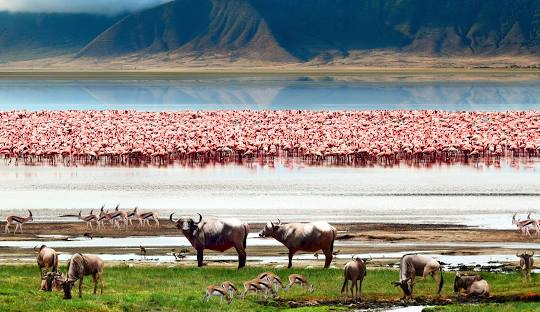
- Excellent birding. Migratory birds are in, many in breeding colours, so this is one of the best birding windows of the year.
- Young animals. The calving season runs into March, so there are still plenty of youngsters about, and the predators that follow them.
- Luxury within reach. The discounts can put a premium camp inside a mid-range budget.
The trade-offs, in short
- Rain, mostly afternoon showers, heaviest in April
- Longer grass and more dispersed wildlife
- Muddy roads in some areas
- Some southern and western camps closed
- No river crossings until July
Where is the wildebeest migration in April and May?
This one matters, because people assume the off-season means no migration, and that is not quite right.
In April and May the great herds are on the move. Having spent the calving season, roughly December to March, on the southern short-grass plains, they begin moving northwest through the central and western Serengeti as the rains green the land, heading toward the Western Corridor. So the migration is very much in the Serengeti in these months, and you can see huge numbers of wildebeest and zebra travelling together, with lions and other predators shadowing them. What you do not get is the Mara River crossings, the dramatic scenes of herds pouring across the water, because those happen far to the north from July to October. So April and May give you the migration on the move, but not the crossings. For the full month-by-month picture, see our best time and migration guide, and for the crossings themselves, our September migration guide.
Off-season, park by park
The off-season does not treat every park the same, and this is the key to a good rainy-season trip. Choose the right parks and you barely notice the downsides.
Ngorongoro Crater, the off-season star
The crater is the one I steer off-season travellers to first. Its wildlife is resident, so the animals are there whatever the season, and the contained, well-tracked crater floor is far less affected by mud than the open parks. It is greener and more scenic in the rains, and you share it with a fraction of the peak-season crowd. For value and reliability in April or May, it is hard to beat. Our Ngorongoro Crater guide covers it in full.
Serengeti
The Serengeti holds up reasonably well, because its main tracks and lodges are built for year-round use. The game is more spread out and the grass longer, but the herds are moving through the central and western areas, and you have the plains almost to yourself. A sensible off-season Serengeti trip leans on the better-drained central area and permanent lodges.
Tarangire and Lake Manyara
Tarangire is the park that loses the most in the green season. Its dry-season magic is the elephants gathering at the river, and once water is everywhere they disperse, so sightings are less concentrated. Lake Manyara, on the other hand, is excellent for birds in the wet months. Neither is a strong reason to travel off-season by itself.
The southern and western parks, a caution
Ruaha and Nyerere are the parks most affected. Many of their camps close in the heaviest rains and some roads become impassable, so I would not usually recommend a remote southern or western safari in April. If the south is your plan, travel in the dry season, or check very carefully that your specific camp is open.
Is an off-season safari worth it? Who should go, and who should not
Here is the honest decision, sorted by who you are, because the answer really does depend on that.
The off-season is not the right choice if you: have your heart set on the Mara River crossings, which are a July-to-October event; need reliably dry, sunny weather; want the easiest possible game viewing with animals concentrated at water; or plan to visit the remote southern parks that may be closed. There is no shame in choosing the dry season, it is popular for good reasons. The point is to match the season to what you most want, and to know the numbers on both sides before you decide.
And one practical note that saves people the most: choose May over April. April, especially late April, carries the heaviest rain and the highest risk of a washed-out drive. May keeps almost all of the savings while giving you noticeably better weather. If you are going off-season, May is usually the sweet spot.
How to do an off-season safari well
Get these right and an April or May safari can be one of the best-value trips you will ever take.
- Travel in May, not late April. Same savings, better weather.
- Base it on the Northern Circuit and the crater. Better roads, open lodges, less mud than the south.
- Stay in permanent lodges built for the rains, often around Karatu, rather than seasonal mobile camps that may be closed.
- Use the savings to upgrade, either your lodge tier or the length of your trip, since your money goes much further now.
- Pack for it: a waterproof jacket, a dry bag for your camera, quick-drying clothes and a flexible attitude. Our honest guide on what to know before you go covers packing and the practical side.
- Watch for last-minute deals. In April and May, lodges with empty beds discount hard close to the date, so it can pay to ask.
Ready to book? Our multiday safaris
If the off-season deal appeals, here are the multiday safaris we run on both the Northern and Southern circuits. The green season is the perfect time to book a longer or more comfortable trip than you thought you could afford, because your money simply goes further. Every one is private and tailored, and we quote it in full.
Northern Circuit safaris, Serengeti, Ngorongoro and Tarangire
The Northern Circuit is the better off-season choice, with stronger roads and lodges that stay open through the rains.
- Best 8-Day Northern Circuit itinerary, the full loop, with three routes compared.
- 8-Day Luxury Northern Circuit, the premium version, and often within reach off-season.
- 7-Day Northern Circuit, mid-range, a shorter, great-value option.
- 3-Day Tarangire, Lake Manyara and Ngorongoro, the classic short circuit.
- 3-Day Serengeti and Ngorongoro fly-in, the plains and the crater.
- 3-Day Tarangire, Manyara and Crater fly-in, gentle short drives.
- 3-Day budget camping safari, the most affordable way onto the circuit.
Southern Circuit safaris, Mikumi and Nyerere (Selous)
The south is best in the dry season, and some remote camps close in the heaviest April rains, so for an off-season trip check the camp opening with us first. These are our main southern safaris.
- 3-Day Mikumi safari, the accessible, affordable south.
- 3-Day Nyerere (Selous) fly-in, with the Rufiji River boat safari.
- Private Selous safari, a private trip into the wild south.
- 4-Day Mikumi and Nyerere luxury, two southern parks in comfort.
To browse every trip in one place, see our safaris from Zanzibar hub and our 3-day safari packages, or just tell us your dates and budget and we will build a green-season trip and quote it.
Want an honest off-season quote?
Tell us your dates and budget and we will build a green-season safari that plays to the season's strengths, the crater, the quiet parks, the savings, and quote it in full, with the trade-offs explained up front.
Ask on WhatsApp Email usCritical questions, answered
How much do you save on a Tanzania safari in April and May?
In the off-season, April and May, accommodation typically falls 30 to 50 percent, often around 40 percent, compared with the July to October peak. A mid-range lodge that costs about US$300 to $500 a night in peak season can drop to about $150 to $300, and a luxury lodge of $800 to $1,200 can fall to about $400 to $600. Park fees are also lower in this window, roughly US$70 instead of the peak rate, and a 7-day Northern Circuit safari can cost several hundred dollars less per person than the same trip in July. You also get near-empty parks and extra deals like stay-four-pay-three.
Is April to May a good time for a Tanzania safari?
It can be, if you value low prices and quiet parks and you accept some rain. April and May are the long rains, the cheapest and quietest months, with lush green scenery, excellent birding, newborn animals and far fewer vehicles at sightings. The trade-offs are rain, muddy roads, thicker grass that hides wildlife, and some camps closing, mainly in southern and western Tanzania. If you are flexible, focused on the better-drained Northern Circuit and happy to trade guaranteed sun for big savings, it is worth it. If you want reliable dry weather or the river crossings, choose the dry season instead.
What do you miss on an off-season safari?
You miss the peak dry-season conditions: short grass, animals concentrated at waterholes, reliably dry days and the famous Mara River crossings, which only happen from July to October. In April and May the grass is long, the wildlife is more spread out because water is everywhere, and the game viewing takes more patience. Some remote camps in southern and western Tanzania close, and a few roads can become difficult. You do not miss wildlife altogether, the parks are still full of animals, they are just harder to spot and less concentrated.
Can you see the wildebeest migration in April and May?
Yes, but not the river crossings. In April and May the migration herds are moving northwest through the central and western Serengeti after the calving season, heading toward the Western Corridor. So you can still see large numbers of wildebeest and zebra on the move, along with the predators that follow them, but the dramatic Mara River crossings do not happen until July to October in the far north. If watching a crossing is your goal, April and May are the wrong months.
Does it rain all day on an April-May safari?
Usually not. Even in the long rains, the rain often comes as heavy afternoon showers rather than all-day downpours, and mornings are frequently clear for game drives. April is the wettest month, averaging around 280mm in some areas over roughly 18 rainy days, and late April is the period most operators suggest avoiding. May is noticeably drier and improving, which is why many people who go off-season choose May. With waterproof gear and a flexible attitude, rain rarely ruins a safari.
Do lodges and camps close in the low season?
Some do, which is why where you go matters. Many camps in southern and western Tanzania, such as parts of Ruaha and Nyerere, close during the heaviest long rains because roads become difficult. The Northern Circuit, the Serengeti, Ngorongoro and Tarangire, has stronger infrastructure and better all-weather lodges, so most northern properties stay open. For an off-season safari we steer you toward year-round lodges built for the rains, often around Karatu, rather than seasonal camps that may be shut.
Is the Ngorongoro Crater good in the rainy season?
Yes, the crater is the star of the off-season. Its wildlife is resident rather than migratory, so the animals are there all year, and the crater floor is greener and even more scenic in the rains. Because it is a contained, well-tracked area, it is less affected by muddy roads than the open parks, and you share it with far fewer vehicles than in peak season. For an April or May safari, a crater-focused trip is one of the best-value experiences in Tanzania.
Is April or May better for an off-season safari?
May is generally the better of the two. April, especially late April, is the wettest month of the year and the one most operators advise avoiding, with the highest chance of muddy roads and disrupted drives. By May the rains are easing, the prices are still low, and the balance of savings and conditions is at its best. So if you are choosing an off-season month for value, May usually gives you the most for your money with less risk of heavy rain.
What is the cheapest month for a Tanzania safari?
April and May are the cheapest, during the long rains, when lodge rates fall 30 to 50 percent and park fees are at their lowest. November, the shorter rains, is the next cheapest, with savings of around 20 to 30 percent and lighter rainfall. March is a shoulder month, cheaper than the June to October peak but drier than April. If the lowest possible price is your priority and you can accept some rain, April and May win, with May offering the better weather of the two.
Is an off-season Tanzania safari worth it for budget travellers?
For budget-conscious and flexible travellers, often yes. You save 30 to 50 percent, share the parks with almost no one, and see lush green landscapes, newborn animals and superb birds, and the savings can bring a luxury lodge within a mid-range budget. It is worth it if your priority is value and quiet over guaranteed sun and concentrated dry-season game. It is not the right choice if you have your heart set on the river crossings, want reliably dry weather, or plan to visit remote southern parks that may be closed. Match the season to what you most want.
Runs safaris in every season and will give you the real numbers on both sides, then tell you honestly whether the off-season deal is right for your trip.