The best luxury Serengeti lodge is not the most famous name. It is the one in the right area for your travel dates. Stay in the central Serengeti for reliable resident game all year, the north for the July to October river crossings, the western Grumeti concession for exclusivity and the May to July crossings, and the south for the December to March calving. A mobile migration camp follows the herds through all of it. Pick the area first, then the lodge.
Most luxury lodge lists hand you a ranked top ten and let you pick the prettiest photo. That is how people end up paying a fortune for a beautiful camp in the wrong part of the Serengeti at the wrong time of year, then wondering where the wildlife is. The Serengeti is enormous, roughly the size of a small country, and the migration is always moving through it, so where a lodge sits matters more than how grand it is. This guide is built the way we actually plan luxury trips: by area, matched to the season, with the best properties in each.
On this page
- How to choose a luxury Serengeti lodge
- Where is the migration through the year?
- Best luxury lodges: central Serengeti
- Best luxury camps: northern Serengeti
- Best luxury lodges: western Grumeti
- Best luxury camps: southern Serengeti
- Luxury mobile migration camps
- What makes a lodge "luxury"?
- How much do they cost per night?
- Best for honeymoons, families and photographers
- Pairing the Serengeti with the crater
- How Kai Tours arranges your stay
- Frequently asked questions
Highlights
- Choose the area first, then the lodge – the Serengeti is roughly the size of a small country
- Central Serengeti (Seronera) delivers resident predators all year round
- Northern Serengeti (Kogatende & Lamai) is the place for the July–October Mara River crossings
- Western Grumeti is a private concession – off-road driving, night drives and walking safaris allowed
- Southern Serengeti / Ndutu hosts the December–March calving season and its intense predator action
- Luxury mobile migration camps relocate two to three times a year to stay beside the herds
- The Mara River crossings can be watched entirely from the Tanzania side, no need to enter Kenya
How to Choose a Luxury Serengeti Lodge (Start With the Area, Not the Name)
Let me give you the method we use, because it is the opposite of how most people go about it, and it is the single thing that separates a great luxury safari from an expensive disappointment.
The instinct is to search for the best lodge, look at the photographs, and book the one that takes your breath away. The problem is that the Serengeti covers about 15,000 square kilometres, and the wildebeest migration moves through it in a slow loop across the year. A lodge that is perfectly placed in July can be an hour's flight from the action in February. So the beauty of the room tells you almost nothing about the quality of the safari you will have from it.
Here is the order that works. First, fix your travel dates, because you usually cannot move them far. Second, work out which area of the Serengeti the wildlife will be in on those dates. Third, and only third, choose the best property in that area at your comfort level. Do it in that order and you will always be close to the animals in a lodge you love. Do it in the reverse order, name first, and you are gambling. Everything below is arranged to let you work this way: by area, with the seasons attached, and the best luxury properties in each.
Where Is the Migration Through the Year? A Quick Map
Before the lodges, here is the loop in brief, so the area sections make sense. This is the short version; our best time and migration guide has the full month-by-month detail.
| Season | Where the herds are | Area to stay |
|---|---|---|
| December to March | Southern plains and Ndutu, calving | Southern Serengeti |
| April to June | Moving northwest through the centre and west | Central, then western Grumeti |
| May to July | Western corridor, Grumeti River crossings | Western Grumeti |
| July to October | Northern Serengeti, Mara River crossings | Northern Serengeti |
| November | Short rains draw them south again | Central to southern |
Notice that the central Serengeti holds strong resident wildlife all year even when the migration has moved on, which is why it is the safe, reliable base for a first luxury safari at any time. The other areas shine in their season.
Best Luxury Lodges in the Central Serengeti (Seronera)
Best all year · resident predators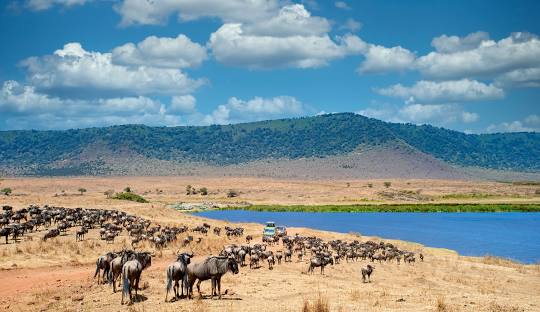
The Reliable Heart of the Park
The central Serengeti, around the Seronera Valley, is the part people picture: endless plains, rocky kopjes, and some of the highest densities of lion, leopard and cheetah anywhere in Africa. Because so much of that wildlife is resident, the centre delivers excellent game viewing in every season, which makes it the dependable choice if your dates fall outside a migration window, or if you simply want guaranteed big cats.
Dunia Camp. A tented camp on the central plains, notable for being run entirely by an all-female team of guides and staff, one of the few in Africa. Intimate, well positioned for resident game, and with genuine character.
Namiri Plains. Out in the eastern reaches of the central Serengeti, in an area once closed for cheetah conservation and now known for exceptional big-cat sightings, especially cheetah. Remote, spacious and quiet.
Four Seasons Serengeti. A large permanent luxury lodge built around a waterhole that animals visit through the day, with full resort facilities including a pool. The most hotel-like of the luxury options, and a comfortable choice for families and first-timers who want polish.
Best for: first-time luxury safaris, reliable predators, families who want resort comforts, and any trip outside the peak migration months.
Best Luxury Camps in the Northern Serengeti (Kogatende and Lamai)
Best July to October · river crossings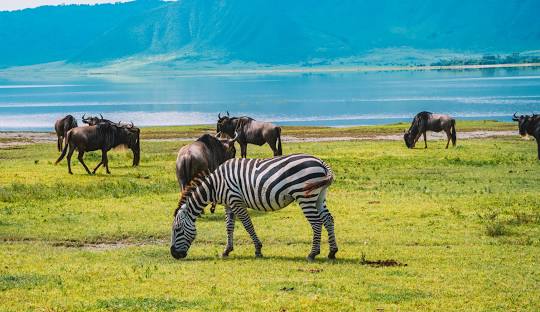
Where the Mara River Crossings Happen
The far north, around Kogatende and the Lamai Wedge, is the stage for the most dramatic event in the whole migration: the Mara River crossings, when the herds pour across the crocodile-filled water. From July to October this is where you want to be, and the good news is that these crossings happen on the Tanzania side, so you do not need to cross into Kenya to see them. The northern camps are positioned precisely for this, and the area is wilder and less crowded than the central plains.
Sayari Camp. One of the best-known luxury camps in the north, close to the river, with a strong reputation for guiding and photography, and unusually good accessibility for guests with limited mobility.
Lemala Kuria Hills. Set in the Wogakuria hills with glass-fronted tented suites and private plunge pools, one of the more design-led camps in the north and a favourite for honeymooners, within reach of the Mara River.
Serengeti Bushtops. Known for spacious tents with private hot tubs and a high level of service, a plush option for the crossing season.
Singita Mara River Camp. A small, remote, off-grid camp in the Lamai Triangle, right on a bend of the Mara River, about as close to the crossing action as a permanent camp gets.
Best for: the river crossings from July to October, photographers, and travellers who want the wildest part of the Serengeti. For the full picture of the September crossings, see our where is the migration in September guide.
Best Luxury Lodges in the Western Serengeti (Grumeti) and the Private-Concession Advantage
Best May to July · plus exclusivity year-round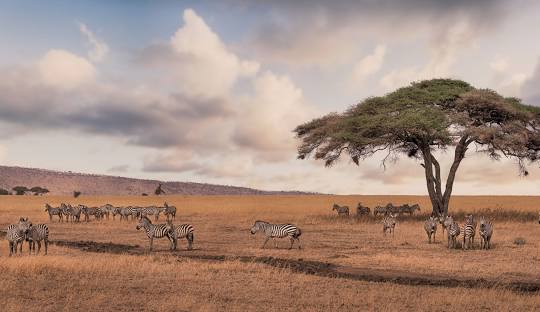
Private-Concession Luxury on the Grumeti
The western corridor, along the Grumeti River, has two draws. The first is the Grumeti crossings, when the herds pass through around May to July on their way north. The second, and the bigger one for luxury travellers, is that much of this area is a private concession rather than national park. That distinction matters more than most people realise.
Inside the national park you must stay on the tracks, there are no night drives, and popular sightings draw a crowd of vehicles in peak season. On a private concession like the Grumeti reserve, the operator controls access, which allows off-road driving to reach sightings, night drives, walking safaris, and very few vehicles around any animal. You are paying for exclusivity and a kind of freedom the park itself cannot offer, and for many luxury travellers that is worth a great deal.
Singita Sasakwa. An Edwardian-style manor house set on a hill over the plains, with cottage suites, each with its own infinity pool and sweeping views. The grandest address in the Serengeti, and priced to match.
Singita Faru Faru. A contemporary lodge along the Grumeti River, more relaxed and intimate than Sasakwa, with large windows onto the wildlife.
Singita Sabora. A tented camp styled after 1920s safari elegance out on the open plains, canvas in name but as refined as any lodge.
andBeyond Grumeti Serengeti River Lodge. A design-forward lodge in the western corridor, known for the area's large lion prides and its riverside setting.
Best for: honeymoons, exclusivity, walking and night drives, and travellers for whom privacy and space matter as much as the wildlife.
Best Luxury Camps in the Southern Serengeti (Ndutu) for the Calving Season
Best December to March · calving and big cats
The Calving Plains, and the Best Predator Action of the Year
From December to March the herds gather on the short-grass plains of the southern Serengeti and the neighbouring Ndutu area, in the Ngorongoro Conservation Area, to give birth. Several hundred thousand calves are born in a few weeks around February, and that concentration of vulnerable young draws intense predator activity, so this is arguably the finest season of all for big cats. It is also quieter and often better value than the July to October peak, which surprises people.
Because the calving grounds shift with the rains, the south is served largely by mobile camps that set up here for the season, rather than permanent lodges. Properties from Legendary, Asilia and Lemala move their camps into the Ndutu area for these months, putting you right among the herds and the predators.
Legendary Songa Migrational Camp. A mobile camp that positions in the south for calving, offering walking safaris, night drives and cultural visits with the local Datoga community in this area.
Ubuntu Migration Camp. Asilia's mobile camp, which sits in the southern Serengeti around Kusini from roughly December to March before moving north for the crossings.
Lemala Ndutu. A tented camp in the Ndutu region on the edge of the southern plains, well placed for the calving herds.
Best for: the February calving, big-cat photography, and travellers who want the migration with fewer crowds and better value.
Luxury Mobile Migration Camps That Follow the Herds
Running through all of the above is a category that deserves its own section, because for a migration-focused luxury trip it is often the smartest choice of all: the mobile migration camp.
These are semi-permanent luxury camps built to be packed up and relocated two or three times a year, so they stay beside the migration as it moves. In the calving season they sit in the south. From July to October they are up in the north above the Mara River. You give up the permanent structures of a lodge, the big pool, the solid walls, in exchange for the one thing money struggles to buy on a fixed property: being in exactly the right place. Camps like andBeyond Serengeti Under Canvas, Nomad Serengeti Safari Camp and Ubuntu work this way, and they are the migration purist's choice. If seeing the herds up close is the whole point of your trip, a well-run mobile camp usually beats a grander lodge that cannot move. We explain the permanent-versus-mobile distinction in full in our lodge versus tented camp guide.
What Makes a Serengeti Lodge "Luxury", and What You Are Paying For
It is worth being clear about what the luxury price actually buys, because it is not mainly the decor.
At the top of the Serengeti market you are paying for four things. Position, a camp placed for the wildlife, often in a private concession or a prime crossing spot. Exclusivity, few guests, few vehicles, sometimes a private guide and vehicle included. Guiding, the most experienced guides in the country, which changes what you actually see. And service, all-inclusive comfort, fine food, and logistics handled so smoothly you never think about them. The beautiful suite is real and lovely, but it is the least important part of the bill. If you remember one thing when comparing luxury lodges, let it be that you are buying access and expertise more than furniture. We go deeper on this in our guide to what an 8-day luxury safari costs.
How Much Do Luxury Serengeti Lodges Cost Per Night?
Rates move with the season and the property, but here is the shape of the market for 2026 to give you a realistic frame. These are per person, per night, usually all-inclusive of meals, drinks and game drives, with park fees typically charged on top.
| Tier | Rough rate per person per night | Example properties |
|---|---|---|
| Mid to upper lodge or camp | Around US$350 to US$750 | Serengeti Serena, Kubu Kubu |
| Luxury | Around US$700 to US$1,400 | Four Seasons, Sayari |
| Luxury mobile migration camp | From around US$600 | Under Canvas, Nomad, Ubuntu |
| Ultra-luxury | Around US$1,500 to US$3,000+ | Singita Grumeti, andBeyond Crater Lodge |
Two things drive these numbers more than the property itself: the season, with the July to October migration peak carrying the highest rates and the green season dropping sharply, and the location, with private concessions and prime crossing positions commanding a premium. For how accommodation fits into a whole trip's cost, our costs and park fees guide lays out the rest.
Rates and properties change with the season and over time, and camps open, close and change hands. Treat these as a guide, and we confirm current rates and availability when we build your trip.
Which Luxury Lodge Is Best for Honeymoons, Families and Photographers?
The right property shifts with who is travelling, so here is a quick steer by traveller type.
- Honeymooners. Lean toward the western Grumeti concession for privacy and space, or the intimate design-led camps of the north such as Lemala Kuria Hills. Small, secluded and romantic beats large and busy.
- Families. The central Serengeti suits families well, and the Four Seasons in particular, with its pool, waterhole and resort facilities. Some camps set minimum age limits, so family suitability is one of the first things we check.
- Photographers. The north for the crossings and the private concessions for off-road positioning and few vehicles. Camps with a photographic focus and vehicles set up for cameras, such as those in the north, are worth seeking out.
- First-timers. The central Serengeti for reliable game year-round, at a luxury lodge with full comforts, is the safe and rewarding choice.
Do You Need to Combine the Serengeti With the Ngorongoro Crater?
For a luxury Northern Circuit trip, the Serengeti and the Ngorongoro Crater almost always go together, and we would encourage it.
The crater is a different landscape and a different experience, a collapsed volcanic caldera holding one of the densest concentrations of wildlife in Africa, including the rare black rhino, all within a contained space you can explore in a day. Its resident wildlife is there year-round, so it pairs with a Serengeti stay in any season. The rim is high and cold, so it is served by solid luxury lodges rather than camps, from the elegant to the extraordinary. A classic luxury pattern is three or four Serengeti nights, positioned for the migration, plus a night or two on the crater rim, and for many a Zanzibar beach finish after. Our Ngorongoro Crater guide covers the area, and our 8-day luxury Northern Circuit safari shows how it all fits into one trip.
How Kai Tours Arranges Your Luxury Serengeti Stay
Here is where we come in, and how we are different from a glossy list that just wants you to click a lodge.
We arrange these luxury lodges and camps as part of a private, tailored Northern Circuit safari, and we choose them the way this whole guide argues you should: by matching the area to where the wildlife will be on your dates, then selecting the property that fits your comfort level and your budget. We handle the lodges, the light-aircraft flights between them, the private vehicle and guide, and the wider trip, and we itemise the quote so you can see exactly what you are paying for. We will also tell you honestly when a famous name is in the wrong place for your dates, or when a slightly less expensive property in the right area is the better trip.