In Short
This is a 2-day private safari from Arusha into the Ngorongoro Crater, the world's largest intact volcanic caldera and the densest concentration of wildlife in Africa. You drive up to the crater rim on day one and overnight at a lodge right on the edge, then descend onto the crater floor at first light on day two for a full, unhurried day of game viewing before returning to Arusha in the afternoon. Splitting the trip over two days removes the rushed 06:00-to-19:00 slog of the day-trip version and gets you onto the floor while the predators are still most active. The price, from US$620 to US$980 per person, includes one night's accommodation on the rim, the US$295 crater service fee, and all park fees.
Overview
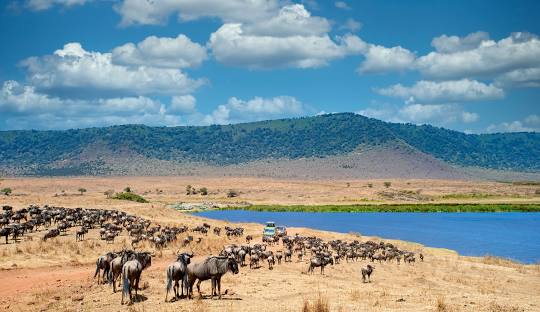
If a single day in the Ngorongoro Crater sounds rushed, this 2-day version is the fix. Nowhere else lets you descend into a single, enclosed 260 square kilometre arena holding an estimated 25,000 to 30,000 large animals, and a second day means you are not racing the clock to reach the exit gate by 18:00. Because the crater walls form a natural enclosure, the wildlife lives there permanently and does not migrate out, so the game viewing is reliable in every month of the year.
We run this as a private trip, with your own 4x4 and professional driver-guide throughout. Day one is a relaxed drive up to the crater rim with a stop at the viewpoint, followed by an overnight at a lodge or tented camp on the rim itself. Day two starts before the day-trippers have even left Arusha: you descend onto the floor at first light, when the predators are most active, and have the entire day to explore at your own pace before heading back.
Explore More Tanzania Safari Packages
Want to see more than the crater? This trip pairs naturally with Lake Manyara or Tarangire as a third day. We're happy to quote a combined 3-day itinerary alongside this one.
Highlights
- A first-light descent onto the crater floor, ahead of the day-trip crowds, when predators are most active.
- A full, unhurried day on the floor instead of a single rushed afternoon.
- One night at a lodge or tented camp right on the crater rim, one of the great settings in Africa.
- A real chance at four of the Big Five: lion, elephant and buffalo are reliable, and Ngorongoro is one of the best places in Africa to see black rhino.
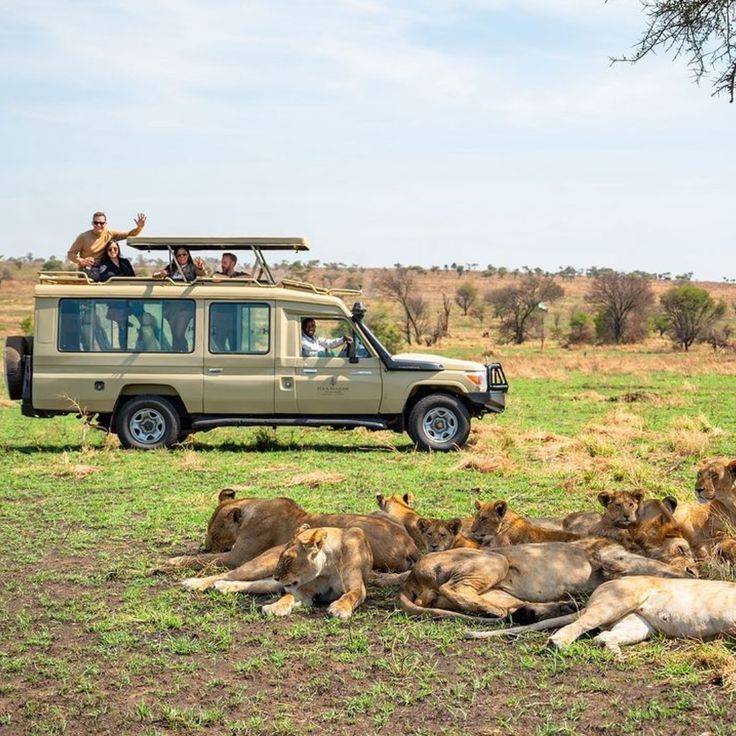
- A private 4x4 with a pop-up roof and window seats for everyone, with a guide who knows where the animals will be.
- Panoramic rim views at sunset on day one and sunrise on day two.
Short Itinerary
- Day 1: Depart Arusha, drive to the crater rim, check in to your lodge, sunset at the viewpoint.
- Day 2: First-light descent, full-day game drive on the crater floor, picnic lunch, ascent and return to Arusha.
2-Day Itinerary
Pick-up from your Arusha hotel at a relaxed hour. Depart southwest toward the Ngorongoro Conservation Area, with views of the Rift Valley and Maasai settlements along the way. This is the same drive as the day-trip version, but without the 06:00 start.
Lunch stop in Karatu, the last town before the conservation area. Continue to the gate for a short briefing before the final climb up to the crater rim.
Arrive at the crater rim in the mid-afternoon, with time to settle in and enjoy the viewpoint before dinner. Overnight at a lodge or tented camp on the rim, at around 2,300 metres, so it is cold after dark.
Depart the lodge before sunrise and descend the steep access road onto the crater floor while the light is still soft and predators are most active.
A full morning exploring the plains, swamps and Lerai Forest, with no need to rush toward an exit deadline.
Picnic lunch at the designated crater picnic site, near the hippo pool.
Continue the game drive into the afternoon, searching the forest and slopes for elephant, rhino and the harder-to-find cats.
Ascend from the crater and begin the drive back, arriving in Arusha in the early evening.
Timings are a guide and flex with the season, road conditions and the wildlife.
Price for 2027 (2 Days / 1 Night)
The price is per person and falls as your group grows, because the 4x4, the overnight accommodation, and the US$295 crater service fee are all shared across everyone in the vehicle.
| Group size | 1 | 2 | 3 to 4 | 5 to 6 | 7+ |
|---|
| Price Adult (USD) | $980 | $750 | $690 | $650 | $620 |
Per person sharing, based on non-East African adults, 2027 indicative rates for a standard rim lodge. Upgrading to a luxury property is quoted separately. Children receive a reduced rate.
Accommodation
One night is spent at a lodge or tented camp on the Ngorongoro Crater rim, on a full-board basis (dinner, bed and breakfast). Standard options sit right on the rim with crater views from the grounds; we can also quote mid-range and luxury properties on request. Because the rim sits at around 2,300 metres, evenings are cold, and most rim lodges have fireplaces in the common areas.
What's included
- • Hotel pick-up and drop-off in Arusha
- • Private 4x4 Land Cruiser with pop-up roof
- • Professional English-speaking driver-guide
- • 1 night accommodation on the crater rim, full board
- • Ngorongoro Conservation Area entry fees (both days)
- • Crater Service Fee (~$295 per vehicle)
- • All government taxes and levies
- • Picnic lunch on day 2 and bottled water throughout
What's excluded
- • Drinks and beverages beyond meals
- • Tips for your driver-guide
- • Personal expenses and souvenirs
- • Travel insurance
- • Tanzania visa and international flights
- • Anything not listed as included
The crater fee is already in our price. The single most common trick in a cheap Ngorongoro quote is to exclude the US$295 per vehicle Crater Service Fee, so the headline price looks lower until you reach the gate. Ours includes it. If you are comparing quotes, ask every operator one question: is the crater service fee included, yes or no?
What you'll see in the crater
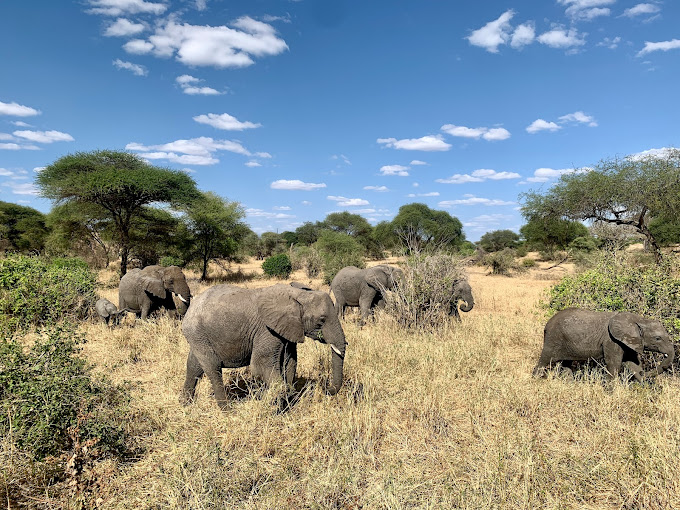
The Ngorongoro Crater floor holds around 25,000 to 30,000 large animals permanently, including roughly 60 lions, some 6,000 spotted hyenas, around 300 elephants and about 30 black rhino. With a full second day, you have far more time to search for the harder sightings than a single rushed afternoon allows.
| Animal | Likelihood |
|---|
| Lion | High, one of Africa's densest populations |
| Elephant | Good, often large old bulls in Lerai Forest |
| Cape buffalo | Very high |
| Black rhino | Good, best in the early morning. Around 30 resident |
| Hippo | Very high, in the pools and swamps |
| Spotted hyena | Very high |
| Zebra, wildebeest, gazelle, eland | Very high, in large numbers |
| Flamingo | Seasonal, on Lake Magadi |
| Leopard, cheetah | Present but elusive, never guaranteed |
Best time for a 2-day Ngorongoro safari
The crater is a genuine year-round destination, so there is no wrong time to go, only better and cheaper ones. The dry season, June to October, gives the shortest grass and the easiest game viewing, with animals concentrated near water. The green season, November to May, is quieter, greener and better value, with the occasional afternoon shower and thicker grass. The rim sits at around 2,300 metres and is cold at night and in the early morning all year, so bring a warm layer whatever the season.
Good to know
- Pack a small overnight bag. Your main luggage can stay in the vehicle; a small bag for the lodge keeps things simple.
- Dress in layers. Cold on the rim at dawn and after dark, warm on the floor by midday. Neutral colours are best.
- Bring cash for tips. A tip for your guide and lodge staff is customary and not included; US dollar cash is easiest.
- From Moshi? We can collect you in Moshi with a slightly earlier start, since Moshi is about an hour beyond Arusha.
- Want a third day? This pairs naturally with Lake Manyara or Tarangire; ask us for a combined quote.
Frequently asked questions
Our private 2-day, 1-night Ngorongoro Crater safari from Arusha starts at US$980 per person for a solo traveller, falling to US$620 per person for larger groups, because the vehicle, the overnight lodge, and the US$295 crater fee are all shared. All park fees, the crater service fee, the 4x4, the guide, one night's accommodation and a picnic lunch are included.
The 1-day version is a long day: roughly 7 to 8 hours of driving plus 5 to 6 hours in the crater, all in a single day. The 2-day version removes that time pressure. You arrive at the rim the evening before, descend at first light while predators are most active, and have a full, unhurried day on the crater floor instead of a rushed afternoon.
Hotel pick-up and drop-off in Arusha, a private 4x4 Land Cruiser with a pop-up roof, a professional English-speaking driver-guide, one night's full-board accommodation on the crater rim, all park entry and crater service fees, a picnic lunch on day two, and bottled water. Drinks, tips and personal expenses are not included.
At a lodge or tented camp on the Ngorongoro Crater rim, on a full-board basis. Standard rim properties are included in the quoted price; mid-range and luxury options are available on request.
Yes. The Crater Service Fee of about US$295 per vehicle and the conservation area entry fees for both days are included in our price. Cheaper quotes sometimes exclude the crater fee, which is why they look cheaper until you reach the gate.
It is private by default, so you have your own 4x4 and guide and set the pace. Because the vehicle, lodge and crater fee are shared across your group, the per-person price falls as the group grows.
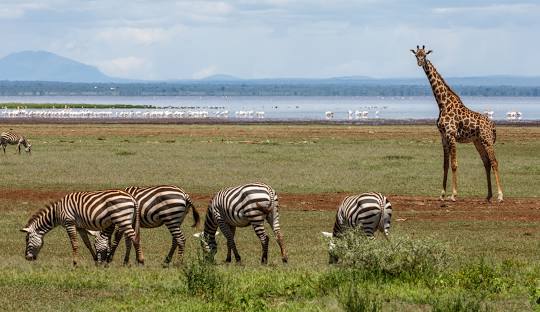
Lion, elephant, buffalo, zebra, wildebeest, hippo, eland, gazelle and spotted hyena are seen regularly, and the crater is one of the most reliable places in Africa for black rhino. Leopard are present but elusive. Note there are no giraffes on the crater floor, because the descent roads are too steep for them.
Yes. This 2-day itinerary pairs naturally with a third day at Lake Manyara or Tarangire, or can be extended further into a longer Northern Circuit safari. Ask us for a combined quote.
Bring a warm layer for the cold rim evenings and mornings, plus a hat, sunglasses, sunscreen, binoculars, a camera, a small overnight bag, and some US dollar cash for tips. Wear neutral colours, and bring any personal medication.
The crater is excellent year-round because its wildlife does not migrate out. June to October is the dry season with the easiest game viewing, while the green season from November to May is quieter, greener and better value, with the odd afternoon shower.