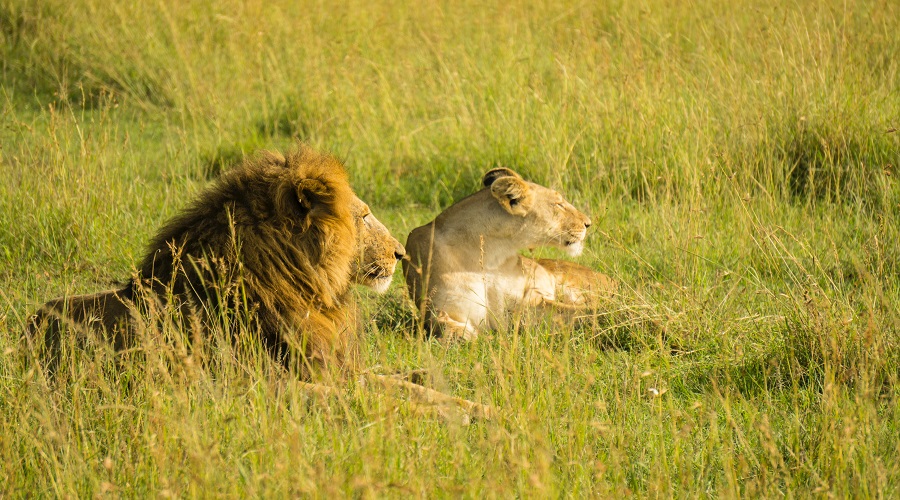
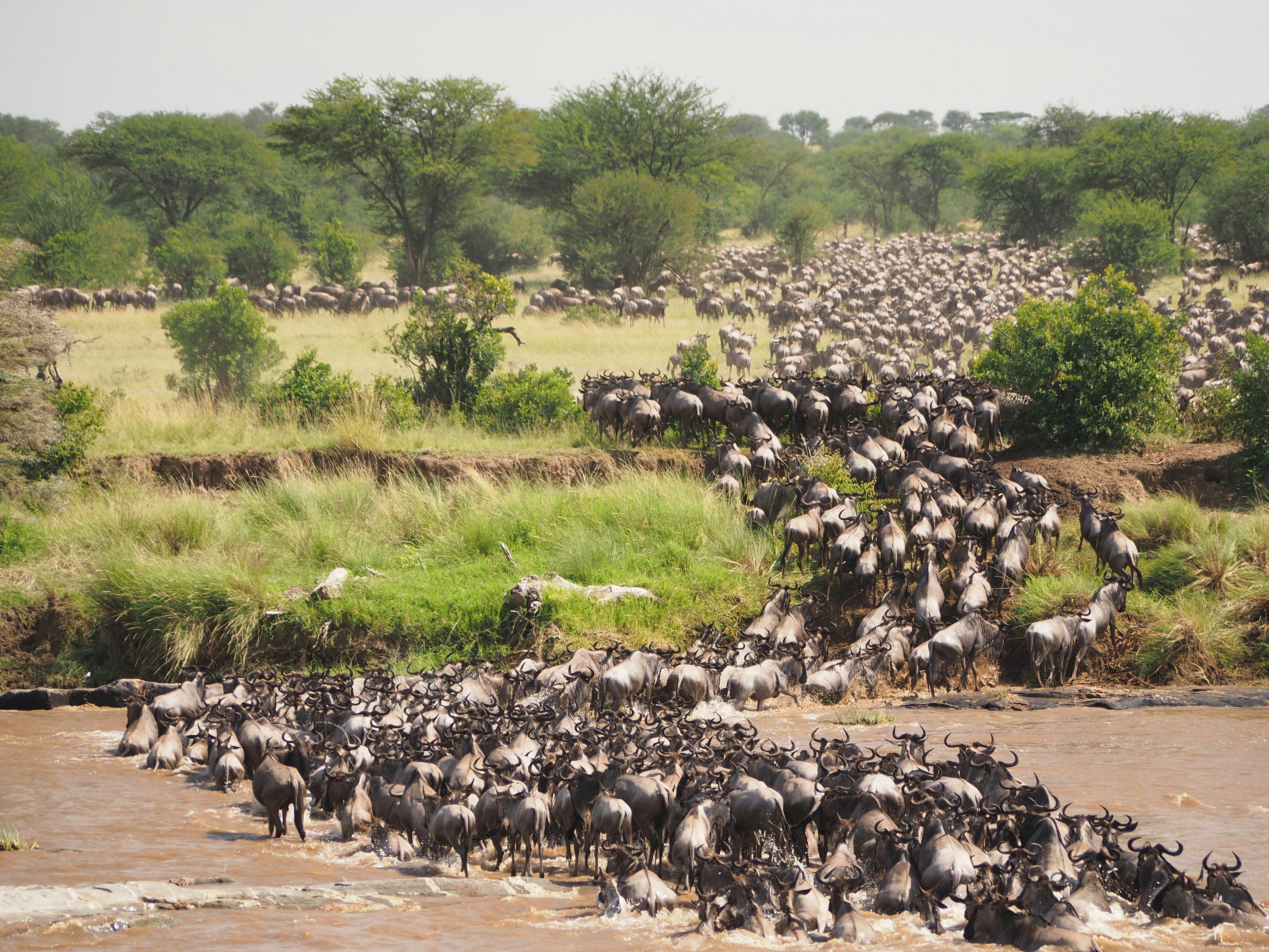
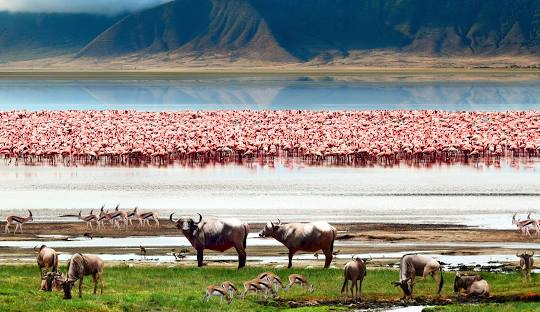
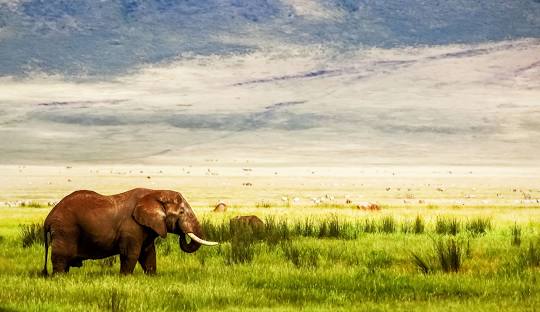
There is no single best 8-day Northern Circuit itinerary, and anyone who tells you otherwise is selling you their standard package rather than your trip. There is a best route for you, and it comes down to four decisions: what you want to see, whether you fly in or build up to the Serengeti, which small parks you keep, and where you fly rather than drive. For most first-timers my honest recommendation is the build-up route: Tarangire and the Ngorongoro Highlands first, then three nights in the Serengeti as the finale, and fly out. Below I lay out the four decisions, then map three complete 8-day itineraries day by day so you can see exactly which one fits.
On this page
Why 8 days is the sweet spot
Before we get to the routes, it is worth saying why eight days is such a good length for this circuit, because it is not an accident that it is the most popular duration we run.
The Northern Circuit's headline parks, the Serengeti and the Ngorongoro Crater, sit a long way apart, with Tarangire and Lake Manyara filling the country in between. On a five or six day trip you can technically visit all of them, but you spend so much of it moving that the safari never quite settles. You get one full day in the Serengeti, half a day here and there, and you leave feeling you rushed the best park on the continent. It is the single most common regret I hear from people who tried to do too much in too little time.
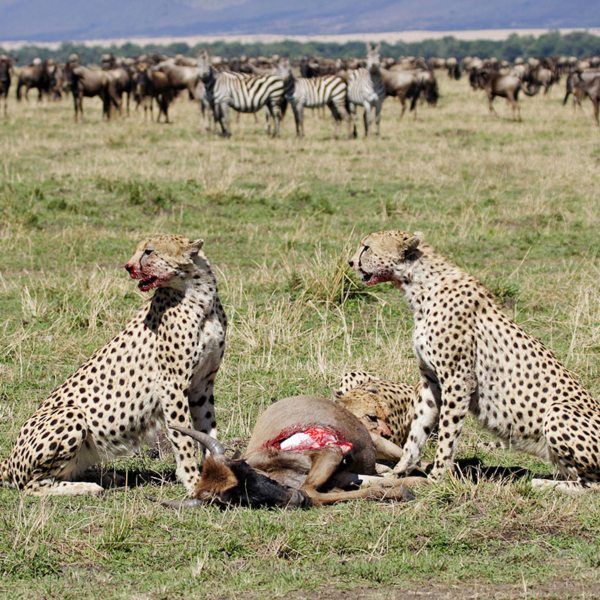
Eight days changes that. It gives you three nights in the Serengeti, which is two full days of game drives rather than one, plus a proper crater day and time in one or two of the smaller parks. You go deep instead of skimming. You can follow a leopard for an afternoon, wait out a cheetah stalking on the plains, and still not feel you are watching the clock. And it does this without tipping into the higher cost and longer leave of a ten or twelve day trip. If you have the time and budget for ten days you can add the far north or a cultural day, and that is lovely, but eight is where the value and the experience meet. It is long enough to be unhurried and short enough to be affordable.
So every itinerary below is built on the same non-negotiable spine: the Serengeti and the Ngorongoro Crater, with three Serengeti nights, and the rest of the days arranged around your priorities. What changes between them is the order, the small parks, and where the migration is.
The four decisions that define "best"
The reason there is no universal best itinerary is that four separate choices pull the trip in different directions. Get clear on these and the right route almost picks itself.
Decision 1: What do you most want to see?
This is the big one, because the wildlife moves. If you are chasing the wildebeest migration and the Mara River crossings, you need to be in the far northern Serengeti in the July to October window, which changes the whole shape of the trip. If you want the calving season and the best big-cat action, that is the southern Serengeti in February. If you simply want reliable classic game viewing and the Big Five, the central Serengeti and the crater deliver that all year, and you have more freedom over timing. Work out your priority first, and read our guide to the best time and where the migration is by month before you fix your dates.
Decision 2: Fly in to the Serengeti, or build up to it?
There are two philosophies. The build-up saves the Serengeti for last, so the landscape grows grander as the trip goes on and you finish on the highest note, which is how most safari-lovers prefer it. The fly-in-first puts the Serengeti at the start and drives out through the other parks. The reason to choose fly-in-first is not preference, it is safety: if your international flight home is infrequent or tightly timed, flying out of the Serengeti on your last day risks a bush-flight delay costing you that flight. Fly in first and the risk disappears. If your schedule has a buffer, build up. If it does not, fly in first.
Decision 3: Which small parks do you keep?
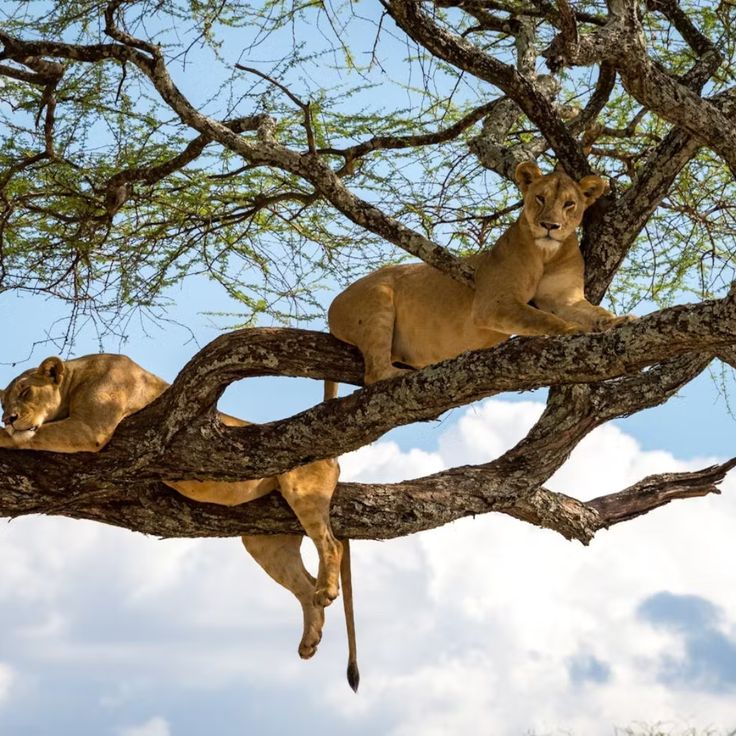
The Serengeti and Ngorongoro are fixed. The choice is what fills the other days. Tarangire is elephant and baobab country and is at its best in the dry season, when the herds mass along the river. Lake Manyara is compact and green, strong on birds and famous for its tree-climbing lions, and it can be seen in half a day. Many experienced travellers drop Manyara and give Tarangire a second night instead, for more wildlife and a slower pace. Others keep Manyara for the variety, or swap in a Lake Eyasi cultural day with the Hadzabe and Datoga communities. None of these is wrong. It depends whether you want density, variety or culture.
Decision 4: Where do you fly, and where do you drive?
The small parks near Arusha, Tarangire, Manyara and the Ngorongoro Highlands, are close together and the drives between them are short and scenic, so driving those legs is sensible. The long leg to and from the Serengeti is different: the road from Arusha to the central Serengeti is a genuine seven to nine hours, and to the far north it is ten to twelve. That is where flying earns its keep, turning a lost day into a short scenic hop. Almost every good 8-day itinerary drives the small parks and flies at least one Serengeti leg. Our guide to flying to the Serengeti covers the real costs and times.
Itinerary A: the classic build-up
Tarangire and the highlands first, Serengeti finale, fly out
Best for: first-time visitors who want the country to unfold and the Serengeti as the grand finish, with a comfortable buffer before their flight home.
- Arusha to Tarangire. Collected in Arusha and driven to Tarangire for an afternoon among the elephant herds and baobabs. Overnight near or inside the park.
- Tarangire to the Ngorongoro Highlands. A morning game drive in Tarangire, then a scenic drive up to the Karatu and Ngorongoro area, with the option of a Lake Manyara stop or a Lake Eyasi cultural visit on the way. Overnight in the highlands.
- Ngorongoro Crater. An early descent to the crater floor for a full morning among big herds, lion prides and the resident black rhino, one of the best rhino chances in Tanzania. Back up to the rim by afternoon.
- Drive to the Serengeti. A long but rewarding game-viewing drive down into the Serengeti, passing Naabi Hill and the open plains, arriving at your central Serengeti camp by evening.
- Serengeti. A full day of game drives across the central plains, prime country for lions, cheetah, leopard and elephant.
- Serengeti. A second full day to go deeper, explore a different area, or take an optional dawn balloon flight over the plains.
- Serengeti to Arusha by air. A final morning game drive, then a short scenic flight back to Arusha, with an overnight near the airport so there is no rush and a full buffer before your international flight.
- Departure. An unhurried transfer to Kilimanjaro International Airport for your flight home.
Itinerary B: the schedule-safe fly-in
Fly in to the Serengeti first, drive out through the crater and Tarangire
Best for: travellers with an infrequent or tightly timed flight home, who want the marquee wildlife up front and zero risk on the final day.
- Fly to the Central Serengeti. A short flight from Arusha into the heart of the Serengeti, then three nights here with full days of game drives across the central plains. Front-loading the Serengeti means the biggest wildlife while you are freshest.
- Serengeti to Ngorongoro. A game-viewing drive from the Serengeti up to the crater rim, the landscape shifting from open plains to green highlands. Overnight on the rim.
- Ngorongoro Crater, then Manyara. A descent into the crater in the morning, then on toward the Lake Manyara area for the night.
- Lake Manyara. Game viewing in Manyara's forest-to-lakeshore variety, with its birdlife and tree-climbing lions.
- Tarangire, then Arusha. A day among Tarangire's elephants and baobabs, then the drive back to Arusha for a comfortable final night near the airport.
- Departure. Transfer to Kilimanjaro International Airport.
Itinerary C: the migration chaser
Weighted to the northern Serengeti for the Mara River crossings
Best for: travellers coming specifically for the wildebeest migration and river crossings, willing to trade the smaller parks for more time in the north.
- Arrive in Arusha. Land, meet your team and overnight in Arusha, ready for an early flight into the bush.
- Fly to the Central Serengeti. A flight into the central plains for a night, with an afternoon game drive among the resident cats and plains game before heading north.
- Northern Serengeti (Kogatende). Three nights in the far north, at the heart of the Mara River crossing country. Days spent tracking the herds along the river, waiting for the crossings, and enjoying some of the wildest, least crowded country in the park.
- Fly south to the Ngorongoro area. A flight and transfer from the north to the Ngorongoro Highlands, overnight on the crater rim.
- Ngorongoro Crater, then Arusha. A crater descent in the morning, then transfer or a short flight back to Arusha for a final night near the airport.
- Departure. Transfer to Kilimanjaro International Airport.
The mistakes that spoil an 8-day trip
After building a lot of these, the same avoidable errors come up. None of them are your fault, they are just things the standard packaged itinerary rarely warns you about.
- Cramming in too many parks. Trying to add a fifth or sixth park to eight days means more driving and less watching. Depth beats breadth. Three Serengeti nights and a couple of parks done well beats five parks skimmed.
- The build-down. Doing the Serengeti first and then finishing on the tamer parks can leave the last days feeling flat after the grandest one. If your flight allows, build up instead, and if it does not, at least know the trade-off you are making for the schedule safety.
- Ignoring where the migration actually is. Booking a central Serengeti trip in September expecting river crossings, when the crossings are two hundred kilometres north at Kogatende. Match the route to the month.
- Sleeping outside the parks to save money. Lodges outside the park gates can add an hour or more of driving to and from each game drive, quietly costing you the best early-morning wildlife hours. Sometimes it is a fair trade for the price, but know when a lodge is outside the boundary.
- The same-day flight-home gamble. Scheduling a bush flight out of the Serengeti for the morning of your international departure. One weather delay and you miss the big flight. Build in a buffer night near the airport, as every itinerary above does.
- Booking peak season late. The best camps, especially the northern Serengeti crossing camps in August and September, sell out a year or more ahead. If those are your dates, book early or accept second choices.
What 8 days costs, roughly
I will not quote a single figure here, because a real 8-day price depends on your comfort level, your group size and your season, and a made-up number would be dishonest. What I can tell you is the shape of it.
The biggest fixed cost is the park fees, and on this circuit they are significant, with the Serengeti and Ngorongoro among the highest in the country, plus the crater service fee charged per vehicle for the descent. Those apply no matter which tier you choose. On top of that sit your vehicle and guide, your accommodation, and any internal flights. A shared mid-range trip is the most affordable way to do the circuit properly. A private luxury trip with fly-in camps sits far higher. And peak season, July to October, runs above the green season for the same route. What you should never see is a genuine 8-day Northern Circuit safari priced like a budget tour, because the park fees alone set a real floor. For the full breakdown of the fees and what drives the price, see our safari costs and park fees guide, and always ask us for a fully itemised quote so you can see exactly what each line is.
So which one should you pick?
Here is the honest short version, the way I would advise a friend.
- If it is your first safari and your flight home has some flexibility, take Itinerary A, the build-up. It is the classic for a reason, and finishing in the Serengeti is hard to beat.
- If your international connection is tight or infrequent, take Itinerary B, the fly-in-first. You lose a little of the build-up magic and gain complete peace of mind on your flight day.
- If you are coming for the migration between July and October, take Itinerary C, the migration chaser, and accept the higher cost for the northern nights that actually put you where the crossings are.
And if you are still not sure, that is exactly what we are here for. Tell us your dates, your priority and your flight details, and we will tell you honestly which of these three fits, and adjust it until it is genuinely yours rather than a package off a shelf.
Let us build your 8-day Northern Circuit
Send us your travel dates, your group size and what you most want to see, and we will map the right route for you, confirm the lodges, and quote it in full with every fee shown.
Plan it on WhatsApp Email usRelated Trips
Frequently asked questions
What is the best 8-day Tanzania Northern Circuit itinerary?
There is no single best 8-day itinerary, only the best one for what you want. For most first-time visitors the strongest choice is a build-up route: start with Tarangire and the Ngorongoro Highlands, then finish with three nights in the Serengeti as the grand finale and fly out. It saves the best park for last, protects your flight home, and gives the Serengeti the time it deserves. If your international connection is tight, a fly-in-first version is safer, and if you are travelling in the July to October crossing season, a migration-weighted route with more nights in the northern Serengeti is better. This guide maps all three.
Is 8 days enough for a Tanzania Northern Circuit safari?
Eight days is close to ideal for the Northern Circuit. It gives you three nights in the Serengeti plus the Ngorongoro Crater and one or two of the smaller parks, without the rushed feeling of a five or six day trip where you spend too much of it driving. It is long enough to go deep in the Serengeti rather than skimming it, and short enough to stay affordable. Ten days lets you add the far north or a cultural day, but eight is the sweet spot for a first safari.
Should I fly into the Serengeti first or end there?
Both work, and the right choice depends on your flight home. Ending in the Serengeti is the classic build-up, and most travellers find the experience better because the landscape builds toward the grandest park and you finish on a high. The exception is when you have a tight or infrequent international connection, because flying out of the Serengeti on the final day risks a bush-flight delay causing a missed flight. In that case, fly in to the Serengeti first and drive out, which removes the risk. Tell your operator your exact departure and they will advise.
Should I include Lake Manyara or add a second night in Tarangire?
Many experienced travellers drop Lake Manyara and give Tarangire two nights instead, because Tarangire has larger elephant herds and more to fill the time, especially in the dry season. Manyara is compact and can be seen in half a day. That said, Manyara has excellent birdlife, a groundwater forest and its famous tree-climbing lions, and it breaks up the drive nicely. Neither choice is wrong. If you want maximum wildlife density, deepen Tarangire. If you want variety and a gentler pace, keep Manyara.
How many days should I spend in the Serengeti?
Three nights is the sweet spot on an 8-day trip. Two nights gives you one full day of game drives, which feels short for the largest and richest park on the circuit. Three nights gives you two full days, time to explore different areas, follow a leopard or a cheetah hunt, and not feel rushed. If you can stretch to four nights in the Serengeti, it is rarely wasted, but you would usually trade a smaller park to do it.
Can I see the wildebeest migration on an 8-day Northern Circuit trip?
Yes, but where you go depends on the month, because the herds move. In July to October the migration and the Mara River crossings are in the far northern Serengeti around Kogatende, so a migration trip weights its nights up there. In December to March the herds are on the southern plains for calving. The classic central Serengeti holds excellent resident wildlife year-round but is not where the crossings happen. Tell your operator your dates and they will position the trip where the animals will actually be.
Should I fly or drive between the parks?
A mix is usually best. Driving between Arusha, Tarangire, Manyara and the Ngorongoro Highlands is scenic and sensible, as they are close together. The long leg to and from the Serengeti is where flying earns its cost: the road from Arusha to the central Serengeti is a real seven to nine hours, and to the northern Serengeti it is ten to twelve. Flying that leg turns a lost day into a short scenic hop. Most good 8-day itineraries drive the small parks and fly at least one Serengeti leg.
How much does an 8-day Northern Circuit safari cost?
It varies widely with comfort level, group size and season. A shared mid-range trip is far cheaper than a private luxury one, and peak-season prices in July to October run higher than the green season. The park fees alone are significant, with the Serengeti and Ngorongoro among the highest, plus the crater service fee per vehicle, so a genuine 8-day Northern Circuit safari sits well above budget-tour pricing. Ask for a fully itemised quote that shows the park fees, any internal flight and all transfers as separate lines so you can compare fairly.
Is an 8-day Northern Circuit safari good for first-timers?
It is arguably the best first safari there is. In eight days you see the Serengeti, the Ngorongoro Crater and the elephants of Tarangire, which together cover the big cats, the Big Five, the great plains and one of the densest wildlife areas on earth. The pace is comfortable rather than punishing, and the variety means you are never looking at the same landscape two days running. For a first trip to Africa, this is the classic and it earns its reputation.
Can I add Zanzibar to an 8-day Northern Circuit safari?
You can, though it usually pushes the trip past ten days once you add the beach and the travel days. From the end of a Northern Circuit safari you fly from the Serengeti or Arusha to Zanzibar for a few beach days. If your total time is fixed at around eight days, you would either shorten the safari or consider the southern parks, which sit closer to the coast. We can plan either, and we cover the routing in detail in our combining a safari with Zanzibar guide.
Luxury, mid-range or budget for an 8-day safari?
All three see the same wildlife in the same parks, so the difference is comfort, not sightings. Budget trips use basic camps or campsites and shared vehicles, mid-range uses comfortable lodges and is where most travellers land, and luxury uses premium camps, often fly-in, with the highest level of service and privacy. On an 8-day trip the tier mostly affects your evenings and your vehicle, not your game viewing. Choose the level that fits your budget and you will see the animals either way.
Justus Kahwa, Safari Operations Director, Kai Tours & Safaris.
Builds Northern Circuit itineraries every week, sequences each around the guest's flights and the season, and would rather send you the route that fits than the one on the shelf.