On this page
- Is it worth it? The honest answer
- The roads are rough. Bring a cushion.
- There is a lot of dust. Pack for it.
- It gets cold in the mornings.
- Your phone will not work like at home.
- Bring a soft bag, not a hard suitcase.
- Do you need binoculars and a camera?
- Small things that keep you comfortable.
- You will hear animals at night.
- Where you sleep really matters.
- The airports test your patience.
- The yellow fever confusion.
- Zanzibar makes you buy insurance.
- Malaria and staying healthy.
- Charging your phone and devices.
- When should you come?
- My honest checklist
- Common questions
Is a Tanzania safari worth it? The honest answer
Yes. Almost everyone I send comes back happy, and most tell me it was better than they hoped. Seeing lions, elephants and big herds of animals living freely, not behind a fence, changes how you feel about wild places. That part lives up to what you have seen in videos, and often more.
But I will be straight with you, because that is the whole point of this page. A safari is not a soft, easy holiday. You wake before sunrise, you spend long hours in a vehicle on rough roads, you eat some meals with dust on your hands, and at night you sleep in a tent with animals moving around outside. If you expect a smooth trip with a swimming pool and room service every day, parts of it will surprise you. If you come ready for something more real than that, you will love every bit of it. The people who are happiest are the ones who knew what they were walking into. That is exactly what I am trying to give you here.
The roads are rough. Bring a cushion.
If you remember one thing from this page, make it this one, because it is the thing people are least ready for.
The roads inside the parks are dirt, not tarmac. And the long drives, especially from the northern part of the Serengeti down to the central part, and from the central Serengeti across to the Ngorongoro Crater, are very rough. You get shaken around for hours. People here half-joke about the free massage, but by the end of a long drive your back and your seat can really ache. It is normal, and it catches almost everyone off guard the first time.
Two things help a lot. First, bring a small cushion or a folded soft jacket to sit on. It sounds silly, but it makes a real difference over a long, bumpy day, and guests who do it thank me for the tip. Second, think about flying over the longest stretches instead of driving them. A short flight between the parks turns a full, painful day on the road into a quick, easy hop, and it gives you more time to actually watch animals. It costs more, but for a lot of people it is worth it. Our guide on flying to the Serengeti explains when flying makes sense.

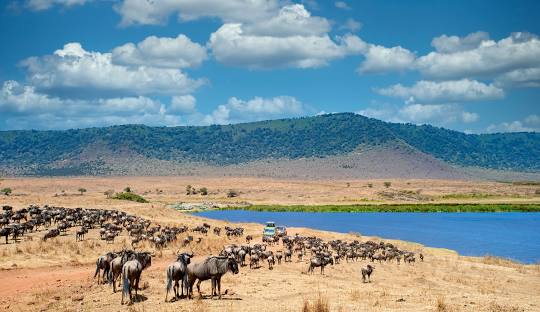
There is a lot of dust. Pack for it.
In the dry months, and that is when most people come, the parks are very dusty. Fine dust gets into everything: your bag, your clothes, your hair, your camera. It is not a problem, it is just part of being out there, but you should pack with it in mind.
A few simple things that guests find helpful:
- Do not bring white shoes. They will be brown by the second day and never fully clean again. Bring shoes you do not mind getting dirty.
- Wear loose cotton clothes, full-sleeve tops and long trousers in soft, dull colours. They keep the sun and dust off your skin and stay cooler than they look.
- Carry hand sanitiser. You will want it before every snack and meal, because your hands pick up dust all day.
- A small water spray or mist bottle is surprisingly useful for wiping dust off your face, your glasses and your camera.
None of this is expensive or hard to find. It is just the difference between being comfortable and spending the trip wishing you had packed better.
It gets cold in the mornings and at night.
This one surprises people who think of Africa as always hot. The days are warm, sometimes very warm, but the early mornings and the evenings can be genuinely cold, and the game drives start at dawn when it is coldest.
The Ngorongoro Crater area is the coldest of all, because it sits high up. If you stay near the crater, the nights are chilly and you will be glad of warm clothes. So even in the dry season, bring a warm layer, a fleece or a jumper, and a light windproof jacket for the open vehicle in the morning. During the day it warms up fast, so the trick is to dress in layers you can peel off as the sun climbs. People who pack only for heat end up cold and uncomfortable on the best drives of the day.
Your phone will not work like it does at home.
Be ready to be mostly offline, and honestly, try to enjoy it.
Once you are out in the parks the mobile signal is weak. On a good day you might get 4G near a town or a gate, but out in the wild areas it drops to very little, and there is no fast 5G anywhere out there. Most camps have wifi, but usually only at the reception building, not in your room, so you cannot lie in bed scrolling. If you need to send a message home, you walk to reception and wait.
One useful tip from guests: a local SIM card from Airtel or Vodacom often works better in remote places than a foreign eSIM. If staying reachable matters to you, buy a local SIM with some data when you arrive. But my honest advice is to tell your family before you leave that you will be hard to reach for a few days, and then let the phone go. Most people find that being unreachable in the middle of the wild is one of the best parts of the whole trip.
Bring a soft bag, not a hard suitcase.
Pack your things in a soft duffel bag rather than a hard shell suitcase. Soft bags are easier to load into the safari vehicle and to move between camps, and if any part of your trip uses the small planes, they are required, because a hard case will not fit and the planes limit you to about 15 kilograms including your hand luggage.
I have seen people manage with a hard suitcase on a driving-only trip, so it is not impossible. But it is more of a struggle, and the moment a light aircraft is involved, a soft bag is the only sensible choice. Pack light. You need far less than you think, and laundry is available at most camps.
Do you need binoculars and a big camera?
Binoculars help a lot, and I recommend them, especially for spotting animals that are far away and for watching birds. If you are travelling as a family or group, bring more than one pair, because passing a single pair around gets frustrating fast when there is something to see.
Here is an honest point that saves people money: if your phone or camera already has a strong zoom, around 40 times or more, it can often do a similar job, at least for photos. You will see the animal clearly on the screen and get a decent picture. So if buying good binoculars is a stretch, a phone or camera with a big zoom will still let you see and capture plenty. Bring binoculars if you can, but do not feel you have failed the trip if you only have a good camera.
Small things that keep you comfortable all day.
A few little items make the long days much nicer, and they are the sort of thing nobody thinks to mention.
The safari vehicles are usually fitted with a cool box or fridge and drinking water, so you will not go thirsty. But the water in the fridge does not stay cold once you pour it out into a warm vehicle, so a good insulated flask or thermal bottle is worth its space, it keeps your drink cold long after you have taken it from the vehicle fridge. Add lip balm and moisturiser, because the dry air and dust chap your lips and skin, and a small pack of tissues or wet wipes. These are tiny things, but on a long, hot, dusty day they matter more than you would expect.
You will hear animals at night. That is normal, and safe.
This is part of the experience, not a problem, but it helps to know it before your first night so you are not frightened.
Many camps in the parks are not fenced, on purpose, so that the wildlife can move through freely. That means at night you may hear, and sometimes see, elephants, zebra, wildebeest and other animals right around the camp, sometimes very close to your tent. It is completely normal, and the camps are built and run so that it is safe.
The way it works is simple. After dark you stay inside your tent with it zipped shut. When you want to go to dinner or back to your tent, you do not walk alone, you call one of the camp guards, who walks you there with a torch. Follow those two rules and you are safe. The animals treat the tents as part of the landscape and pass by without interest. One honest warning: if you are a light sleeper, the bush is not quiet at night, so bring earplugs. And remember, you chose to sleep in the middle of a wild place, so a bit of noise is exactly what you came for. If you want to understand the different kinds of camps and lodges, our guide to lodges and tented camps explains them plainly.
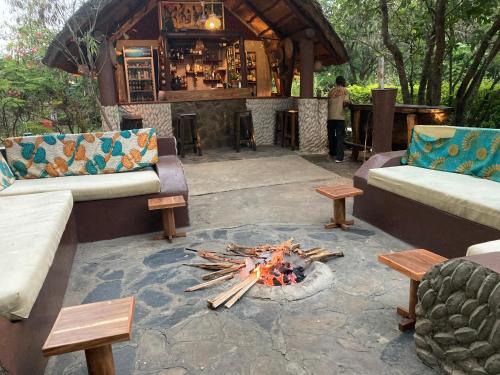
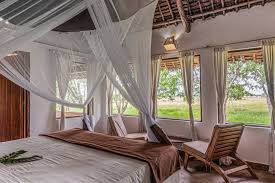
Where you sleep really matters. Choose it carefully.
Guests often tell me afterwards what they would change about where they stayed, so let me pass on what they say.
First, the middle of the day can get very hot inside a tent, and not every camp has a fan or air conditioning. If you feel the heat, ask us in advance which camps stay cooler, or which have a fan, because a hot afternoon in a tent is not fun. Second, hot water at some camps is heated on demand and can take a little time to come through, so do not expect an instant hot shower the second you turn the tap. Third, and this is a nice one, if you love the cool weather and the scenery of the Ngorongoro Crater, ask about staying right up on the crater rim rather than driving up from far away, waking up there is something many guests wish they had booked.
The bigger point is that where a camp sits, and how it is set up, changes your whole experience, more than how fancy it looks in photos. Tell us how you like to travel, whether you feel the heat, how well you sleep, how close you want to be to the animals, and we will match you to the right camp instead of just the prettiest one.
The airports and immigration test your patience.
I will be honest about this because it is the part guests find most tiring, and being ready for it helps a lot.
The airports, and Dar es Salaam in particular, can feel crowded and disorganised. You may be sent from one counter to another, asked the same questions more than once, and put through security screening several times, when you enter the building, after you get your boarding pass, and again before you board. Some travellers have even been asked to get off the plane and go back through screening. It is frustrating, but it is not personal and it is not a sign anything is wrong. The staff are doing their checks their way.
The best thing you can do is give yourself plenty of time, keep your documents easy to reach, stay calm and polite, and treat the whole thing as part of the journey rather than a fight. Rushing or getting angry only makes it slower. Arrive early, breathe, and let it take the time it takes.
The yellow fever confusion, and how to avoid it.
This trips up a lot of people at the airport, so let me make it clear.
Tanzania asks for a yellow fever vaccination certificate only if you are arriving from, or you passed through for more than about twelve hours, a country that has yellow fever, such as Kenya, Ethiopia or Uganda. If you fly in straight from Europe, the United States, or through a Gulf airport like Dubai or Doha, you do not need a yellow fever certificate. Those places do not have yellow fever, and simply changing planes there does not count.
Zanzibar makes you buy insurance, even if you already have some.
This one costs people money and time at the airport when they do not know about it, so read this carefully if Zanzibar is part of your trip.
Since October 2024, every foreign visitor to Zanzibar must buy the government inbound travel insurance. It costs about US$44 per person, and that applies to adults and children alike. It covers you for up to about ninety days. Here is the part that surprises people: you must buy this even if you already have your own travel insurance from home, because your own policy is not accepted in its place. It is a separate, compulsory payment just to enter Zanzibar.
Do not leave it to the airport. Buy it online from the official Zanzibar government portal before you travel, around the same time you sort your visa, and save the QR code they email you, because you show that on arrival. If you turn up without it, you can be held up or turned away, and buying it in the airport queue is slow and stressful. Keep your own travel insurance too, for the safari part of your trip and for bigger emergencies, this Zanzibar policy is on top of that, not instead of it. And because rules like this can change, check the current requirement before you go.
Malaria and staying healthy.
A few simple health basics that keep your trip smooth.
Malaria is present in Tanzania, on the mainland and in Zanzibar, so most travellers take anti-malaria tablets. You get these from your doctor or a travel clinic before you leave, and you cover up in the evenings and use insect repellent to avoid bites. Beyond that, drink plenty of water, because the dry air and long days leave you more tired and dehydrated than you notice, use the hand sanitiser often because of all the dust, wear sunscreen and a hat because the sun is strong even when the air feels cool, and bring any personal medicines you use, as remote camps will not have a pharmacy. See a travel clinic about six to eight weeks before you travel so there is time for any vaccines to work. Again, this is general advice, not medical advice, so let a clinic guide you for your own health.
Charging your phone and using your own devices.
People worry about this more than they need to, so here is the simple version.
Tanzania runs on 230 volts and uses the same three-pin plugs as the United Kingdom, with the older round-pin type also seen. If your device is built for 220 to 240 volts, which is most of the world outside North America, it works here with no problem, you just need a plug adapter to fit the socket. One guest even used a 220 to 240 volt hair styler at a solar-powered camp with no trouble. If you come from the United States, where the power is 110 to 120 volts, check whether your device says it handles 240 volts, and if not, bring a voltage converter, not just a plug adapter.
Charging itself is usually fine. Most camps have power, and even the ones running on solar can charge phones and cameras, though sometimes at the reception rather than in your room, and sometimes only at certain hours to save power. Bring a power bank so you are never caught with a flat phone during a long drive.
When should you come?
The short version: the dry months, from about June to October, are the most popular, with easier animal viewing, cooler dry air and a lot of dust. This is when many people come, so it is busier and prices are higher. The green months, roughly March to May and again in November, are quieter and cheaper, with lush scenery and some rain. And the festive season around December and January is peak time on the beaches. Whatever month you pick, it can be a good trip, the season just changes what you see and how much it costs. For the full picture, our guide to the best time to go breaks it down month by month, and if you are thinking of December, we have a separate guide to Tanzania in December.
My honest packing and preparation checklist
Here is everything above, boiled down to a simple list you can pack from.
- A small cushion for the bumpy roads
- Loose cotton clothes in dull colours
- A warm layer and a light windproof jacket
- Shoes you do not mind getting dusty, not white
- Hand sanitiser and wet wipes
- Sunscreen, a hat and sunglasses
- Binoculars, or a camera or phone with strong zoom
- An insulated flask for cold water
- A soft duffel bag, not a hard suitcase
- A power bank and a UK-style plug adapter
- Anti-malaria tablets and personal medicines
- Lip balm and moisturiser for the dry air
- Earplugs if you are a light sleeper
- Your Zanzibar insurance QR code, printed
- Proof of your travel route for the airport
- Patience for the airports and immigration
Planning your trip? Let us make it easy.
Tell us your dates and what you want to see, and we will plan a safari and beach trip that fits you, warn you about the things above before you pack, and quote it all clearly. No surprises.
Related guides
Common questions people ask
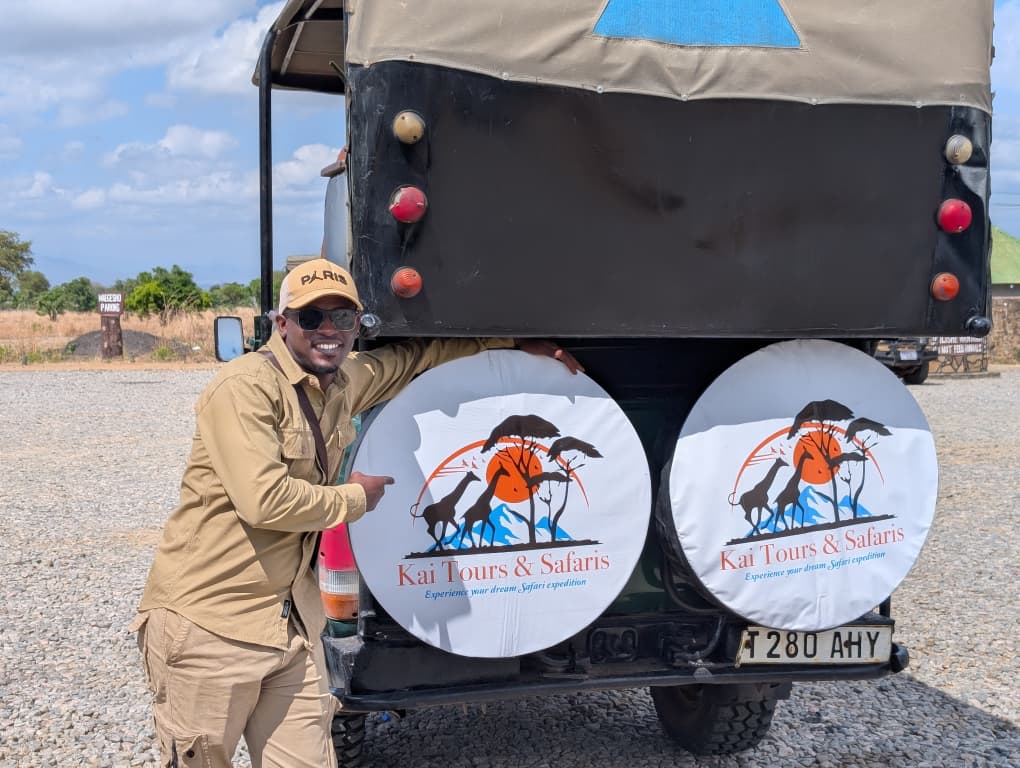
Justus Kahwa, Safari Operations Director, Kai Tours & Safaris.
Sends travellers on this trip every week, listens to what they say when they come home, and would rather tell you the honest truth before you pack than have you find it out the hard way.