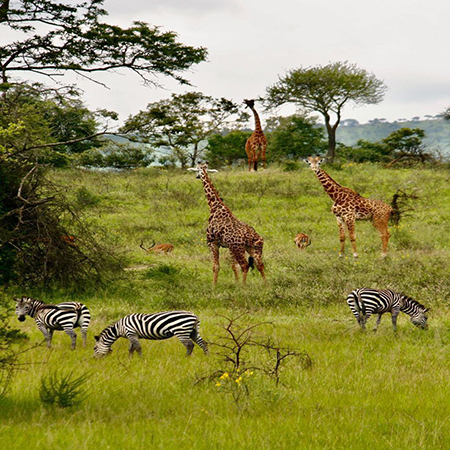
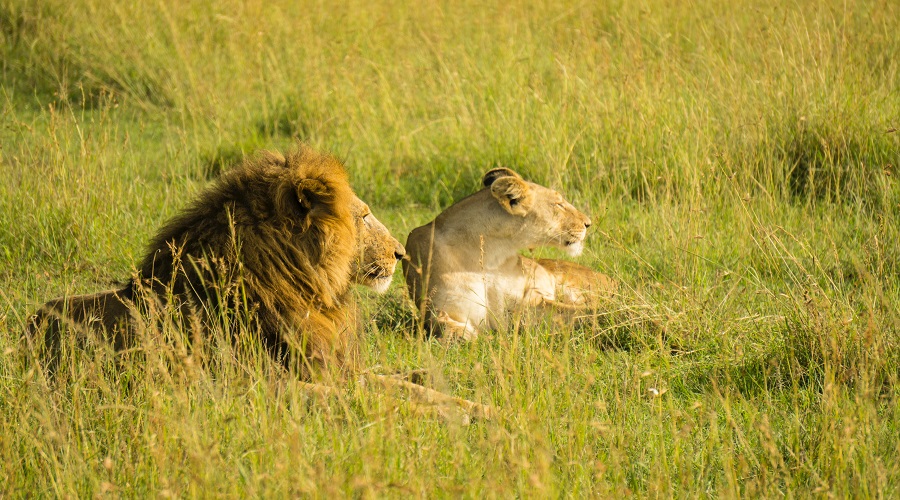
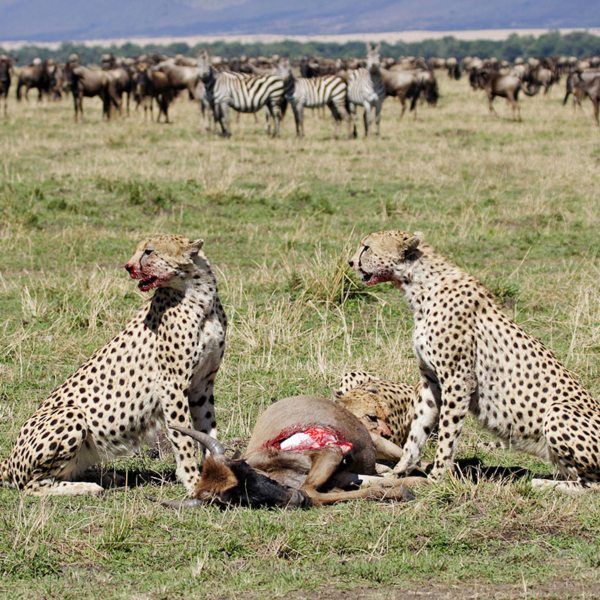
Three days is the perfect length for a first taste of Tanzania, a long weekend add-on, or a short trip from Zanzibar or Dar es Salaam. Below are our best 3-day safari packages, grouped by how you want to travel: the classic Northern Circuit from Arusha, a fly-in from Zanzibar, and a short Mikumi safari from the coast, in budget, camping, mid-range, private and luxury styles. Every one is private and tailored unless it says otherwise, priced honestly and itemised in full. Pick the one that fits, and we will build it around your dates.
On this page
- Why 3 days works for this trio of parks
- The four decisions that shape a 3-day trip
- Itinerary A: the classic circuit
- Itinerary B: the shared safari
- Itinerary C: the luxury circuit
- Itinerary D: the southern route
- Our best 3-day safari packages
- How to choose your 3-day safari
- What a 3-day safari actually costs in 2026
- Where 3-day safaris start from
- Is 3 days enough?
- What is included
- Frequently asked questions
Why 3 days works for this trio of parks
Three days will never give you the depth of a week in the Serengeti, and it is worth saying that plainly before we go further. But for Tarangire, Lake Manyara and the Ngorongoro Crater specifically, three days is a genuinely good length, not just a compromise.
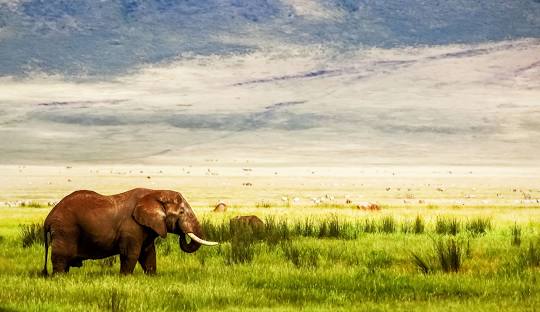
All three parks sit close together in the Manyara and Arusha region, within two to four hours of each other by road, which is exactly why this trio has become the classic short safari combination in northern Tanzania. In three days you get real time in each one: a proper game drive in Tarangire among its elephant herds and baobabs, an afternoon in Manyara's forest-to-lakeshore scenery, and a full descent into the Ngorongoro Crater, still the single best place in Tanzania to see the Big Five in one game drive. Stretch it to four or five days and you can slow the pace or add Lake Eyasi's cultural visits. Cut it to two days and you usually have to drop one park entirely. Three days is the point where you see all three properly without needing a full week off.
This is also why the trio is so often bolted onto a longer trip. It fits neatly before or after a Kilimanjaro climb, or ahead of several days on a Zanzibar beach, because it starts and ends near Arusha and Moshi, both within easy reach of Kilimanjaro International Airport.
The four decisions that shape a 3-day trip
Three days is a tight schedule, so the choices you make matter more than they would on a longer trip. Here are the four that actually change your itinerary.
Decision 1: Arusha or Moshi / Dar or Zanzibar as your starting point?
Arusha is closer to the Northern Circuit parks (Manyara, Tarangire, Ngorongoro and Serengeti ) and is the standard, most efficient base, typically saving an hour and a half to two hours of driving each way compared with Moshi.
Moshi works just as well, especially if you are combining the safari with a Kilimanjaro climb or are already staying there, but your first and last days will have more driving. Neither choice changes what you see once you are in the parks. It only changes how much of your first and last day is spent on the road.
Dar or Zanzibar Best for Fly-in to Northern circuit and they're closer to the Southern circuit parks (Nyerere(Selous), Mikumi, and Uluguru mountain hiking), where it can includes fly-in or use of sgr electric train heading to the parks, then 4x4 private cars for game drives, while enjoying view of your favourite adventures.
Decision 2: Shared vehicle or private vehicle?
A shared safari puts you in a vehicle with other travellers on a fixed schedule, which is the main reason budget and mid-range 3-day safaris cost less. A private vehicle means your own pace, your own stops and no waiting on anyone else, which matters more on a short trip than a long one, because every hour is scarce. If the budget stretches to it, private is worth prioritising on a 3-day safari precisely because time is so tight.
Decision 3: What order do you visit the three parks?
Geography gives you a few sensible loops. Starting with Manyara eases you in gently before the longer Tarangire and Ngorongoro days. Starting with Tarangire front-loads the elephants while you are freshest. Ending with the Ngorongoro Crater is the near-universal choice, because it is the most dramatic of the three and the strongest note to finish on before your final transfer back to Arusha or Moshi.
Decision 4: Do you need all three parks, or would add the biggest one?
If your schedule genuinely cannot stretch to three full park days, most experienced travellers keep Serengeti and Ngorongoro and treat Tarangire and Manyara as the ones to drop, since the including Serengeti beats all the two parks with Wildebeest Migration and Big Five casting.
Itinerary A: the classic circuit
Arusha to Lake Manyara, Tarangire, then the Ngorongoro Crater
Best for: first-time visitors starting in Arusha who want a scenic loop through all three parks at a comfortable, classic pace.
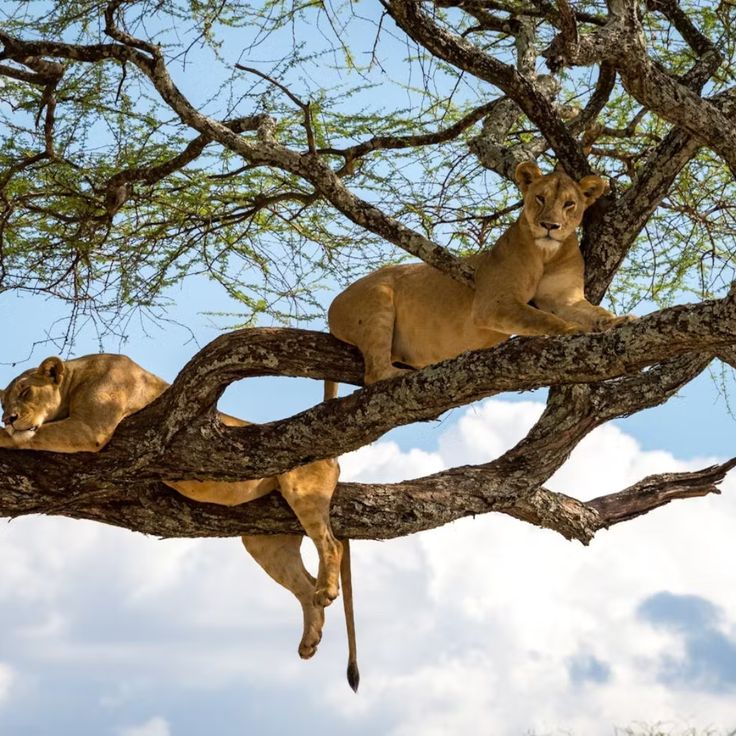
- Arusha to Lake Manyara. Collected in Arusha and driven west through the Maasai Steppe and the town of Mto wa Mbu to Lake Manyara National Park, roughly two to two and a half hours. An afternoon game drive through Manyara's groundwater forest and along the lakeshore, watching for its famous tree-climbing lions, prolific birdlife and flamingos on the lake. Overnight near Manyara or in the Karatu highlands.
- Manyara to Tarangire. A drive back south to Tarangire National Park, around two hours, arriving in time for a full afternoon game drive among Tarangire's huge elephant herds and ancient baobab trees, at their best in the dry season when the herds mass along the Tarangire River. Overnight inside or near the park.
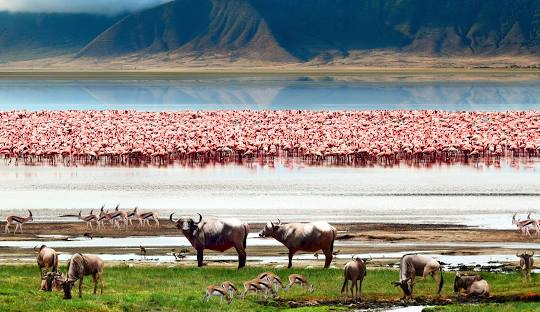
- Tarangire to the Ngorongoro Crater, then Arusha. An early departure north to the Ngorongoro Conservation Area, roughly three hours, followed by a descent to the crater floor for a game drive among dense wildlife and a strong chance of the resident black rhino, lion prides, elephant and buffalo. After the crater, the drive back to Arusha, arriving in the evening for your onward departure or overnight.
Itinerary B: the shared safari
Moshi to Tarangire, Ngorongoro, then Lake Manyara
Best for: travellers starting from Moshi who want to keep costs down with a shared vehicle and a budget or mid-range camp.
- Moshi to Tarangire. Collected in Moshi and driven via Arusha to Tarangire National Park, around three and a half to four hours in total given the extra Moshi-to-Arusha leg. An afternoon game drive among Tarangire's elephant herds and baobabs. Overnight in a budget or mid-range camp near the park, often in a shared group vehicle with other travellers.
- Tarangire to the Ngorongoro Crater. A drive north of around three hours to the Ngorongoro Conservation Area, arriving in time to overnight on the rim or in nearby Karatu, ready for an early crater descent the next morning.
- Ngorongoro Crater, then Lake Manyara and back to Moshi. An early morning descent into the crater for a game drive among its dense wildlife, back up to the rim by around midday, then a shorter stop at Lake Manyara on the drive back, roughly an hour from Karatu, for its birdlife and tree-climbing lions before the return transfer to Moshi.
Itinerary C: the luxury circuit
Arusha or Moshi to Tarangire, Lake Manyara, then the Ngorongoro Crater
Best for: travellers who want private vehicles and premium lodges throughout, including honeymooners and anyone prioritising comfort and privacy over budget.
- Arusha or Moshi to Tarangire. A private transfer to Tarangire National Park, roughly two hours from Arusha or a little longer from Moshi, followed by an afternoon game drive among the elephant herds and baobabs in a private vehicle with your own guide. Overnight at a premium lodge or luxury tented camp inside or beside the park.
- Tarangire to Lake Manyara. A private drive of around two hours to Lake Manyara, with the afternoon spent on a private game drive through the groundwater forest and along the lakeshore, watching for tree-climbing lions and flamingos. Overnight at a luxury lodge on the Rift Valley escarpment above the lake, many with sweeping views over Manyara and the valley floor, ideal for a sundowner.
- Lake Manyara to the Ngorongoro Crater, then departure. A private drive of around ninety minutes up to the Ngorongoro Highlands, followed by a private descent to the crater floor for an unhurried game drive with your own vehicle and guide, the strongest wildlife day of the trip. After the crater, a private transfer back to Arusha or Moshi for your onward departure.
Itinerary D: the southern route, from Dar es Salaam or Zanzibar
Dar es Salaam or Zanzibar to Mikumi, Nyerere (Selous) or the Uluguru Mountains
Best for: travellers based on the coast who want a short safari without the long transfer north, choosing between Mikumi's open plains, Nyerere's river wilderness or a Uluguru Mountains hike.
- Dar es Salaam or Zanzibar to your chosen park. Depending on which of the three you pick: a scenic SGR electric-train ride to Morogoro for the Uluguru Mountains and a guided hike to the Choma Waterfalls, or a road transfer of around four to five hours to Mikumi National Park or to Nyerere National Park on the Rufiji River. An afternoon activity on arrival, either a waterfall hike, an opening game drive, or a Rufiji River boat safari past hippos and crocodiles.
- A full day of game viewing. In Mikumi, a full day exploring the Mkata Floodplain, often called the Mini-Serengeti, for elephant, lion, giraffe, zebra and buffalo. In Nyerere, a full day of game drives across the wilderness with a real chance of the endangered African wild dog. A picnic lunch in the bush either way.
- A final activity, then return. A closing morning experience, a guided walking safari with an armed ranger in Nyerere, or a Maasai cultural visit near Mikumi, before the transfer back to Dar es Salaam or a connecting flight to Zanzibar to continue your beach days.
Our Best 3-Day Safari Packages
Each package below is a starting point we tailor to you. Where you see a price it is an indicative per-person figure for 2026, confirmed on enquiry, and where a trip is fully bespoke we quote it to your group and dates. We do not post inflated review scores, our real guest reviews are on our TripAdvisor page.
Prices shown are indicative per-person figures for 2026 and are confirmed on enquiry. Park fees are reviewed by the government and usually change on 1 July. Group size and season affect the final price.
What a 3-day safari actually costs in 2026
Unlike a longer Northern Circuit trip where costs vary enormously, the Tarangire, Manyara and Ngorongoro route is common enough that real current market pricing is available, so here it is rather than a vague range.
| Tier | Typical price per person | What's included |
|---|---|---|
| Shared or budget | roughly $600 to $1,000 | Group vehicle, basic to comfortable camps, all park fees, guide and meals |
| Mid-range private | roughly $1,000 to $1,500 | Private vehicle, comfortable lodges or tented camps, all park fees, guide and meals |
| Luxury private | roughly $1,800 to $2,500 | Private vehicle and guide, premium lodges, all park fees, full board and higher service levels |
| Southern route (Mikumi, Nyerere or Uluguru) | roughly $480 to $700 | Lower park fees than the north, full board, guide and transport, per person sharing |
These figures move with group size, season and exactly which camps you choose, and peak season, roughly July to October and over the holidays, sits above the green season for the same route. What stays constant across every tier are the park fees themselves. As of 2026, Tarangire's entrance fee runs around $53 to $59 per person per day depending on season, Lake Manyara is broadly similar at around $50 to $59, and the Ngorongoro Conservation Area charges roughly $70 to $83 per person per day on top of a separate crater service fee of around $295 to $300 charged per vehicle for the descent to the crater floor, where a strict time limit applies. Together these fees are one of the largest fixed costs on this route regardless of tier, which is exactly why a genuine 3-day Tarangire, Manyara and Ngorongoro safari should never be priced like a single-park day trip. Always ask for a fully itemised quote showing the park fees, the crater vehicle fee, accommodation and transport as separate lines so you can compare offers fairly.
How to choose your 3-day safari
With several options, the quickest way to narrow it down is to start with how you want to travel and where you are coming from.
By budget
Tightest budget: camping or group-join. Best value comfort: mid-range lodge. Special occasion: luxury. All see the same wildlife.
By privacy
Want your own vehicle and pace: private or any lodge option. Happy to share and save: group-join. Families and couples usually prefer private.
By starting point
From Arusha: any Northern Circuit option. From Zanzibar: the fly-in. From Dar or Zanzibar on the coast: Mikumi.
By what you want to see
Crater and elephants: the classic Tarangire, Manyara and Ngorongoro. The Serengeti plains: the Serengeti fly-in. Culture too: the Lake Eyasi fly-in.
If you are still unsure, our guides can help. Read our honest take on whether private is worth it versus a group trip, and see our safari costs and park fees guide to understand what drives the price.
Where do 3-day safaris start from?
The right package depends a lot on where your trip begins, so here is how the three starting points work.
- From Arusha. The classic base for the Northern Circuit. You drive to Tarangire, Lake Manyara and the Ngorongoro Highlands, all within a few hours, which makes a 3-day overland safari comfortable and scenic.
- From Zanzibar. If you are on the coast and short on time, flying in for a Northern Circuit safari saves the long transfer and puts you straight into the parks. Our fly-in options are built for exactly this.
- From Dar es Salaam or Zanzibar, for Mikumi. Mikumi National Park is the most accessible safari from the coast, reached by road or a short flight, with lower park fees and genuinely good wildlife. It is the natural 3-day choice if you are not heading to the north.
Is 3 days enough for a safari?
Honestly, it depends what you want from it, so let me be straight rather than just say yes.
Three days is plenty for a genuinely rewarding safari. From Arusha you can cover two or three parks and see a great deal, and the Ngorongoro Crater alone packs an extraordinary amount of wildlife into a single day. From the coast, three days suits Mikumi well. Where three days falls short is the Serengeti by road: the drive is simply too long to do the park justice in the time, which is why our Serengeti option flies in rather than drives. And if this is your one big trip to Africa, you will get more out of five to eight days, with time for the Serengeti and a gentler pace. For a fuller discussion, see our guide on whether a 3-day safari is enough. If you have the time, our 8-day Northern Circuit itinerary is the natural step up.
What is included in a 3-day safari package?
Our 3-day packages are built to be clear about what you get, so you can compare quotes fairly. Typically included:
- All park and conservation fees, and the Ngorongoro crater service fee where the itinerary uses it
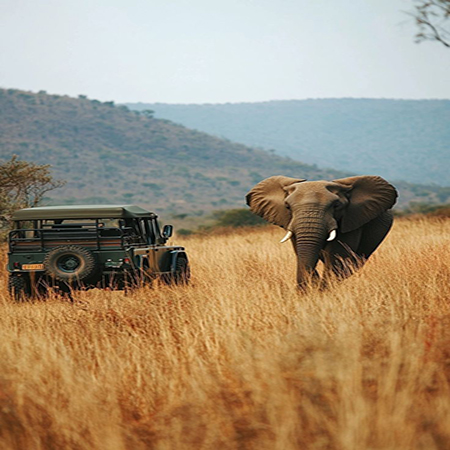
- A 4x4 safari vehicle with a pop-up roof and a professional guide
- All game drives on the itinerary
- Two nights' accommodation in your chosen style
- Meals on safari and drinking water in the vehicle
- Transfers, and internal flights on the fly-in options
Usually excluded are international flights, your Tanzania visa, travel and medical insurance, tips for your guide, and drinks beyond those provided. Every quote we send itemises all of this, so nothing hides in a lump sum.
Not sure which 3-day safari fits?
Tell us where you are starting from, your dates, your group size and your budget, and we will recommend the right 3-day package and quote it in full, with every fee shown.
Ask On WhatsApp Email usLonger safaris and travel guides
Frequently asked questions
What is the best 3-day Tanzania safari itinerary?
There is no single best 3-day itinerary, only the best one for your budget and priorities. The classic route runs Arusha to Lake Manyara, then Tarangire, then the Ngorongoro Crater, and suits most first-timers who want a scenic loop through all three parks. A shared or budget version usually starts from Moshi and runs Tarangire, then Ngorongoro, then Manyara on the way back, keeping costs down with a group vehicle. A luxury version runs Tarangire, then Manyara, then Ngorongoro with private vehicles and premium lodges throughout. This guide maps all three.
Is 3 days enough for a Tanzania safari?
Three days is enough for a genuine taste of the Northern Circuit, and it is a popular length for travellers on a tight schedule or adding a safari onto a Zanzibar or Kilimanjaro trip. It comfortably covers Tarangire, Lake Manyara and the Ngorongoro Crater, three very different parks with elephants, tree-climbing lions and the Big Five. It will not give you the depth of a 6 to 8 day Serengeti trip, but for a short, high-value introduction to Tanzania's wildlife, three days works well.
Can you do Tarangire, Manyara and Ngorongoro in 3 days?
Yes, and it is one of the most popular short safari combinations in northern Tanzania, because all three parks sit within two to four hours of each other and of Arusha. A typical 3-day itinerary gives you roughly a half to full day in each park. It is a fuller schedule than a longer trip, with more driving between stops, but it is a well-established route that operators run every week.
How much does a 3-day Tanzania safari cost in 2026?
For the classic Tarangire, Manyara and Ngorongoro route, a shared or budget safari typically runs from around $600 to $1,000 per person, a mid-range private safari from roughly $1,000 to $1,500 per person, and a luxury private safari from about $1,800 to $2,500 per person. Prices vary with group size, season and exactly which lodges you choose, and park fees plus the Ngorongoro crater vehicle fee are a fixed cost within all of them. Always ask for an itemised quote so you can see what is included.
Should I start a 3-day safari from Arusha or Moshi?
Arusha is closer to all three parks and is the more efficient starting point, typically saving one and a half to two hours of driving each way compared with Moshi. Moshi works perfectly well too, especially if you are combining the safari with a Kilimanjaro climb or are already staying there, but expect a longer first and last day on the road. Neither choice affects what you see in the parks themselves.
Do I need a private vehicle for a 3-day safari?
No, a shared safari vehicle is a common and perfectly good way to do Tarangire, Manyara and Ngorongoro on a budget, and it is the main reason budget and mid-range 3-day safaris cost less than private ones. A private vehicle gives you your own pace, your own stops and no waiting on other travellers, which matters more on a short trip where every hour counts. If budget allows, private is worth it on a 3-day safari precisely because time is so tight.
Which park is best to visit on a short Tanzania safari, Tarangire, Manyara or Ngorongoro?
All three earn their place on a 3-day itinerary for different reasons. Tarangire has the largest elephant herds and iconic baobab trees. Lake Manyara is compact, green and known for tree-climbing lions and prolific birdlife. The Ngorongoro Crater is the most wildlife-dense of the three and your best chance of the Big Five, including the rare black rhino, in a single game drive. If you can only fit two into a very tight schedule, most travellers keep Tarangire and Ngorongoro and treat Manyara as the first to drop.
What does the Ngorongoro Crater fee include on a 3-day safari?
The Ngorongoro Conservation Area charges a per-person conservation fee plus a separate crater service fee charged per vehicle for descending to the crater floor, where vehicles are limited to a set number of hours. These fees are reviewed annually and are one of the largest single costs in a 3-day Tarangire, Manyara and Ngorongoro safari, on top of the Tarangire and Manyara park fees. Reputable operators include all of these in their quoted price, so always confirm the fees are covered before booking.
Can I combine a 3-day safari with Zanzibar?
Yes, a 3-day Tarangire, Manyara and Ngorongoro safari combines very naturally with a Zanzibar beach stay, since both start and end near Arusha or Moshi, within reach of Kilimanjaro International Airport and onward flights to Zanzibar. Many of our guests do exactly this, three days of wildlife followed by several days on the coast. Tell us your total trip length and we will build the safari and the beach days around each other.
Runs the Tarangire, Manyara and Ngorongoro route every week in every tier from shared to luxury, and sequences each one around the guest's starting point and budget rather than a fixed template.