Almost everyone asks this question as "which is more comfortable, and which is more roughing it", and that framing sends them down the wrong path. On the Northern Circuit the comfort question barely matters, because both lodges and tented camps run from simple to extraordinary, and a luxury tented camp often costs more than a lodge. The questions that actually shape your trip are different: do you want the camp to follow the migration or stay in one place, do you want to hear the bush at night or sleep behind solid walls, and where exactly does it sit relative to the animals. Get those right and the lodge-or-tent label sorts itself out. This guide walks through all of it, with real examples of the best of each.
On this page
- What's the difference, really?
- Is a tented camp just fancy camping?
- Permanent vs mobile: the difference that matters most
- Which is more comfortable?
- Which gets you closer to the wildlife?
- Can you hear animals at night?
- Are tented camps safe?
- Which is better for families?
- Which is better for the migration?
- Does a lodge or tented camp cost more?
- What you'll find, park by park
- The best of each, by type
- So which should you choose?
- Frequently asked questions
What's the difference between a lodge and a tented camp, really?
Let me define both cleanly, because the words carry a lot of wrong assumptions.
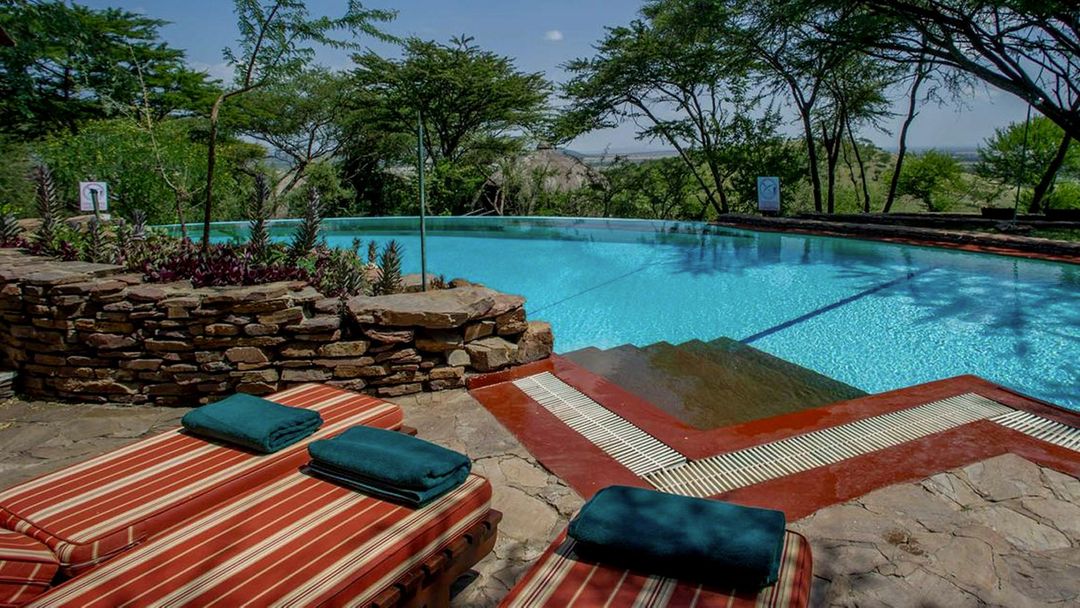
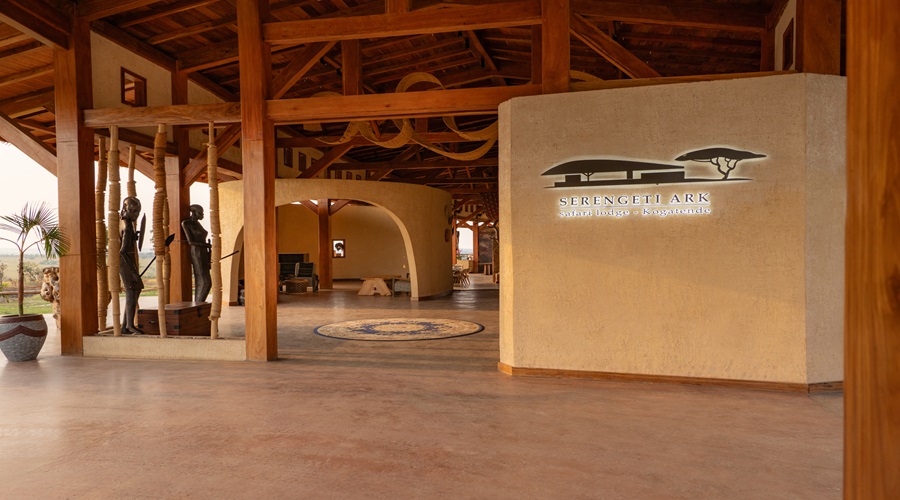
A lodge is a permanent building. Solid walls, a roof, rooms much like a good hotel, usually a restaurant and often a swimming pool, built in a fixed location that was chosen for its view or its access to a park. The lodges on the Ngorongoro Crater rim are the classic example, planted where they can look down into the crater.
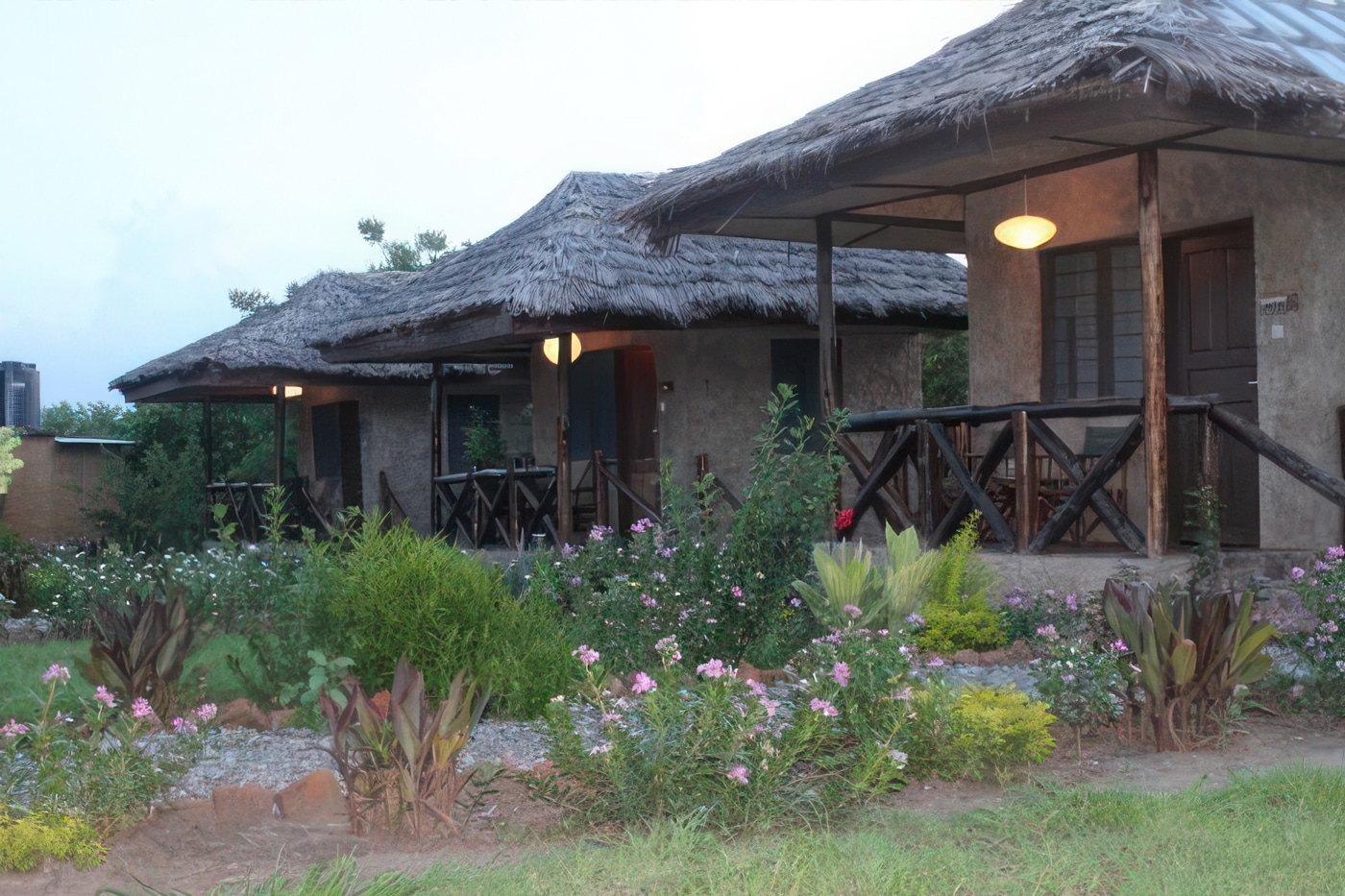
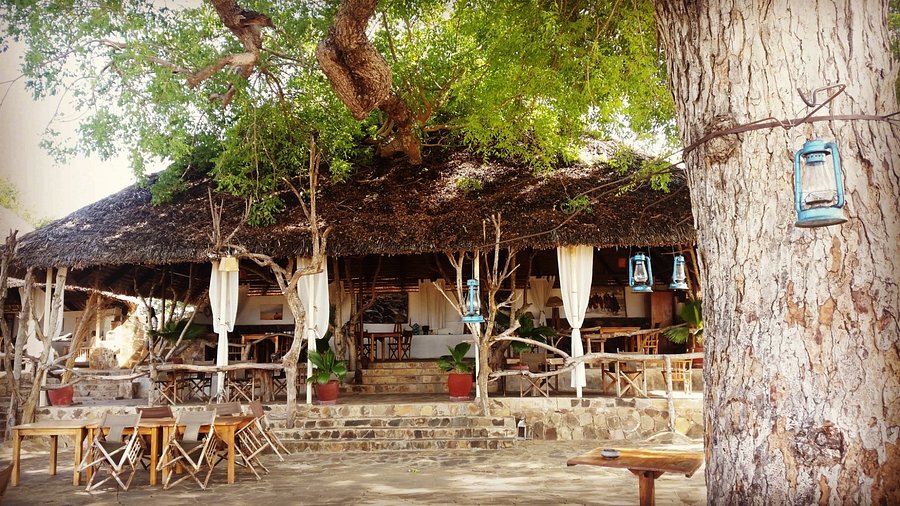
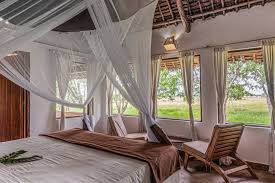
A tented camp has walls of heavy canvas rather than brick, but that is close to the only thing that separates the good ones from a lodge. Inside a proper tented camp you have a full-size bed with linen, an en-suite bathroom with a flushing toilet and hot water, furniture, a writing desk, a deck, and staff who look after you. The canvas is what people fixate on, and it is the least important part.
The distinction that actually matters sits within the tented-camp category, and most articles skip right over it. Some tented camps are permanent, pitched in one spot all year. Others are mobile, designed to be packed up and moved several times a year to stay near the wildlife. That permanent-versus-mobile split changes your trip far more than canvas-versus-brick ever will, and I will come back to it because it is the heart of this whole question.
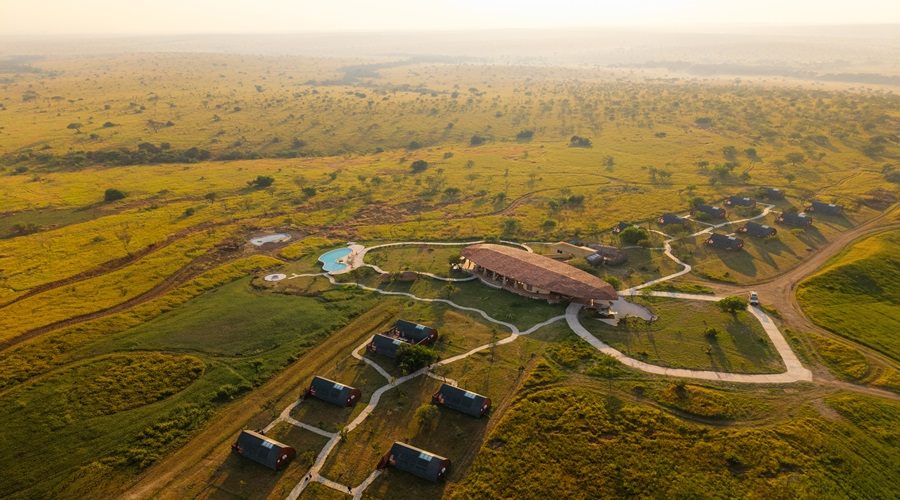
Aerial view of a luxury permanent safari lodge at the vast landscapes of Tanzania’s Serengeti.
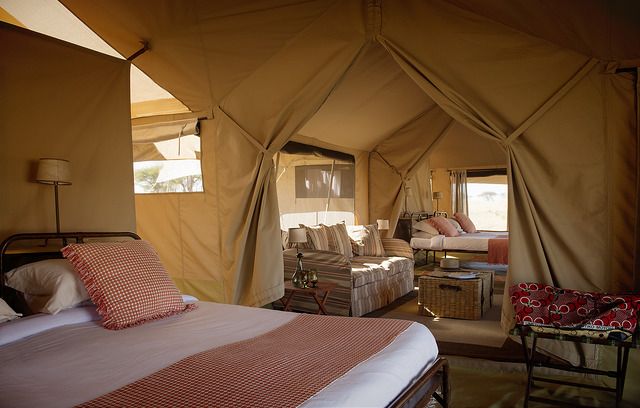
The inside view of safari tented camps showing it's bedrooms.
Is a tented camp just fancy camping?
This is the fear I have to talk people out of most often, usually someone picturing a sleeping bag and a head torch. So let me be blunt: a safari tented camp is not camping in any sense you would recognise.
You do not pitch anything, carry anything or rough anything. You arrive to a made bed, a hot shower, a proper toilet and someone bringing you tea. At the mid-range level a tented camp is comfortable and clean with everything you need. At the top level it moves into a different world altogether: canvas suites with plunge pools, four-poster beds, butler service and food that would hold its own in a city restaurant. Some of the most expensive and sought-after places to stay in the entire Serengeti are tented camps, not lodges. Singita's Sabora, styled after a 1920s safari, and the andBeyond Under Canvas camps are tents in name only.
So drop the camping association entirely. The word "tented" tells you the walls are canvas and, sometimes, that the camp can move. It tells you nothing about how comfortable you will be, which is set by the tier you choose.
Permanent vs mobile tented camps: the difference that matters most
If you read only one section of this page, read this one, because it is the distinction that changes trips and the one almost nobody explains before you book.
A permanent tented camp stays in one place all year, like a lodge but under canvas. A mobile migration camp, sometimes called a semi-permanent or seasonal camp, is built to be relocated. Two or three times a year the whole camp is packed down and set up again somewhere new, so that it stays close to the wildebeest migration as the herds move around the ecosystem.
Here is why that matters so much. The migration is always on the move, in a rough clockwise loop through the Serengeti. In the calving season, from December to March, the herds are on the southern plains, so the mobile camps sit in the south. From July to October, when the Mara River crossings happen, the same camps have moved up to the far north above the river. A mobile camp is therefore in the right place for the migration whenever you travel, because it follows the animals to you.
A permanent lodge cannot do that. It is where it is. And this is the trap I see people fall into: they book a beautiful, famous lodge, and it happens to be in the central or southern Serengeti in September when the migration is two hundred kilometres north, and they spend the trip wondering where all the wildebeest are. A well-positioned mobile camp in the right spot beats a grander permanent lodge in the wrong one, every time, if the migration is what you came for. Camps like Ubuntu, the andBeyond Under Canvas camps, Nomad's Serengeti Safari Camp and the mid-range Kati Kati camps all work this way, moving south for calving and north for the crossings. For the full month-by-month picture of where the herds are, see our best time and migration guide.
Which is more comfortable, a lodge or a tented camp?
People want a clean answer here and I cannot honestly give them one, because the question compares the wrong things.
Both lodges and tented camps run the full range from simple to spectacular. At the budget end, a basic lodge with solid walls usually feels a little more substantial than a basic tent, especially if the weather turns. At the luxury end, the two are level, and a top tented camp with a plunge pool and butler service is as comfortable as anything on four solid walls, sometimes more so. Comfort tracks the tier and the price, not the building material. A luxury tent beats a budget lodge comfortably, and a luxury lodge beats a budget tent, which tells you the walls are not the variable that matters.
There is one genuine exception worth knowing. The Ngorongoro Crater rim sits high and gets genuinely cold at night, and there a solid lodge holds warmth better than canvas. It is one of the few places on the circuit where I will nudge people toward a lodge partly for the walls themselves.
Which gets you closer to the wildlife?
This is where tented camps, especially the mobile ones, tend to pull ahead, though the reason is location rather than canvas.
Tented camps are often set deeper inside the parks and conservancies, in spots a permanent building could not easily go, and they are usually unfenced, so the bush runs right up to your deck. Waking to find zebra grazing between the tents, or an elephant ambling past at breakfast, is normal. Because the good ones are positioned for the wildlife first and the view second, you are frequently closer to the action from a camp than from a lodge that was built where the road and the plumbing were easiest.
The wider point, and I keep coming back to it, is that location beats everything. A camp or lodge in the right area at the right time, close to where the animals are, will always give you a better safari than a fancier place in the wrong spot. When we plan where you sleep, we start with where the wildlife will be on your dates and work back to the accommodation, not the other way round.
Can you hear animals at night in a tented camp?
Yes, and this is the part I find people either love the most or worry about the most, so here is the honest version.
Canvas does not block sound the way brick does, so at night in a tented camp you hear the bush in full. Lions calling to each other across the plain, which carries for miles and is a sound you feel in your chest. Hyena whooping. Hippo grunting down at the river. Sometimes something large moving past close enough that you hear the grass. For most guests this is the single most memorable part of the trip, the thing that makes them feel they are actually in the wild rather than looking at it through glass.
I will be honest that a small number of people find it hard to sleep through the first night, lying awake wondering how close that lion is. It is usually further than it sounds, and by the second night almost everyone is sleeping soundly and a little in love with it. But if deep silence and total insulation from the outside are what let you rest, a solid-walled lodge is the kinder choice, and there is no shame in knowing that about yourself.
Are tented camps safe?
This is one of the most common questions I get, and the honest answer is that yes, a well-run tented camp is very safe, and understanding how it works removes most of the worry.
Camps are unfenced on purpose, so wildlife can and does wander through, and that closeness is part of what you are paying for. Safety comes from a few simple, well-established rules rather than from walls. At night you stay inside your tent with it zipped shut. When you want to go to dinner or back to your tent after dark, you do not walk alone: you call an askari, a camp guard, who escorts you with a torch, because animals are far more active and harder to see at night. During the day you move around normally. That is really the whole system, and it has kept guests safe across the industry for decades.
The animals themselves generally treat the tents as uninteresting parts of the landscape and walk past without a glance. A zipped tent is not something a passing buffalo or lion has any interest in. Follow the rules, use the escort and stay zipped at night, and a tented camp is a safe place to sleep in the middle of the wilderness.
Lodge vs tented camp: which is better for families?
For families this is worth thinking through carefully, because the right answer shifts with the ages of your group.
For families with young children, a lodge is often the easier choice. Solid walls feel more reassuring to a nervous small child at night, there is usually a pool to burn off energy in the middle of the day, and there is more space to spread out. It is also worth knowing that some tented camps set minimum age limits, so not every camp takes young children in the first place.
For families with older children and teenagers, a tented camp is usually a hit, because the adventure of it, the canvas, the sounds at night, the sense of really being out there, lands perfectly at that age. Plenty of families do the sensible thing and mix the two: a comfortable lodge for the Ngorongoro Crater and the first night or two while everyone finds their feet, then a tented camp deeper in the Serengeti once the group has settled and the children are excited rather than anxious. When we plan a family trip we match the accommodation to the ages and the temperament of the group, which is far easier on a private trip where the whole plan is yours.
Which is better for the migration?
For the migration specifically, the answer is clear and it is worth stating plainly: a mobile tented camp, in the right place for your dates.
As covered above, the mobile camps relocate through the year to stay beside the herds, sitting in the southern Serengeti for the calving and moving up to the Mara River in the north for the crossing season. Book one of those, positioned correctly for when you travel, and you are sleeping right beside the action, sometimes close enough to hear it. Book a permanent lodge and you are tied to its fixed location, which may or may not be where the animals are that month. This is the single biggest reason the accommodation choice is not just about taste. For a migration trip it directly affects whether you see the thing you came for. Our 8-day itinerary guide includes a migration-focused route built around exactly this idea.
Does a lodge or a tented camp cost more?
Neither is reliably cheaper than the other, and anyone who tells you tents are the budget option has not looked at the top of the market.
The two overlap almost completely. As a rough guide to 2026 market rates, mid-range lodges and permanent tented camps sit in a similar band per person per night, comfortable luxury runs higher, and the most expensive properties in the Serengeti include both ultra-luxury lodges and luxury mobile camps. In fact the well-positioned mobile migration camps in peak crossing season are among the priciest beds in the country, precisely because location in that window is worth so much. So the cost is driven by the tier, the location and the season, not by whether the walls are canvas or brick. If you want to understand how accommodation fits into the total price of a trip, we lay it all out in our guide to what an 8-day luxury safari costs, and the underlying park and concession fees in our costs and fees guide.
What you'll actually find, park by park on the Northern Circuit
The mix of lodges and camps is not the same in every park, so here is what to expect where.
Serengeti
The Serengeti has the widest choice of anywhere. The central Seronera area has permanent lodges and permanent camps with reliable year-round game viewing. The north, around Kogatende and Lamai, has both permanent camps with river views and the mobile migration camps that gather there for the crossings. The south fills with mobile camps in the calving season and empties out afterwards. Because the park is so large and the migration moves, the Serengeti is where the permanent-versus-mobile choice matters most.
Ngorongoro Crater
The crater is different. The rim sits high and cold, and it is dominated by permanent lodges rather than tented camps, from the mid-range Serena and Sopa lodges to ultra-luxury names like the andBeyond Crater Lodge. There are a few camps up here, but the altitude and the cold make solid walls the sensible default. For most people a crater-rim lodge is the natural choice for the one or two nights they spend here. Our Ngorongoro Crater guide covers the area in full.
Tarangire and Lake Manyara
Tarangire has a good mix of lodges and permanent tented camps, many with views over the river valley and its elephants. Lake Manyara leans toward lodges, some perched on the Rift Valley escarpment above the lake. Neither has much in the way of mobile camps, because neither is on the migration route, so here the choice really is down to your taste and budget rather than to following animals.
The best lodges and tented camps on the Northern Circuit, by type
To make the categories concrete, here are well-known examples of each kind of accommodation on the Northern Circuit. This is to show what each type looks like in the real world, not a ranked list, and we match the specific property to your trip, budget and dates.
| Type | What it is | Well-known examples |
|---|---|---|
| Ultra-luxury permanent lodge | Solid-built, top-tier, fixed location | Four Seasons Serengeti, Singita Sasakwa, andBeyond Ngorongoro Crater Lodge |
| Crater-rim lodge | Permanent lodge on the Ngorongoro rim | Ngorongoro Serena, Ngorongoro Sopa |
| Mid-range permanent lodge or camp | Comfortable, reliable, fixed | Serengeti Serena, Serengeti Sopa, Kubu Kubu |
| Permanent luxury tented camp | Fixed, canvas, high-end | Singita Sabora, Sayari Camp, Dunia Camp |
| Mobile migration camp | Semi-permanent, relocates with the herds | andBeyond Under Canvas, Nomad Serengeti Safari Camp, Ubuntu |
| Mid-range mobile camp | Moves with the migration, comfortable, better value | Kati Kati, and similar seasonal camps |
Property names are given as examples of each category and can change ownership or season. We confirm the exact camps and lodges when we build your itinerary, and choose them to match your budget and where the wildlife will be.
So which should you choose?
Here is how I would steer you, based on what you care about most.
- Coming for the migration? A well-positioned mobile tented camp, without much hesitation. Location beats grandeur here.
- Travelling with young children, or comfort-first? Lean toward lodges, especially for the crater and the first nights, with their solid walls and pools.
- Want the immersion, the sounds at night, the romance of canvas? A tented camp, and you will probably remember it as the best part.
- Staying on the Ngorongoro Crater rim? A lodge, for the warmth and the view.
- Not sure, or want the best of both? Mix them across the trip. This is what most of our guests do and what I usually recommend: a crater-rim lodge for a night or two, then a tented camp, ideally a mobile one, in the Serengeti.
Let us match the right camps and lodges to your trip
Tell us your dates, your group and how you like to travel, and we will build an itinerary with the accommodation chosen to suit you and positioned for where the wildlife will actually be, whether that means a lodge, a tented camp, or a mix of both.
Plan it on WhatsApp Email usRelated Trips
Frequently asked questions
What is the difference between a safari lodge and a tented camp?
A lodge is a permanent building with solid walls, much like a hotel, often with a pool and full facilities, frequently in a fixed spot with a good view such as the Ngorongoro Crater rim. A tented camp has canvas walls but a real bed, a proper en-suite bathroom with a flushing toilet and hot water, and a deck. The important split within tented camps is between permanent ones that stay put and mobile ones that relocate through the year to follow the wildlife. The canvas is not the point. Permanence and location are.
Is a tented camp just camping?
No. A safari tented camp is nothing like pitching your own tent. You get a full-size bed with linens, an en-suite bathroom with a flushing toilet and a hot shower, furniture, a deck and full service, all under heavy canvas. At the luxury end, tented camps have plunge pools, butler service and cuisine that rivals any lodge, and they often cost more than one. The tent refers to the canvas walls, not to roughing it.
Are tented camps safe from animals at night?
Yes, when run properly they are very safe, and thousands of guests stay in them every night. Camps are unfenced, so wildlife can wander through, which is part of the experience, but you stay zipped inside your tent at night and an askari, a camp guard, escorts you to and from dinner after dark. The simple rules are to stay in your tent at night, use the escort, and keep the tent zipped. Follow them and the risk is minimal. Animals passing through camp generally ignore the tents entirely.
Can you hear animals at night in a tented camp?
Yes, and for many people it is the best part. Through canvas you hear the bush at night in a way solid walls block out entirely: lions calling, hyena whooping, hippo grunting, the odd branch cracking nearby. Most guests find it thrilling and it is the immersion they came for. A few find it hard to sleep through the first night or two. If deep quiet and total insulation matter to you, a lodge with solid walls will suit you better.
Which is better for seeing the migration, a lodge or a tented camp?
A mobile tented camp, almost always. Mobile migration camps are semi-permanent and relocate two or three times a year to stay beside the herds, sitting in the southern Serengeti for the calving season and moving north above the Mara River for the July to October crossings. A permanent lodge cannot follow the animals, so a wonderful lodge in the wrong region at the wrong time means you miss the action. For a migration-focused trip, a well-positioned mobile camp beats a grander lodge in the wrong place.
Is a lodge or a tented camp better for families?
For families with young children, a lodge is often the easier choice: solid walls feel more reassuring, there is usually a pool and more space, and some camps set minimum age limits. Older children and teenagers usually love the adventure of a tented camp. Many families mix the two across a trip, a lodge for the crater and the early nights, a tented camp deeper in the Serengeti once everyone has settled. We match the choice to the ages and comfort of your group.
Which is more comfortable, a lodge or a tented camp?
There is no clean answer, because both span from simple to extraordinarily comfortable. At the budget end a lodge usually feels more solid than a basic tent. At the luxury end the two are equal, and a top tented camp with a plunge pool and butler service can be more comfortable and more expensive than a lodge. Comfort is set by the tier you choose, not by whether the walls are brick or canvas. On the cold Ngorongoro Crater rim, though, a solid lodge does hold warmth better.
Do tented camps have bathrooms and electricity?
Yes. A proper safari tented camp has an en-suite bathroom with a flushing toilet and a hot shower, either plumbed or a bucket-style safari shower filled with hot water on request. Electricity is usually provided by solar power or a generator, enough to charge cameras and phones and light the tent, though some remote camps limit power to certain hours to protect the quiet. Mobile camps are simpler than permanent lodges but still comfortable and fully serviced.
Does a lodge or a tented camp cost more?
They overlap heavily, so one is not automatically cheaper than the other. Mid-range lodges and permanent tented camps sit in a similar band, while the most expensive properties in the Serengeti include both ultra-luxury lodges and luxury mobile camps, especially the well-positioned migration camps in peak season. The bigger cost drivers are the tier, the location and the season, not simply lodge versus tent. Our safari cost guide explains how accommodation fits into the overall price.
Places guests in lodges and tented camps across the Northern Circuit every week, chooses each by where the wildlife will be rather than by the brochure, and will happily talk you out of a famous lodge in the wrong spot.