Quick Answer
The eight-day Northern Circuit is the classic Tanzania safari. It covers the four great parks of the north, Tarangire, Lake Manyara, the Serengeti and the Ngorongoro Crater, with three nights in the Serengeti where most of the big wildlife moments happen. Eight days is long enough to see them all properly without rushing.
You can do the exact same route at three levels: budget camping from about $1,800 per person, mid-range lodges from about $3,300, or luxury from about $6,500. The wildlife is identical at every level. What changes is where you sleep. This guide walks you through every park, the lodges, the real costs, and the questions people ask me most.
Want to Explore more: Get Your Group Sharing Safaris.
On This Page
- Choose your level: budget, mid-range or luxury
- Why eight days on the Northern Circuit?
- Every park on the Northern Circuit, explained
- How the eight days fit together
- Where you will stay
- What does an 8-day Northern Circuit safari cost?
- What wildlife will you see?
- When is the best time to go?
- Which 8-day Northern Circuit safari is right for you?
- Frequently Asked Questions
Highlights
- Four great parks in one trip: Tarangire, Lake Manyara, Serengeti and Ngorongoro Crater
- Three full nights in the Serengeti, where most big wildlife moments happen
- Dawn descent into the Ngorongoro Crater, your best chance at black rhino
- Same route at three levels: budget camping, mid-range lodges or luxury
- Prices from $1,800 to $6,500 per person, based on two sharing
- Government park fees included and itemised in every quote
- Planned and run by a Tanzanian operator, not a call centre
- Optional fly-in leg and Zanzibar beach extension
Choose your level: budget, mid-range or luxury
Same route, same parks, three ways to sleep
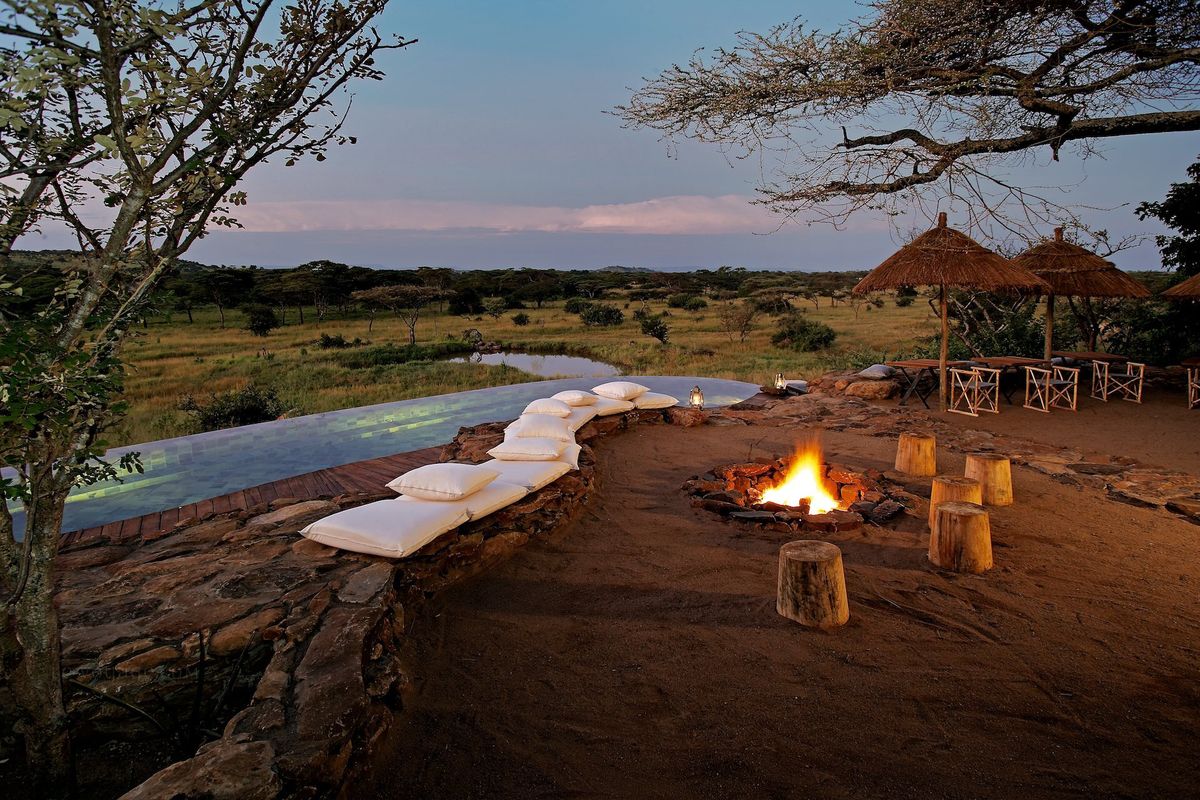
This is the first real decision, and it is simpler than it looks. The route and the parks stay the same. Only your accommodation and your comfort change. Here are the three versions side by side, each with its own full itinerary and pricing.
- Budget Camping, from $1,800 per person: tents at park campsites, a safari cook, shared vehicle. The same animals, closest to the wild, at the lowest honest price. See the budget safari
- Mid-Range, from $3,300 per person (most popular): comfortable lodges and tented camps, private 4x4, en-suite rooms and good food. The sensible middle most guests choose. See the mid-range safari
- Luxury, from $6,500 per person: premium lodges and camps, private 4x4, fly-in options and fine dining. For honeymoons and trips worth doing in style. See the luxury safari
| Budget | Mid-range | Luxury | |
|---|---|---|---|
| From, per person | $1,800 | $3,300 | $6,500 |
| Sleep in | Tents at campsites | Lodges and tented camps | Premium lodges and camps |
| Bathroom | Shared | En-suite | En-suite, often a plunge pool |
| Vehicle | Shared 4x4 | Private 4x4 | Private 4x4 |
| Fly between parks | No | Optional | Optional, common |
| Best for | Adventurous, cost-first | Most travellers | Comfort-first, honeymoons |
Why eight days on the Northern Circuit?
I get asked whether eight days is too long or too short, and my honest answer is that it is close to ideal. The four parks are spread far apart, and the drives between them are long. A five or six-day trip means either cutting a park or spending most of your safari in the vehicle getting from one to the next.
Eight days fixes that. It gives you a proper day in Tarangire, a morning in Lake Manyara, three full nights in the Serengeti, which is the richest wildlife area in the country, and a dawn descent into the Ngorongoro Crater to finish. You get variety, you get depth in the Serengeti, and you are not exhausted by constant travel. If you have only a few days, a shorter focused trip is better than cramming four parks in. If you have more than eight days, adding Zanzibar or a quieter park is the natural next step.
Every park on the Northern Circuit, explained
What each stop is really like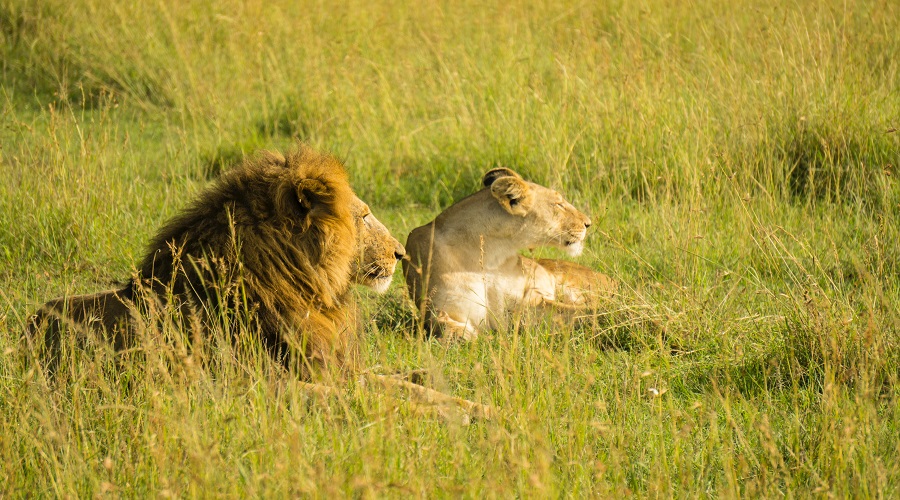
Each park earns its place for a different reason. Here is what each one is really like, so you know what you are getting at every stop.
Stop 1: Tarangire National Park.
Tarangire is elephant country, and in the dry season it holds some of the largest elephant herds in Tanzania. The park is dotted with ancient baobab trees, some of them over a thousand years old, and the Tarangire River draws animals in from a wide area when the land is dry. You will also look for lion, giraffe, zebra and an extraordinary range of birds. Tarangire is quieter than the Serengeti, which is part of its charm, and it makes a strong, gentle opening to the circuit.
- Best for: elephants, baobabs, birdlife, fewer crowds.
- Strongest: dry season, June to October.
Stop 2: Lake Manyara National Park.
Manyara is small but full of variety. You drive in through a lush groundwater forest alive with baboons and blue monkeys, pass a hippo pool, and come out along the shore of Lake Manyara, where flamingos and other waterbirds gather when the water level is right. The park is famous for its tree-climbing lions, though I will be honest with you that they are an uncommon sight and should be a bonus, not an expectation. Manyara is usually done as a half day, and it adds a different, greener landscape to the trip.
- Best for: forest, birdlife, hippos, a change of scenery.
- Strongest: good year-round, flamingos depend on water.
Stop 3: Serengeti National Park.
The Serengeti is the heart of the trip and the reason most people come to Tanzania. Its name means endless plains, and that is exactly what they are. This is the stage for the Great Migration, where over a million wildebeest and hundreds of thousands of zebra move in a year-round loop following the grass. It is also the best place on the circuit for big cats: lion prides in the Seronera valley, leopard in the river acacias, and cheetah out on the open plains. Three nights here is not too many. Where the migration is depends on the month, and your guide works the park around it.
- Best for: the migration, big cats, open plains, sheer scale.
- Strongest: depends on what you want. River crossings July to September, calving January to March.
Stop 4: Ngorongoro Crater and Conservation Area.
The Ngorongoro Crater is the collapsed caldera of a vast ancient volcano, and its floor holds one of the densest concentrations of wildlife in Africa. In a single morning you can see lion, elephant, buffalo, and the endangered black rhino, which makes it the best place on the whole circuit for a shot at the Big Five in one place. The rhino are usually at a distance, so binoculars matter. The crater is busy, because everyone wants to be there, but it is busy for a reason. It is a powerful note to end a safari on. The wider Conservation Area also holds Maasai communities who live alongside the wildlife.
- Best for: Big Five in one place, black rhino, dense game, dramatic setting.
- Strongest: good year-round, early morning is best.
How the eight days fit together
The route builds up gently and saves the best for the end. A typical flow is Tarangire first, then Lake Manyara and up into the highlands, then down into the Serengeti for three nights, then back to finish on the Ngorongoro Crater before returning to Arusha. Starting small and ending on the Serengeti and the crater means the trip keeps getting better rather than peaking early.
There are two route choices worth knowing. First, direction: some operators run it in reverse, but most build toward the Serengeti. Second, fly or drive: the road between the Ngorongoro Highlands and the Serengeti is long and rough, so flying that leg is the single biggest comfort upgrade on the circuit, at extra cost. For a full side-by-side of the main route options, see our guide to the best 8-day Northern Circuit itineraries. The exact day-by-day for each comfort level is on the three tier pages linked above.
Where you will stay
Same areas at every level
Your lodges depend on the level you choose, but the areas are the same. On every version you overnight near Tarangire, in the Karatu and Ngorongoro Highlands area, and in the central Serengeti, with a night in Arusha at the start. Here is what that looks like at each level.
| Area | Budget | Mid-range | Luxury |
|---|---|---|---|
| Arusha | Guesthouse or campsite | Comfortable town lodge | Premium lodge |
| Tarangire | Public campsite | Tented lodge | Luxury tented camp |
| Karatu / Highlands | Campsite | Farm of Dreams or similar | Luxury lodge with a view |
| Central Serengeti | Public campsite, Seronera | Tukaone Camp or similar | Luxury tented camp |
Whatever the level, one rule holds: location matters as much as comfort. A camp close to the game-viewing areas means more time with animals and less time driving to reach them. On every version of this trip I choose properties for where they sit, not just how they look. If a named property is full for your dates, I replace it with one of the same standard and tell you exactly what changed.
What does an 8-day Northern Circuit safari cost?
Real prices and the park fees behind them
The honest headline is that the same route costs very different amounts depending on where you sleep. Budget camping starts around $1,800 per person, mid-range lodges around $3,300, and luxury around $6,500, each based on two people sharing. Solo travellers pay more because the room and vehicle are not shared, and families or groups usually bring the per-person cost down.
The one part that does not change for anyone is park fees. They are set by the Tanzanian government, not by any operator, and they are a large share of every honest quote, even the budget one. The single most common complaint I hear from travellers is discovering fees they did not understand, so here they are in the open. These are approximate 2027 rates per adult, including the 18 percent VAT.
| Fee | Approx. rate (USD) | How it is charged |
|---|---|---|
| Serengeti entry | $70.80–$82.60 | Per adult, per 24 hours |
| Ngorongoro Conservation Area entry | $70.80 | Per adult, per entry |
| Ngorongoro Crater service fee | $295 per vehicle | Per vehicle, per descent |
| Tarangire entry | $53–$59 | Per adult, per 24 hours |
| Lake Manyara entry | $53–$59 | Per adult, per 24 hours |
| Public campsite (budget trips) | About $35 per adult | Per night |
When you get our quote, every one of these lines is itemised, so you can see exactly where your money goes. For a deeper look at pricing, our guide to what an 8-day safari really costs breaks it down further.
Want to Explore more: What an 8-day safari really costs.
What wildlife will you see?
Realistic odds, park by park
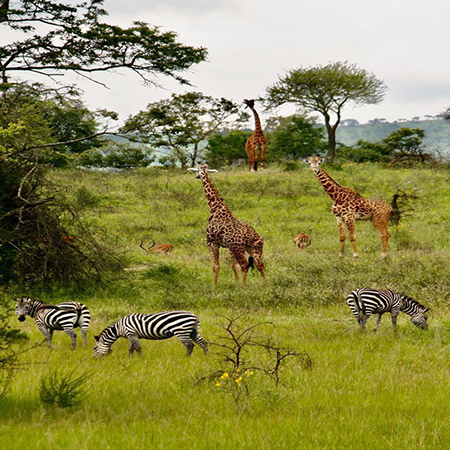
Across these four parks you are near-certain to see lion, elephant, buffalo, zebra, giraffe, wildebeest and hippo. Leopard is a realistic hope, with your best odds in the Serengeti's Seronera area. Cheetah is possible out on the open plains. Black rhino is the hard one, and the Ngorongoro Crater is your single best chance, usually at a distance.
Seeing all of the Big Five in one eight-day trip is genuinely possible on this route, but no honest operator can guarantee it, and you should be wary of anyone who does. The animals keep their own schedule. What a good guide and a sensible route do is stack the odds in your favour. For the realistic, honest odds park by park, and for timing the Great Migration, the guides below go much deeper.
Want to Explore more: Where the migration is, month by month in 2027.
When is the best time to go?
The best month depends on what you want to see
There is no single best month, only the best month for what you want to see. Here is the honest version.
Dry season, late June to October. The easiest game viewing of the year. Short grass, animals gathered at water, and the famous Mara River crossings in the northern Serengeti from roughly July to September. This is peak season, so it is the busiest and the most expensive, and the best camps book up early.
Calving season, January to March. The migration herds are on the southern Serengeti plains, and around half a million wildebeest calves are born in a few weeks. That draws the predators, so this is a strong time for big-cat action, with fewer crowds than the July peak.
Green season, November and April to May. The short rains in November and the longer rains from April bring lush green country, dramatic skies and the best prices of the year, with far fewer vehicles. You trade some ease of viewing for a quieter, greener, cheaper safari. April and May see the heaviest rain. For the full month-by-month picture, see our best time to go guide and the 2027 migration map.
Want to Explore more: Best time to go guide.
Which 8-day Northern Circuit safari is right for you?
- Choose budget camping if. you care more about being in the wild than about comfort at night, you are happy with tents and shared bathrooms, and you want the lowest honest price (from about $1,800).
- Choose mid-range if. you want comfortable lodges and tented camps with en-suite rooms and a private 4x4 at a sensible price (from about $3,300). This is the sensible middle most guests choose.
- Choose luxury if. the lodge and the service are part of why you travel, for a honeymoon or a trip worth doing in style, with premium camps, fine dining and fly-in options (from about $6,500).
- Choose to drive if. you want to watch the landscape change, game view along the way, and keep the cost down.
- Choose to fly the Serengeti leg if. you would rather skip the longest, roughest road, gain time in the parks, and accept the extra cost. Many mid-range and most luxury travellers fly at least one leg.
Let me help you plan it
Tell me your dates, your budget and what you most want to see, and I will tell you honestly which level and which month fit you, then send a clear, itemised quote. You deal with me directly, not a call centre. <a href="https://wa.me/255672530415?text=Hi%20Justus,%20I'd%20like%20help%20planning%20an%208-day%20Northern%20Circuit%20safari">Message Justus on WhatsApp</a>
Ask on WhatsApp Email usFrequently asked questions
Justus Kahwa
Compares Tanzania safari options every week and would rather point you to what actually suits your trip than the one that is easiest to sell. Currently covers choose your level: budget, mid-range or luxury.