Quick Answer
The Great Migration is not one event in one month. About 1.4 million wildebeest, with hundreds of thousands of zebra and gazelle, move in a circle through the Serengeti all year, following the rains. There is no bad month, but there is a right month for what you want to see.
Go in February or March for calving on the southern plains. Go in July to September for the Mara River crossings in the northern Serengeti. Go in June or early July for the Grumeti River in the west. Stay at least three nights in the north if crossings are your goal, because the herds can wait at the river for days before they cross.
This guide shows where the herds usually are in each month, what you can honestly expect, and how to plan the trip. The herds follow the rain, so timing can move by weeks. If you want help, send us your dates and we will check where the herds are before you book. For the full itinerary, see our Great Wildebeest Migration safari Packages.
On This Page
- What the Great Migration really is?
- Where are the herds, month by month
- Calving season: February and March in the south
- River crossings: Grumeti and Mara
- Which part of the migration is right for you?
- How many days and where to stay?
- Tanzania or Kenya for the migration?
- Plan the rest of your trip
- Frequently Asked Questions
- About 1.4 million wildebeest, 200,000 to 300,000 zebra and 300,000 or more gazelle make the journey
- The herds move in a circle through the Serengeti all year, following the rains
- Calving runs from late January to March, with about 500,000 calves born each year
- Up to about 8,000 calves can be born in a single day at the peak
- Grumeti River crossings usually start in June and July in the west
- Mara River crossings are usually from July to September in the northern Serengeti
- Crossings are unpredictable, so plan at least three nights in the north
- Book early: the best camps fill many months ahead
What the Great Migration really is?
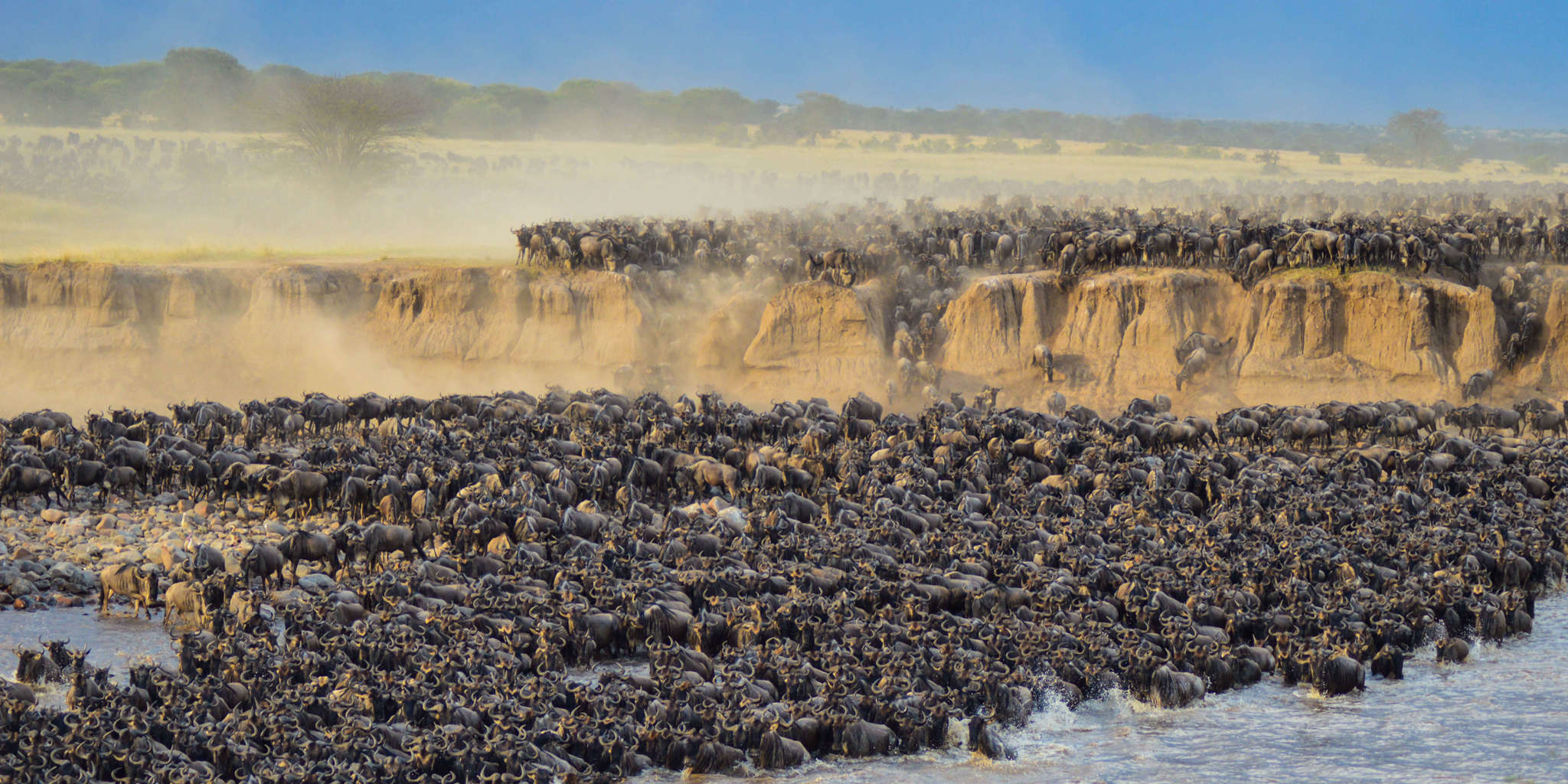
The Great Migration is the year-round movement of wildebeest, zebra and gazelle between the southern plains of the Serengeti and the Maasai Mara in Kenya. It is a loop, not a one-way trip. The herds follow the rain and the fresh grass, so they are always moving, and a few weeks of difference in the rains can shift the whole schedule.
Published figures put the herd at about 1.4 million wildebeest, with 200,000 to 300,000 zebra and 300,000 or more gazelle. About 500,000 calves are born each year. Predators such as lion, leopard, cheetah and hyena follow the herds, and crocodiles wait at the rivers, so the migration is as much about the hunters as the herds.
Where are the herds, month by month
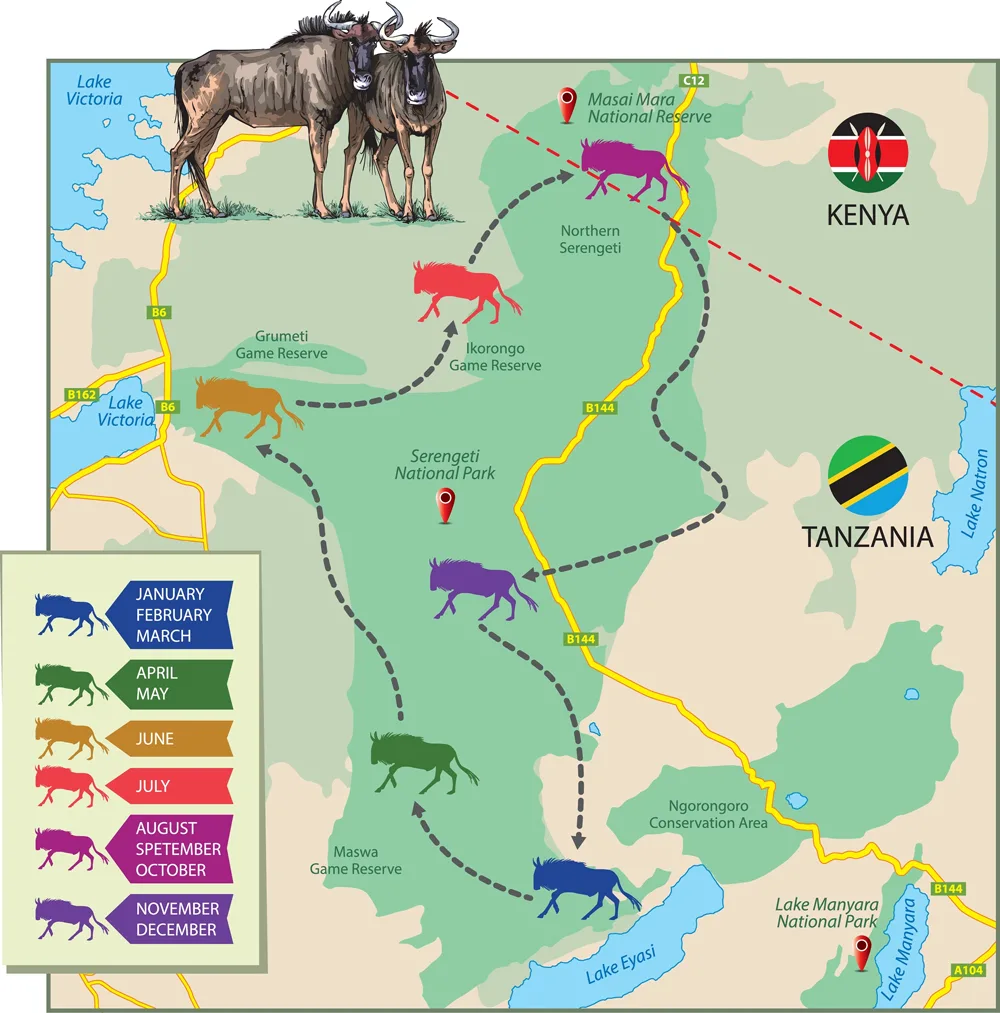
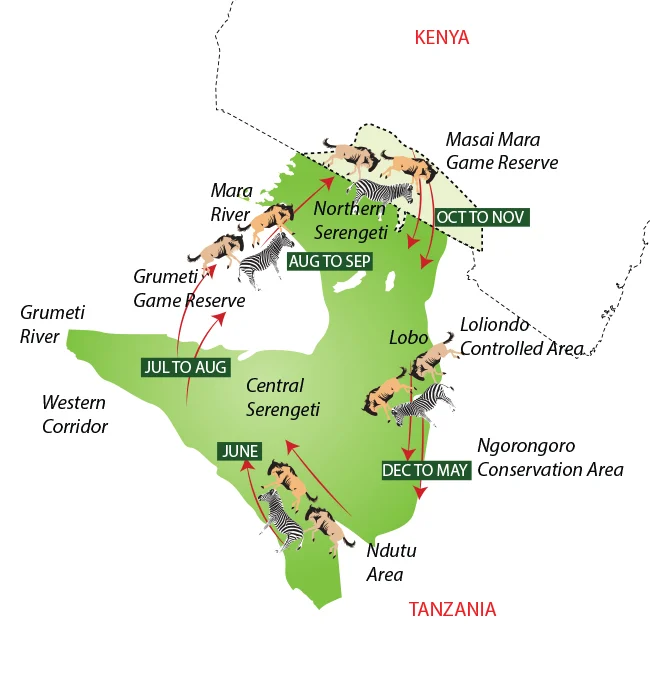
This is the usual pattern. Rains decide the real movements, so treat each month as a guide, not a promise.
| Month | Where the herds usually are | What you see |
|---|---|---|
| December to January | Southern Serengeti and the Ndutu area, returning from the north | Large herds on the short-grass plains; calving starts late in January |
| February to March | Southern plains, Ndutu and Lake Masek | Calving season, with thousands of newborns and active predators |
| April | Moving north and west through the central Serengeti | Long columns on the move; green season, quiet and cheaper |
| May to June | Spread out through Seronera, the Mbalageti area and the Western Corridor | Herds heading to the Grumeti; a good value time |
| June to July | Western Corridor and the Grumeti River | First river crossings, with large Nile crocodiles |
| July to September | Northern Serengeti (Kogatende, the Lamai Wedge) and the Mara River | The famous Mara River crossings, usually at their best from August to September |
| October | Northern Serengeti and the Mara; starting to head south | Crossings taper off; fewer vehicles |
| November | Heading south through the Lobo area and eastern Serengeti | Short rains start; quiet and green |
Calving season: February and March in the south
Calving season runs from late January through March on the short-grass plains of the southern Serengeti and Ndutu, which sit inside the Ngorongoro Conservation Area. About 500,000 calves are born in a few weeks, and at the peak up to about 8,000 can arrive in a single day.
The plains are open, so the viewing is easy, and the newborns attract lion, cheetah, leopard and hyena. Expect drama, but also expect to see predators making kills. If that is not for you, the river crossings may be a better fit.
Good to know for calving
- It is the busiest time in the south, so book camps early.
- You do not need to cross the whole Serengeti: the south is close to Karatu and the Ngorongoro Crater, so a shorter safari works.
- The weather can be wet, so bring a rain jacket.
River crossings: Grumeti and Mara
The river crossings are the scene most people picture: thousands of wildebeest plunging down a bank into a river full of crocodiles. There are two sets of rivers.
- Grumeti River (usually June to July): in the Western Corridor. Smaller crossings, with big crocodiles. A good option earlier in the season.
- Mara River (usually July to September): in the northern Serengeti, near Kogatende. The big crossings, with the highest chance in August and September, and some herds crossing into October.
An honest word on crossings
Nobody can promise a crossing on a given day. The herds may stand at the river bank for hours or days before one animal decides to cross, and the rest follow. Some days you see a dramatic crossing, and other days you see herds waiting. A safari that gives you several days at the river has a much better chance than a short visit.
Which part of the migration is right for you?
| You want | Best months | Where | Trade-off |
|---|---|---|---|
| Newborn calves and predator action | February to March | Southern Serengeti and Ndutu | Busy; wet weather possible |
| The Mara River crossings | July to September | Northern Serengeti (Kogatende) | Peak season, high prices, long drive or flight to the north |
| Smaller crossings with fewer vehicles | June to July | Western Corridor, Grumeti River | Less predictable; more spread out |
| Quiet and good value | April, May and November | Wherever the herds are | Rain and muddy roads; no big events |
| Big herds on the move | Most of the year | Follow the rains | Needs a flexible route |
If you are not sure, tell us your dates and what matters most to you, and we will recommend the area.
How many days and where to stay?

How many days?
The Serengeti is large, and the herds are not always near the road. A good plan is at least 6 days for the southern calving season, and 7 to 8 days for the northern crossings, because the north is a long drive from Arusha and you need time at the river.
Where to stay?
- Permanent tented camps and lodges: comfortable, with en-suite rooms. The best-placed ones fill more than a year ahead for the peak months.
- Mobile and semi-permanent camps: these move with the herds, so you sleep close to the action.
- Budget camping: the most affordable way to see the migration, with simple camps and shared facilities.
Tanzania or Kenya for the migration?
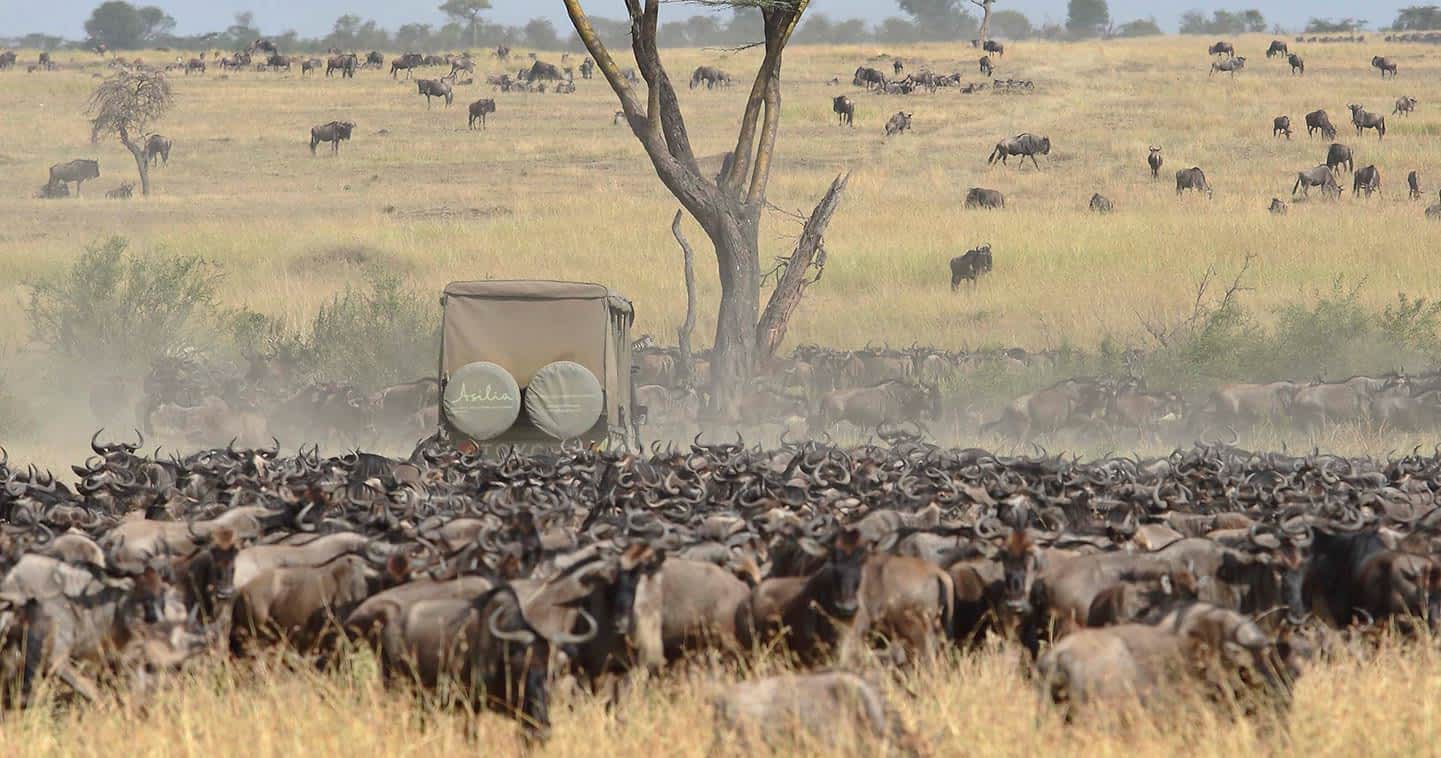
The herds spend part of the year in the Maasai Mara in Kenya, usually from around August to October. The Mara is smaller and more concentrated, but it is also more crowded. The Serengeti is much larger, with fewer vehicles, and in Tanzania you can follow the herds from calving to the Mara River crossings in one country. For most travellers, Tanzania gives the longer season and more space.
Plan the rest of your trip
Planning a Great Migration Safari for 2027?
Tell us your dates and what you most want to see. We will check where the herds usually are and suggest the right area, honestly, from the ground.
Ask on WhatsApp Email usFrequently asked questions
Justus Kahwa
Fields questions about Tanzania safari most weeks and would rather point you to what actually suits your trip than the one that is easiest to sell. Currently covers what the great migration really is?.