The short version: Tanzanians are warm and patient with visitors, but some things that feel normal at home can cause offence here, and a few can get you fined or refused entry.
Greet people properly, use your right hand, cover your shoulders and knees in towns and villages, ask before photographing anyone, and avoid public affection. Leave plastic bags at home, do not fly a drone without permits, and buy the $44 government travel insurance before you land. In Zanzibar, the rules on dress are enforced with fines.
Interested to View Our Best Tanzania Safari Packages. Explore & Book Now.
Most etiquette guides give you a vague list: "dress modestly", "respect the culture", "tip your guide". That is not much use when you are standing in Stone Town in shorts wondering if it is a problem. This guide is different. It tells you what is acceptable, what is not, and where the line is, with real numbers and rules where they exist.
I write this as someone who sends guests into the parks every week. These are the questions guests ask us most often, and the things we wish every visitor knew before arriving. For the practical side of the trip, such as rough roads, dust and cold mornings, read our companion guide, Tanzania Safari and Zanzibar: Things I Wish You Knew.
In this guide
- The rules that can cost you money
- Greetings: the most important habit
- What to wear: mainland, safari and Zanzibar
- Ramadan 2027: dates and what changes
- Public affection and LGBTQ travellers
- Photography: people, Maasai, drones, protests
- Behaviour on safari
- Tipping: who, how much and how
- Money, bargaining and gifts
- Entry rules: visa, insurance, plastic bags
- Laws visitors break without knowing
- Frequently asked questions
The rules that can cost you money
Most of Tanzanian etiquette is about manners. A few points are law, and breaking them can mean a fine, a confiscated item or a refused entry. Read these first.
| Rule | What happens if you ignore it |
|---|---|
| Mandatory inbound travel insurance, $44 per adult | You can be denied entry to mainland Tanzania (from 1 October 2026) and Zanzibar (since October 2024) |
| Modest dress in public in Zanzibar | Fines of $700 or more for visitors; at least $1,000 for guides and tour operators |
| No plastic carrier bags | Bags are collected at entry; ban in force since 1 June 2019 |
| Drones need permits | Not allowed in national parks by default; an import permit and an operations permit are needed |
| No photos or videos of protests or violence | Illegal to take or share; risk of detention |
| Same-sex sexual activity is illegal | Public affection between same-sex couples could lead to arrest |
| Strict drug laws, including for transit passengers | Severe penalties, including long prison sentences |
| No cash at national park gates | Fees are paid electronically, usually by your operator |
Each point is explained below.
Greetings: the most important habit
If you learn one thing, learn to greet people properly. In Tanzania it is considered rude to start a conversation, ask a question or begin a sale without greeting first. Ask how the person is, how their day is going, how their family is. It takes a few seconds and changes how people respond to you.
Swahili greetings that get a smile
| Say | Meaning | Reply you will hear | Use it with |
|---|---|---|---|
| Jambo | Hello | Jambo | Anyone; the tourist-friendly greeting |
| Mambo? | How are things? | Poa (cool, fine) | People your own age, informal |
| Habari? | What news? How are you? | Nzuri (good) | Anyone, polite |
| Shikamoo | A greeting of respect | Marahaba | Anyone clearly older than you |
| Asante / Asante sana | Thank you / Thank you very much | Karibu (you're welcome) | Everyone, all the time |
| Pole pole | Slowly, slowly | — | You will hear it often; it describes the pace of life here |
Shikamoo matters. Saying it to an older person, such as a lodge cook, a village elder or a market seller older than you, shows real respect. Guests who use it are remembered.
Handshakes and the right hand
Handshakes are normal and often last longer than you may be used to. A Tanzanian may keep holding your hand while talking. That is friendliness, not anything else, so don't pull away. When greeting an elder, some people touch their right forearm or elbow with the left hand as a sign of respect.
Use your right hand to shake hands, eat, and give or receive money, gifts and food. The left hand is traditionally linked to hygiene, and using it can come across as disrespectful. If you are left-handed, you are not expected to change everything, but make the effort when handing things to people.
What to wear: mainland, safari and Zanzibar
The simple rule: cover your shoulders and knees in towns, villages and markets. On safari and at beach resorts, the rules are more relaxed. Tanzania is a conservative country, and Zanzibar more so, because most of its population is Muslim.
| Where you are | Acceptable | Avoid |
|---|---|---|
| Safari vehicle and lodges | Shorts, T-shirts, practical clothes in neutral colours | Very bright colours on game drives; revealing clothing in public lodge areas |
| Arusha, Moshi and towns | Trousers, knee-length skirts or shorts, T-shirts | Short shorts, vests, see-through tops |
| Maasai and rural villages | Shoulders and knees covered | Shorts above the knee, sleeveless tops |
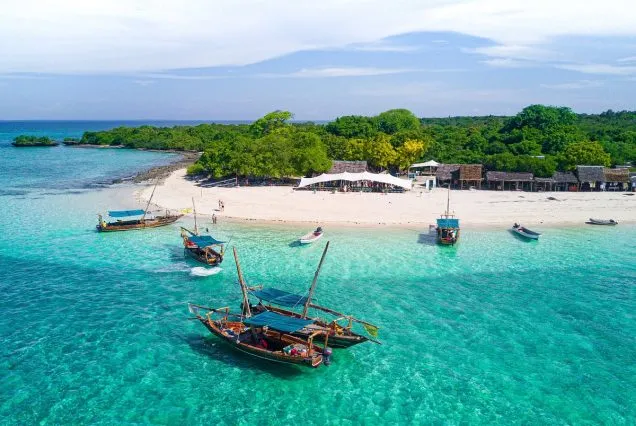
| Zanzibar beach resort | Swimwear on the beach and at the pool | Swimwear when walking off the beach into villages |
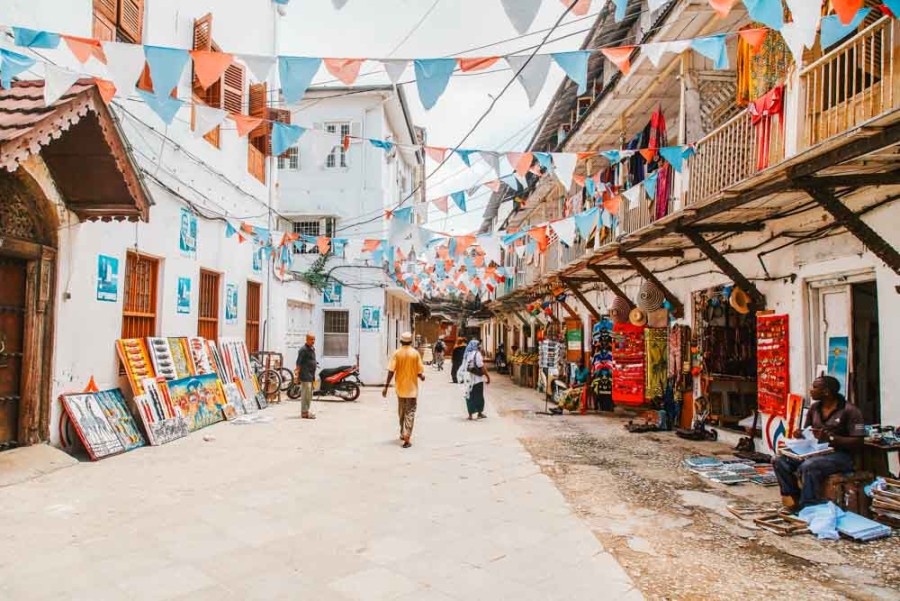
| Stone Town and Zanzibar villages | Loose trousers, long skirts, sleeves covering shoulders | Shorts and sleeveless tops, especially for women; this can bring a fine |
| Mosques and religious sites | Full cover; women may need a head covering | Entering without permission |
Zanzibar enforces this with fines. Women wearing shorts or sleeveless tops away from resorts, especially in Stone Town, may cause offence, and Zanzibar authorities can fine visitors $700 or more for inappropriate clothing in public. Guides and tour operators can be fined at least $1,000. A light scarf or a kanga (a local wrap) in your day bag solves this in seconds.
Men's clothing
Men often assume the rules are only for women. They are not. Walking shirtless through town or Stone Town is not acceptable. Knee-length shorts are generally fine in towns on the mainland. Long trousers are the safe choice in Stone Town and villages.
What to wear on safari
On game drives, wear neutral colours such as khaki, beige and olive. Mornings and evenings are cold, especially on the Ngorongoro Crater rim, so dress in layers. For a full packing list, see our things I wish you knew guide.
Ramadan 2027: dates and what changes
Ramadan 2027 is expected to begin on 8 February 2027, and Eid al-Fitr, the celebration that ends it, is expected on 9 or 10 March 2027. Both dates depend on the official moon sighting, so check closer to your trip.
This matters most if you combine a safari with Zanzibar in February or early March 2027. Here is what changes and what does not.
- What stays the same: safaris, hotels, resorts and most restaurants that serve tourists run normally. Your game drives are not affected.
- What changes: some local restaurants and shops in Zanzibar close during the day or open later. Life gets busier after sunset, when people break the fast.
- What is expected of you: avoid eating, drinking or smoking in public streets during daylight, outside hotels and restaurants. Dress even more modestly than usual in Stone Town and villages.
- Alcohol: available in hotels and resorts, but be discreet. Do not walk around town drinking.
Ramadan is also a beautiful time to see Zanzibar. Evenings in Stone Town come alive with food stalls and families. Ask your guide to show you, respectfully. If you are deciding when to travel, compare with our guide to Tanzania in December: weather, wildlife, safari and beach.
Public affection and LGBTQ travellers
Couples
Kissing and close physical affection in public are not acceptable, in towns, on the street or in villages. Holding hands as a man and woman is usually tolerated in tourist areas but still draws looks in rural places. Keep affection for your lodge room. This applies to honeymooners too: lodges are happy to celebrate your honeymoon in private.
LGBTQ travellers
We want to be straightforward because this is a real question people ask. Same-sex sexual activity is illegal in Tanzania, including Zanzibar. Public affection between same-sex couples, such as holding hands or kissing, could lead to arrest or imprisonment.
LGBTQ travellers do visit Tanzania on safari. Most do so discreetly, often booking a twin room. If this applies to you, speak to us privately before booking. We will tell you honestly what to expect at each lodge and help you plan accordingly.
Photography: people, Maasai, drones and protests
Photographing people
Always ask before you take a photo of a person. A smile and a gesture at your camera is enough. If someone says no, accept it. Taking photos of children without asking a parent is not acceptable.
The Maasai
Many Maasai people expect a small payment for photographs, especially near roads to the parks. This is normal and not a scam. If you are on a planned Maasai village visit, the entry fee usually covers photos inside the village, but ask your guide first. Remember these are people's homes, not a show.
Drones
Drones are not allowed in Tanzania's national parks by default. To use one, you need an import permit and an operations permit from the Tanzania Civil Aviation Authority (TCAA), plus approval from the park authority. Filming may need further approvals. Apply well before you travel. If you arrive with an undeclared drone, it may be held at the airport.
Things you should never photograph
- Protests, demonstrations or violence. It is illegal to take or share these images.
- Police, military, and security sites such as government buildings and airports.
- Anything that could "degrade a person's dignity". Police treat sharing such images as an offence.
Also avoid political discussions in public places and online while you are in Tanzania.
Behaviour on safari
Inside the parks, good manners are about animals and the people sharing the vehicle with you.
- Stay in the vehicle unless your guide says it is safe to get out, for example at a picnic site.
- Never feed animals, including monkeys at picnic sites.
- Keep your voice low at sightings. Shouting or banging the vehicle scares animals away from everyone.
- Don't ask your guide to drive off the road or get closer than the park rules allow. A good guide will say no, and that protects both you and the animals.
- Share the view. In a shared vehicle, take turns at the best window or roof hatch.
- Take your rubbish with you. Leave nothing behind.
At lodges and tented camps, staff escort you to your tent after dark. Wait for them. Choosing the right place to sleep matters; read lodge vs tented camp on the northern circuit.
Tipping: who, how much and how
Tipping is expected on safari in Tanzania. Guides and lodge staff are paid wages, but tips are an important part of their income. Plan for about $20–30 per person per day in total.
| Who | Group safari | Private safari |
|---|---|---|
| Safari guide or driver-guide | $10–20 per person per day | $15–25 per person per day, or $30–50 per vehicle per day |
| Lodge or camp staff (shared tip box) | $5–15 per person per day | $5–15 per person per day |
| Night guard (askari) | $2–5 per night | $2–5 per night |
| Airport or transfer driver | $2–10 per transfer | $2–10 per transfer |
| Restaurant waiter in town | 10–15% of the bill | 10–15% of the bill |
| Zanzibar resort staff pool | $10–15 per guest per day | $10–15 per guest per day |
| Zanzibar spice tour guide | $5–10 per person | $5–10 per person |
Guidelines published by a Tanzanian safari operator in 2026. Tips are always your choice and should reflect the service you received.
If you want Luxury Tanzania Safari. Book Our Luxury Safari.
How to tip without awkwardness
- Tip at the end, not daily, for your guide. Hand it over on the last day.
- Use an envelope and your right hand. Say "asante sana".
- Use the lodge tip box for kitchen and housekeeping staff, so everyone shares it.
- Use cash. Card tipping is rare and unreliable.
Money, bargaining and gifts
US dollars: the bill rule that surprises people
US dollars are widely used for safari tips and some payments. Bring bills printed in 2009 or later, and make sure they are clean and not torn, marked or heavily creased. Older or damaged notes are often refused. There are no ATMs inside the Serengeti or Ngorongoro, so carry what you need before you leave town. Tanzanian shillings are better for small purchases in towns.
Is bargaining acceptable?
Yes, in markets and curio shops it is expected, and first prices for visitors are often high. Bargaining is a friendly conversation, not a fight. Stay relaxed, smile, and if you cannot agree, thank the seller and walk away politely. Do not bargain in supermarkets, restaurants or shops with marked prices.
Gifts and giving to children
It feels kind to hand out sweets, pens or coins to children you meet on the road. Please don't. It can encourage children to beg instead of going to school. If you want to help, ask us about schools or community projects we work with, and give through them.
Entry rules: visa, insurance, plastic bags
Visa
| Visa | Fee | Validity |
|---|---|---|
| Single-entry tourist visa (most nationalities) | $50 | Up to 3 months |
| US citizens, multiple-entry | $100 | 12 months |
| Transit visa | $30 | Short transit only |
Apply online through the official eVisa portal, eservices.immigration.go.tz. Your passport must be valid for at least six months from the date you enter. Only use the official site; look-alike sites charge extra.
Mandatory inbound travel insurance
From 1 October 2026, foreign visitors entering mainland Tanzania must hold a government inbound travel insurance policy. Zanzibar has required its own since October 2024. You only need one policy: buy it where you land first.
| If you land first in… | Buy from | Cost |
|---|---|---|
| Mainland Tanzania (Kilimanjaro, Arusha, Dar es Salaam, a land border) | National Insurance Corporation: inbound.nicinsurance.co.tz | $44 per adult; children 3–17 pay 50%; under 2 free |
| Zanzibar | Zanzibar Insurance Corporation: visitzanzibar.go.tz | $44 per adult; $22 for children 3–17; under 2 free |
The policy is valid for up to 92 days and covers emergency medical treatment, evacuation, repatriation and loss of luggage. Without it, you can be refused entry. Residents of EAC and SADC countries are exempt. It does not replace your own travel insurance, which you still need for cancellations, delays and evacuation home.
Plastic bags
Plastic carrier bags have been banned in Tanzania since 1 June 2019. Do not pack shoes or clothes in plastic shopping bags, and do not bring duty-free goods in a plastic carrier. Any bags you arrive with are collected at entry. Clear zip-lock bags for toiletries are allowed, as long as you keep them with you.
Laws visitors break without knowing
- Not carrying ID. Officials can ask for your passport and visa at any time. Carry copies of your passport photo page and visa, and keep the originals somewhere you can reach quickly.
- Drugs, including in transit. Tanzania has strict drug laws with severe penalties, including long prison sentences, even for small amounts. This applies to transit passengers too, and airports scan bags.
- Joining or filming protests. Stay away from demonstrations and leave the area if one starts nearby. Don't film or share images of them.
- Paying park fees in cash. Parks no longer accept cash. If anyone asks you for cash "for the gate", check with your operator.
None of this should put you off. The guests we host who follow these simple habits have relaxed, trouble-free trips. Knowing the rules means you can stop worrying and enjoy Tanzania.
Plan the rest of your trip
Frequently asked questions
Planning a Tanzania safari or Zanzibar trip for 2027?
Ask us anything, including the questions you feel awkward asking. We answer honestly, from the ground.
Rules, fees and dates can change at short notice. This page reflects published information as of 13 October 2026. Check official government sources before you travel.
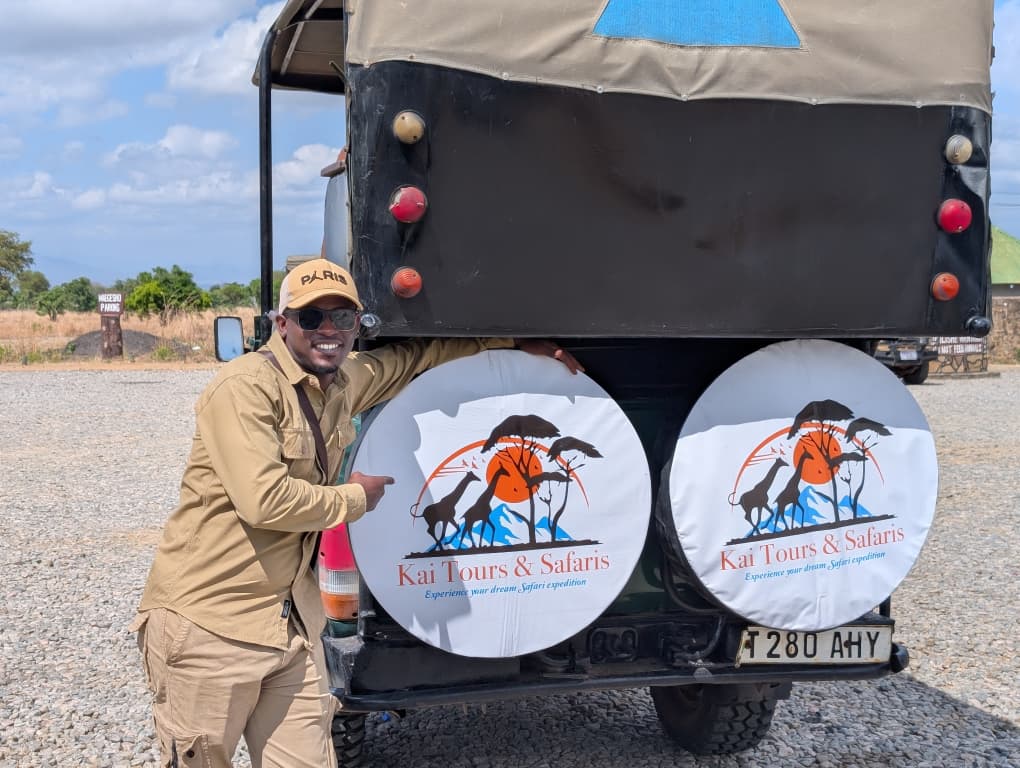
Justus Kahwa, Safari Operations Director, Kai Tours & Safaris.
Sends guests into the parks every week and would rather you knew the rules before you land than learn them the hard way.