The short version
The best Tanzania safari for a first-timer is usually six to eight days on the Northern Circuit (Tarangire, the Serengeti and the Ngorongoro Crater), at a mid-range comfort level, in the dry season from June to October or the calving season from January to March. Budget around $400 to $550 per person per day for mid-range, see lion, elephant and buffalo almost certainly, and add a few days in Zanzibar at the end if you want the beach.
That is the headline. Below, I answer the eight questions my guests ask most, so you can adjust all of it to suit you.
How many days do you need for a Tanzania safari?
Most first-timers do best with six to eight days on the Northern Circuit. That is the honest answer, and here is the reasoning behind it, because the right number depends on the parks you want and how much driving you can stomach.
Tanzania's famous Northern Circuit parks (Tarangire, Lake Manyara, the Serengeti and the Ngorongoro Crater) are spread far apart, and the roads between them are long. A trip that is too short forces you to either cut a park or spend most of your days in the vehicle getting from one to the next. The length you choose is really a choice about how deep you go versus how much ground you cover.
What each trip length gives you
| Days | What it covers | Best for |
|---|---|---|
| 3 to 4 days | Serengeti and Ngorongoro, or a fly-in taster | Tight schedules, a safari added to a beach holiday |
| 5 to 6 days | Tarangire, Serengeti, Ngorongoro, with time in the Serengeti | A solid first safari without a long trip |
| 7 to 8 days | All four main parks, three nights in the Serengeti | Most first-timers; the sweet spot |
| 9 days and over | The circuit plus a quieter park or Zanzibar | Travellers with time who want depth or the beach |
If I had to pick one number for a first safari, it would be eight days. It gives the Serengeti the three nights it deserves, which is where most of the big wildlife moments happen, and still leaves room for Tarangire and the crater without rushing. For the full breakdown, see our 8-day Northern Circuit guide, which maps every park, lodge and price. If your time is genuinely tight, a focused shorter trip beats cramming four parks into too few days.
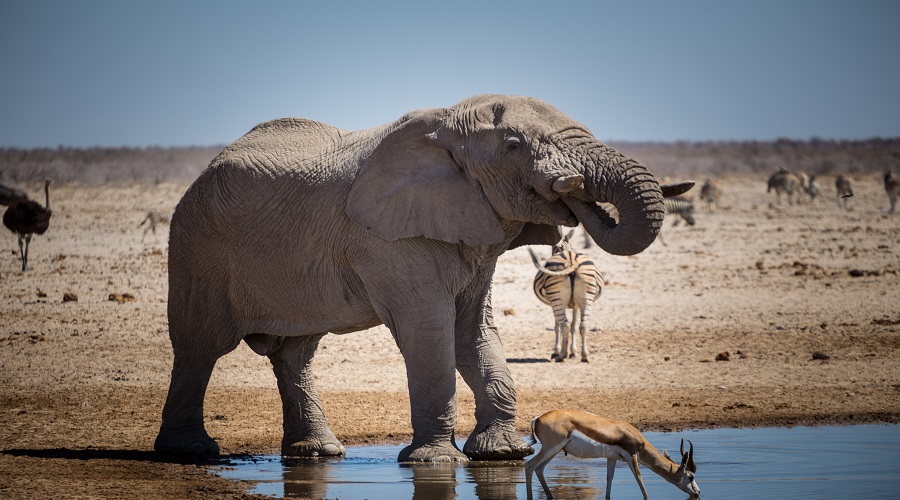 Tarangire is elephant country, the usual first stop on the circuit
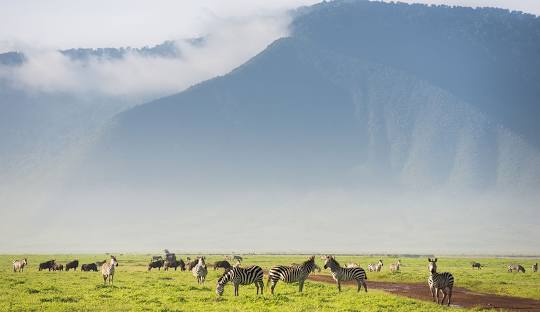 The Ngorongoro Crater, the finale of a classic Northern Circuit trip
Short on time? Safaris from Dar es Salaam (Mikumi and Nyerere)
Most of this guide assumes the classic Northern Circuit from Arusha, but it is not your only option. If you are short on time, travelling on a smaller budget, or based near Dar es Salaam or Zanzibar, a short two to four-day safari to Mikumi or Nyerere National Park is an excellent alternative that many first-timers overlook.
Mikumi National Park
Mikumi is the closest big park to Dar es Salaam, about five hours by road, which makes it the natural choice for a short safari of two or three days. It is open, grassy country, often compared to a smaller Serengeti, with good chances of elephant, lion, giraffe, zebra, buffalo and hippo. For a first taste of the wild, a long weekend, or a family trip on a budget, Mikumi delivers a real safari without the cost and travel of the far north.
Nyerere National Park, the former Selous
Nyerere is one of the largest parks in Africa, in Tanzania's south, and it offers something the Northern Circuit cannot: a boat safari on the Rufiji River. Drifting past hippos, crocodiles and elephants on the water, then game driving the same day, is a rare combination. Nyerere is also one of the best places left in Africa to look for the endangered African wild dog, though no operator can promise them. You reach it by road or a short flight from Dar es Salaam, and two to four days suits it well.
When to choose a Dar safari over the Northern Circuit
Choose a short safari from Dar if your time is tight, your budget is lower, you are already on the coast or heading to Zanzibar, or you want a quieter park and the boat-safari experience. The honest trade-off is that you give up the sheer scale of the Serengeti plains and the Ngorongoro Crater, which remain the bucket-list parks. But Mikumi and Nyerere are closer, cheaper, far less crowded, and a genuine safari in their own right. We run these trips often, including a 2-day Nyerere safari from Dar es Salaam, and short Mikumi safaris for travellers who want the wild without the long haul north.
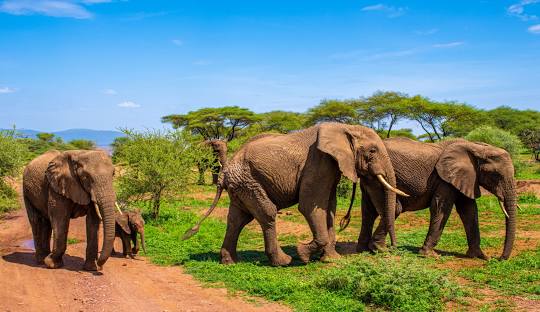 Mikumi, about five hours from Dar es Salaam, has elephants on open grassland
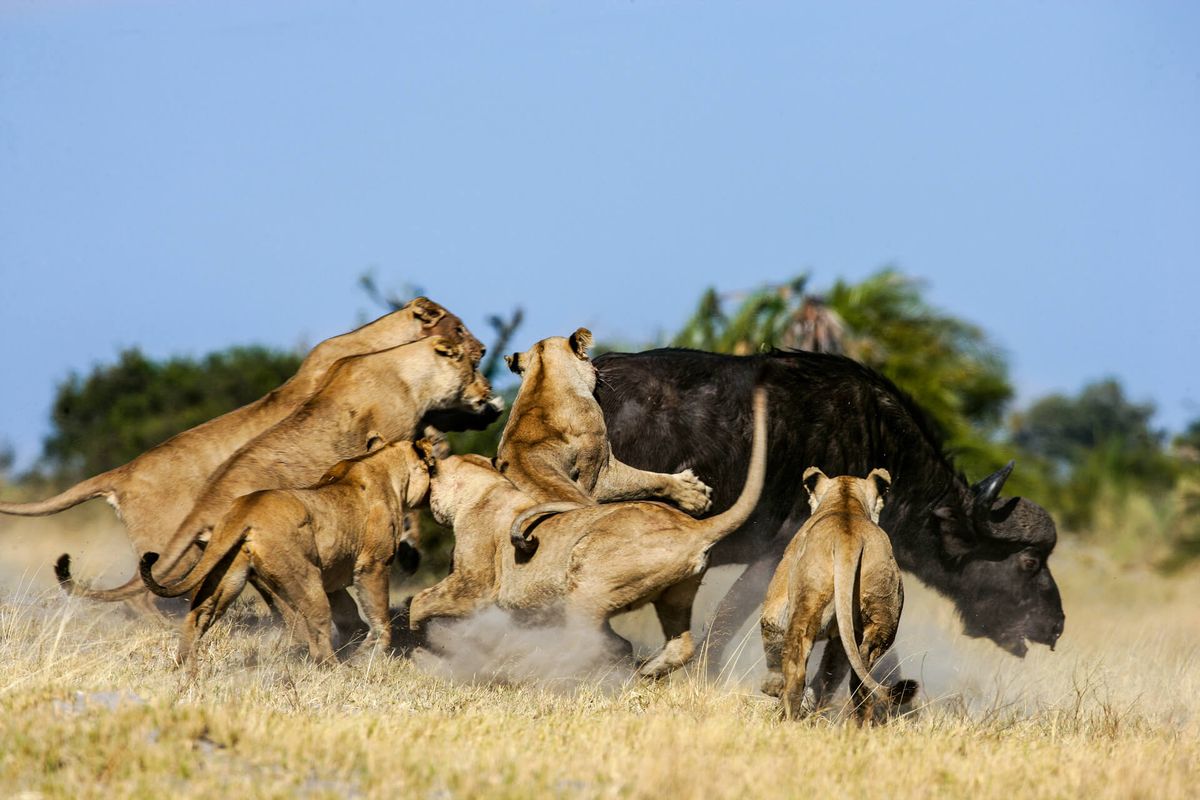 Lions on the Mkata floodplain: a real safari without the long haul north
Camping, lodge, or luxury: which should you choose?
The comfort level changes where you sleep at night, not the wildlife you see by day. This is the single most useful thing to understand about safari pricing, so let me be plain about it. A budget camper and a luxury guest can stand at the same sighting watching the same lions. What you are choosing is how you live between the game drives.
Budget camping
You sleep in tents at public campsites inside and near the parks, with shared facilities, and a cook travels with you. It is the lowest honest price and it puts you closest to the wild, with the sounds of the bush around your tent at night. It suits adventurous travellers and anyone who cares more about being out there than about the room. See our 6-day budget camping safari for what this looks like in practice.
Mid-range
You stay in comfortable lodges and permanent tented camps with proper beds, en-suite bathrooms, hot water and good food. This is the level most of my guests are happiest with, because it is comfortable without paying for extras you will barely use while you are out chasing wildlife from dawn. Our 8-day mid-range safari is the typical first-timer choice.
Luxury
You stay in premium lodges and camps, often in prime positions with few other guests, with fine dining, plunge pools, and the option to fly over the long roads. It is for honeymoons, special occasions and travellers who want the setting and service to match the wildlife. Our 8-day luxury safari covers the top end.
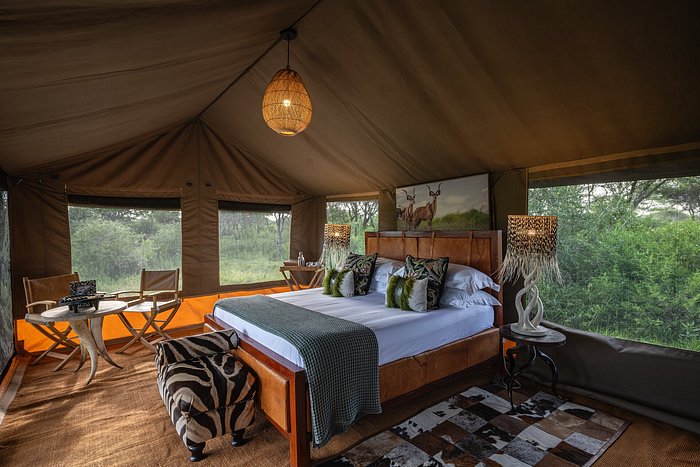 Budget camping: a tent, a mattress and the sounds of the bush
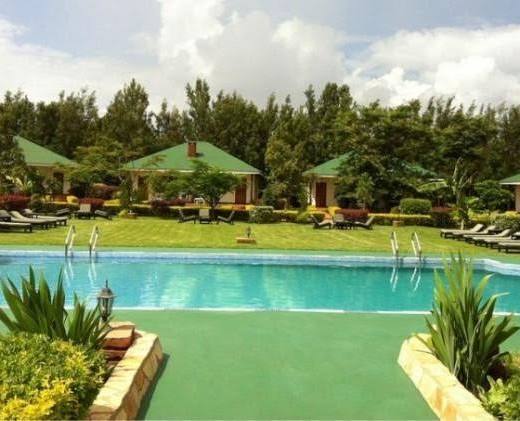 Mid-range: a comfortable lodge room with an en-suite bathroom
How much does a Tanzania safari cost?
A Tanzania safari costs, very roughly, from about $250 per person per day for budget camping, $400 to $550 a day for mid-range lodges, and $700 a day and up for luxury. Those are honest market ranges on the Northern Circuit, and the final figure depends on four things: your comfort level, the season, your group size, and whether you fly or drive. Let me break down each, because understanding them is how you read any quote with confidence.
| Comfort level | Typical cost per person, per day | What you get |
|---|---|---|
| Budget camping | from about $250 to $300 | Tents at park campsites, a cook, shared vehicle option |
| Mid-range | about $400 to $550 | Comfortable lodges and tented camps, private 4x4 |
| Luxury | from about $700 and up | Premium camps, fine dining, fly-in options |
What drives the price up or down
The biggest single cost you cannot avoid is park fees, which are set by the Tanzanian government and are the same for every operator. On the Serengeti and in the Ngorongoro Crater these run to well over a hundred dollars per person per day once entry, conservation and crater fees are added, which is why no honest safari can be truly cheap. Season matters too: peak dry-season months and the festive period cost more, while the green season costs less. Group size helps, because the vehicle, guide and fuel are shared, so a family of four pays less per person than a solo traveller. And flying between parks adds comfort and cost over driving.
How to read a quote
A trustworthy quote itemises what is included, especially the park fees, and states plainly what is left out, such as international flights, the visa, the mandatory inbound insurance, tips and drinks. Be cautious of any total that sits far below the ranges above. The parks must be paid for, so a price that cannot cover them is usually hiding rushed days, hidden extras or corners cut on safety. For a worked example with the fees itemised, see our 8-day Northern Circuit guide.
Will you see the Big Five and the Great Migration?
On the Northern Circuit you are near-certain to see lion, elephant and buffalo, likely to see leopard, and unlikely to see rhino. That is the honest breakdown, and I give it plainly because the biggest disappointment in this business comes from operators who promise a checklist they cannot deliver.
The Big Five, realistically
Lion, elephant and Cape buffalo are all over the Serengeti and the Ngorongoro Crater, so you would be unlucky to miss them. Leopard is a realistic hope, with the Serengeti's Seronera area among the best places in Africa to find one, though they are secretive. Black rhino is the hard one: the Ngorongoro Crater is your single best chance in the north, and even there you usually see them at a distance. Seeing all five in one trip is genuinely possible, but no honest operator guarantees it.
The Great Migration
The migration is not a single event on a fixed date. It is around 1.4 million wildebeest, plus hundreds of thousands of zebra, moving in a year-round loop around the Serengeti following the grass. Where it is depends entirely on the month. For calving and newborn drama, come in February; for the famous Mara River crossings in the north, come in August or September. Whether you see it is a question of timing your trip, not of luck on the day. Our month-by-month migration guide shows where the herds usually are through 2027.
.jpg) Rhino is the hard one, with the Ngorongoro Crater your best chance
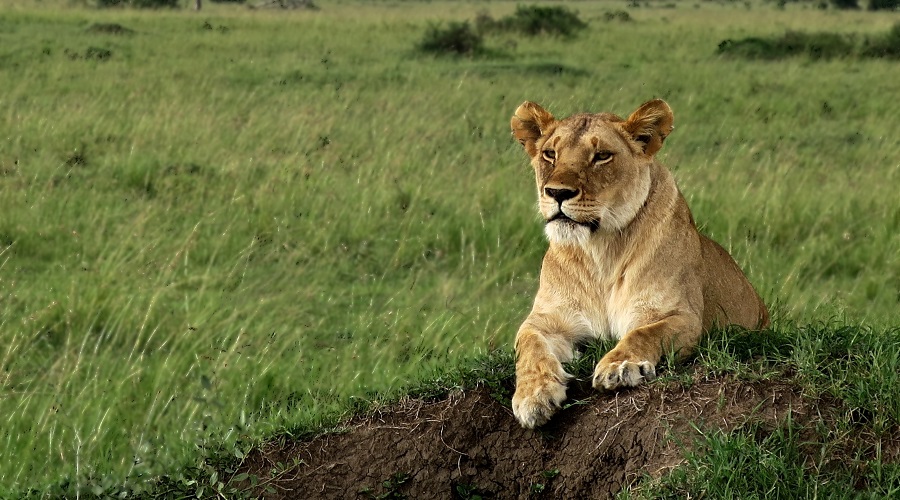 Lion, elephant and buffalo are near-certain on the Northern Circuit
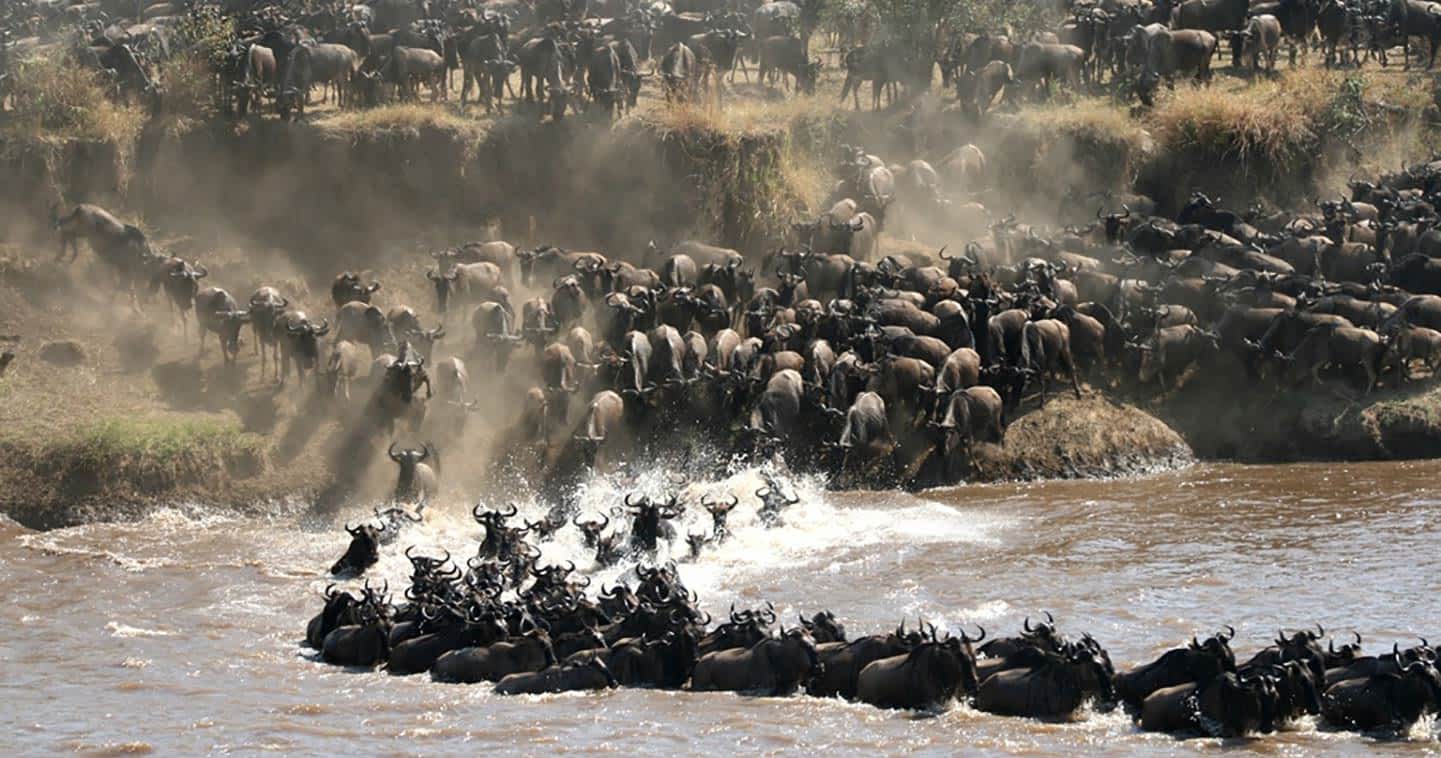 The migration follows the grass in a year-round loop; the Mara River crossings are best in August and September
Private or group safari: which is right for you?
A private safari gives your party its own vehicle, guide and pace; a group-joining safari shares those with other travellers to lower the cost. Both see the same parks, so the choice is about budget, privacy and how you like to travel.
When private is worth it
On a private safari the day runs entirely on your wishes. You decide when to leave, how long to sit with a sighting, and whether to take a packed lunch and stay out all day. Every seat is a window seat. It is the better choice for couples, families, photographers and anyone who wants control of the day, and for most trips it costs less per person than people expect once the group is three or four.
When group-joining makes sense
A group-joining safari shares the vehicle with other travellers up to a set maximum, which splits the cost of the car, guide and fuel across more people. It is the cheapest way to go, and it can be sociable. The trade-offs are less flexibility and the luck of who you share with. For a fuller comparison, see our guide to private versus group safaris.
 A private 4x4 gives your party its own guide, its own pace and a window seat for everyone
Can you combine a Tanzania safari with Zanzibar or the beach?
Yes, and it is one of the most popular ways to plan a Tanzania trip. After your last game drive you fly to Zanzibar, the Indian Ocean island off the Tanzanian coast, for a few days of beach, spice and history. The safari and the beach are the classic pairing: the thrill of the bush, then the rest of the ocean.
How the combination works
A good operator arranges the whole thing as one trip, including the connecting flight from the Serengeti or Arusha to Zanzibar, so you are not booking two separate holidays that may not line up. You finish the safari, fly to the island, and spend your last days on the sand. Stone Town, the old quarter, is worth a night or two for its history and markets before you move to a beach in the north or east.
One piece of honest advice
Build in a buffer. Going straight from a dawn game drive to a beach lounger in a single day is a hard travel day after a run of early mornings. A night in between, in Stone Town or Arusha, makes the change of pace far more enjoyable. We plan many of these combinations from our safari from Zanzibar page, which works in both directions.
 The classic pairing: the bush first, then the ocean
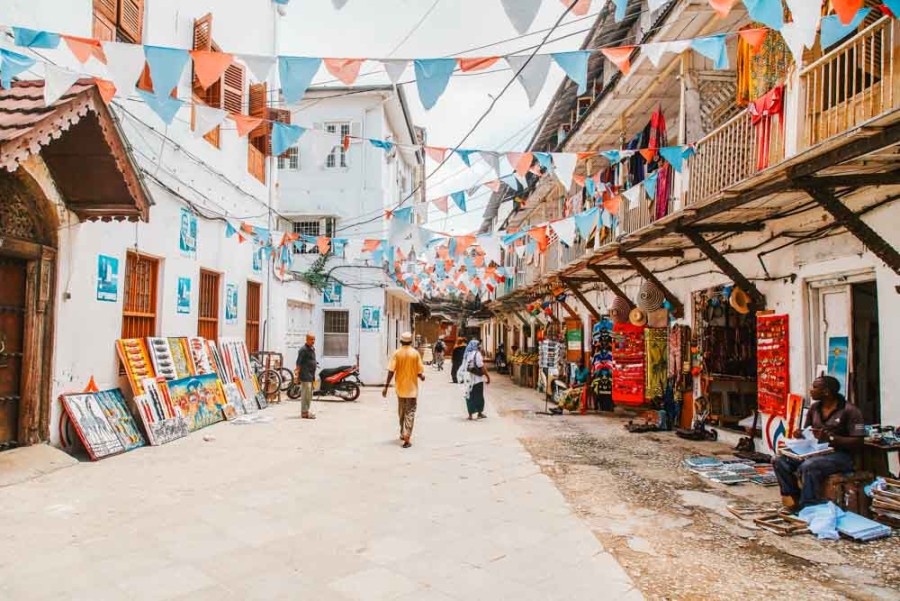 Stone Town is worth a night or two before you head to the beach
How do the flights and transfers between parks work?
You either drive between the parks in a 4x4 or fly over the longest stretches in a light aircraft, and most trips use a mix of the two. Understanding this early saves you from the biggest hidden surprise in safari planning: how much time the logistics actually take.
Driving
The classic Northern Circuit is driven in a 4x4 Land Cruiser with a pop-up roof, game viewing along the way, so the transfer days are part of the safari rather than wasted time. The drives are real, though. Arusha to the central Serengeti is a full day on roads that are rough in the dry season, so a good operator plans the route to break it up, and a small cushion genuinely helps.
Flying
Light-aircraft flights link the main parks and airstrips, and flying the longest leg into or out of the Serengeti is the single biggest comfort upgrade on the circuit. It turns a hard road day into a short hop and gives you more time with wildlife, at extra cost. Fly-in safaris from Zanzibar use the same aircraft to bring beach travellers straight to the plains. The right balance of driving and flying depends on your budget and how much road time you want.
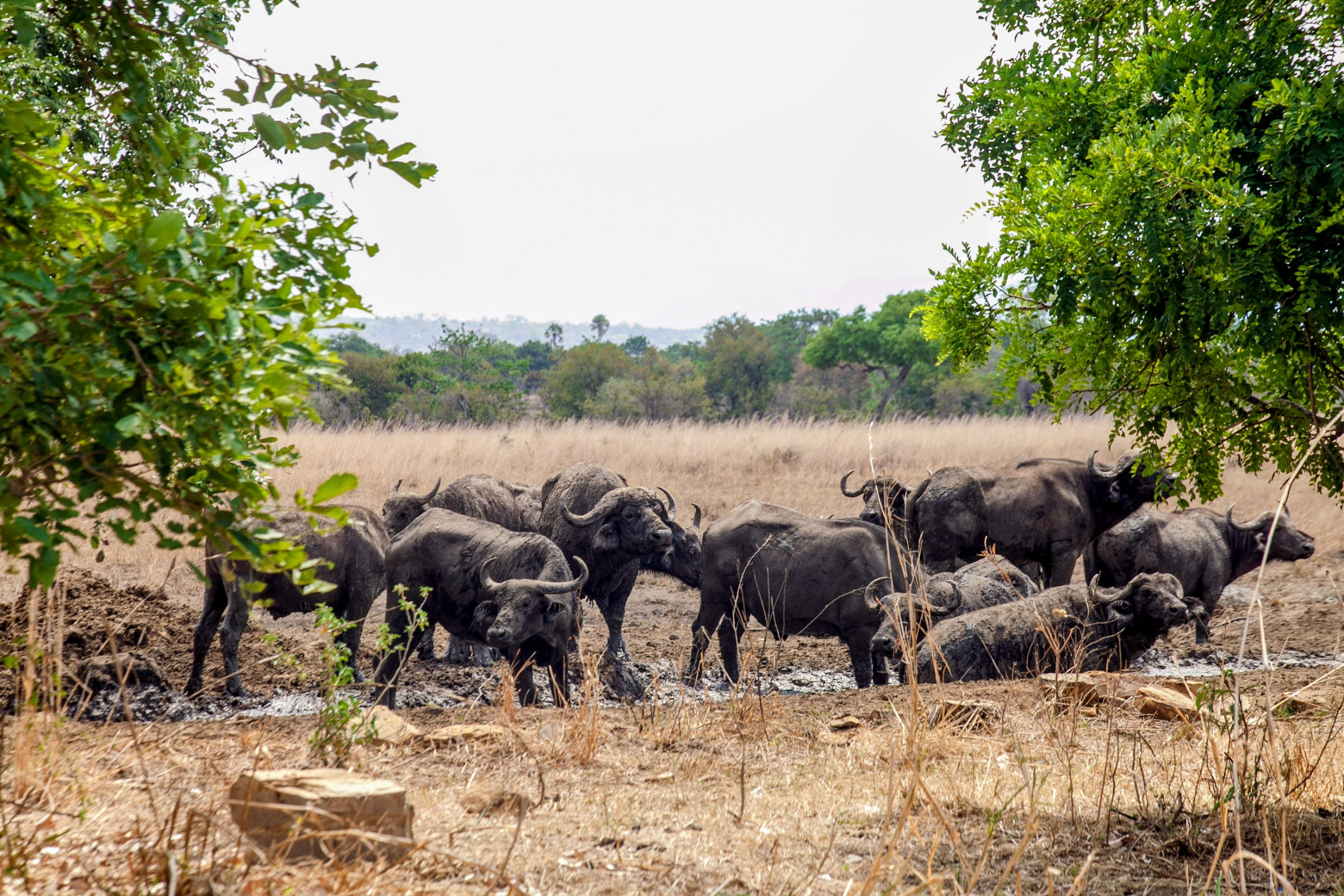 Light aircraft link the main parks and airstrips
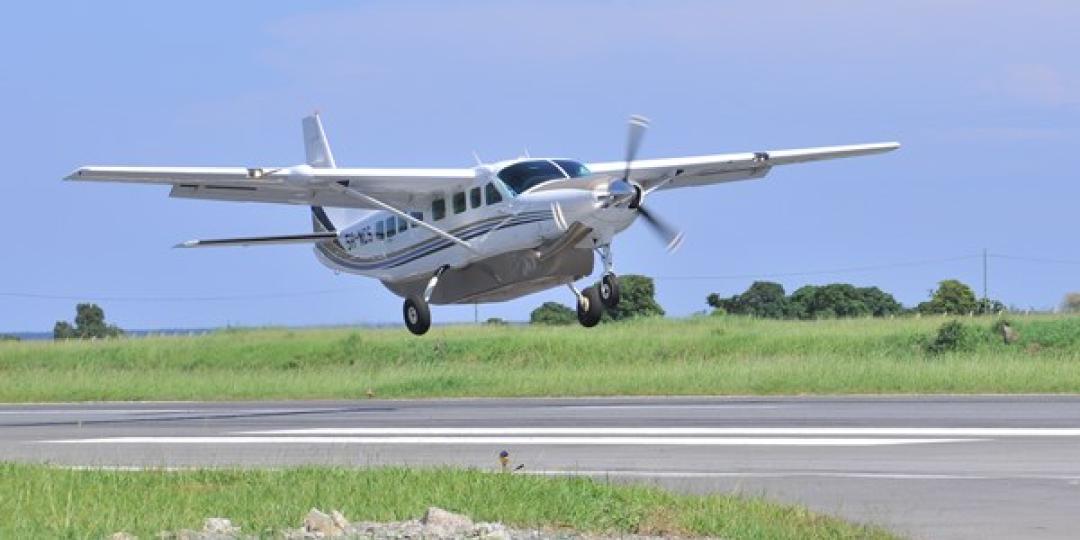 Flying the longest leg is the biggest comfort upgrade on the circuit
When is the best time to go on a Tanzania safari?
There is no single best time, only the best time for what you want to see. This is the question with the most myths around it, so here is the honest season-by-season version.
Dry season, late June to October
The easiest game viewing of the year. The grass is short, animals gather at water, and the Serengeti holds the famous Mara River crossings from roughly July to September. This is peak season, so it is also the busiest and the most expensive, and the best camps book up months ahead.
Calving season, January to March
The migration herds are on the southern Serengeti plains, and around half a million wildebeest calves are born in a few weeks. That draws the predators, so this is a superb time for big-cat action, with fewer crowds than the July peak. It is my quiet favourite.
Green season, November and April to May
The short rains in November and the longer rains from April bring lush green country, dramatic skies and the best prices of the year, with far fewer vehicles. You trade some ease of viewing for a quieter, greener, cheaper safari. April and May see the heaviest rain, so weigh that up. For a deeper look, see our guide to the best time for a Northern Circuit safari.
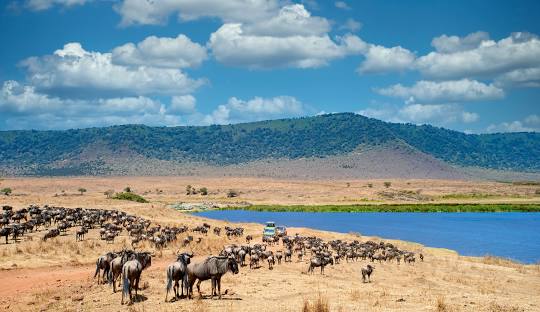 Herds on the move in the Serengeti
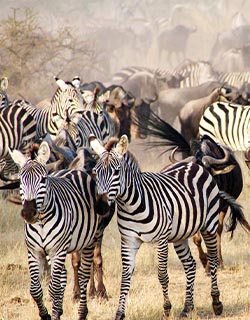 Zebra and wildebeest travel together, whatever the month
Is Tanzania good for a honeymoon, family, or solo trip?
Yes to all three, and each is planned a little differently. A safari is one of the great trips of a lifetime for couples, families and solo travellers alike, as long as the trip is shaped to fit who is travelling.
Honeymoons
Tanzania is one of the world's leading honeymoon destinations, and for good reason. A private vehicle, quiet premium camps, sundowners on the plains and a Zanzibar beach finish make it hard to beat. Many lodges arrange private dinners and romantic touches, and the safari-then-beach combination is the classic honeymoon shape. If this is you, tell your operator it is a honeymoon and let them build around it.
Families
Families are very welcome, and children often remember a safari for the rest of their lives. The things to plan around are long drive days, which suit older children better, and lodge minimum ages, which some properties set. A private vehicle is usually the right call for a family, so you can set your own pace and take breaks when the little ones need them.
Solo travellers
Solo safaris are common and completely normal. You can travel privately with your own guide, or join a small group to share the cost and the company. A single traveller pays a supplement on a private trip, because the vehicle and room are not shared, which is worth knowing when you compare quotes.
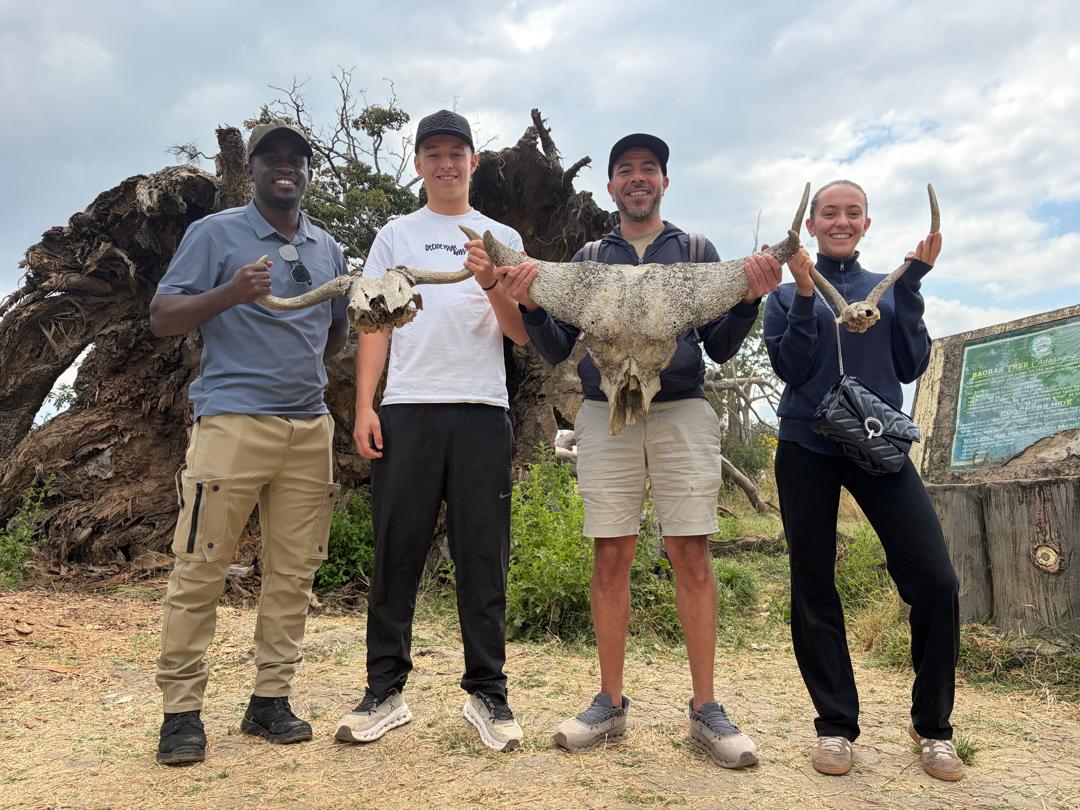 Couples, families and solo travellers all do well on safari when the trip is shaped to fit them
What does a typical day on safari look like?
A typical safari day runs around the animals, which means early starts and a rest in the heat of the day. Knowing the rhythm in advance helps you choose your trip and pack for it, so here is how a normal day unfolds on the Northern Circuit.
You wake before dawn, because the first light is when the cats are most active and the air is cool. After coffee you head out for a morning game drive, often the best of the day, returning to camp for a proper breakfast, or taking a packed one and staying out longer if the sightings are good. The middle of the day is hot and the animals rest in the shade, so you do too: lunch, a nap, a shower, time by the lodge watching whatever wanders past. In the late afternoon you head out again as the heat drops and the animals stir, returning around sunset for dinner and an early night, because tomorrow starts early again.
On a private safari you shape all of this yourself. If a lion kill is unfolding, you stay; if you would rather a slow morning, you take one. The pace is yours. On the drives you travel in a 4x4 with a pop-up roof, so you can stand and photograph, with your guide reading tracks, radio calls and behaviour to put you in the right place. It is more relaxed than most first-timers expect, and more thrilling.
What to bring on a game drive
Pack light layers for cold mornings and warm afternoons, a hat, sunscreen, binoculars, a camera, and something to cushion the bumpy roads. Neutral colours are best. Your vehicle carries drinking water, and a good operator keeps the day comfortable so you can focus on the wildlife.
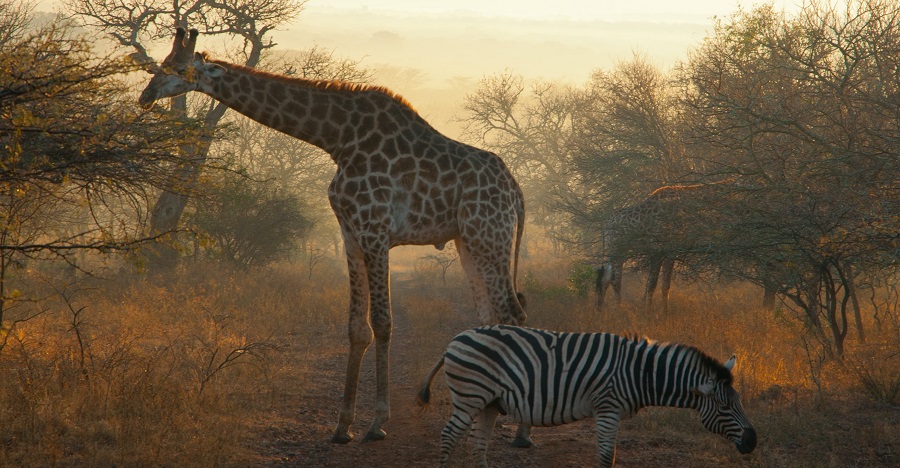 The late afternoon drive, when the heat drops and the animals stir
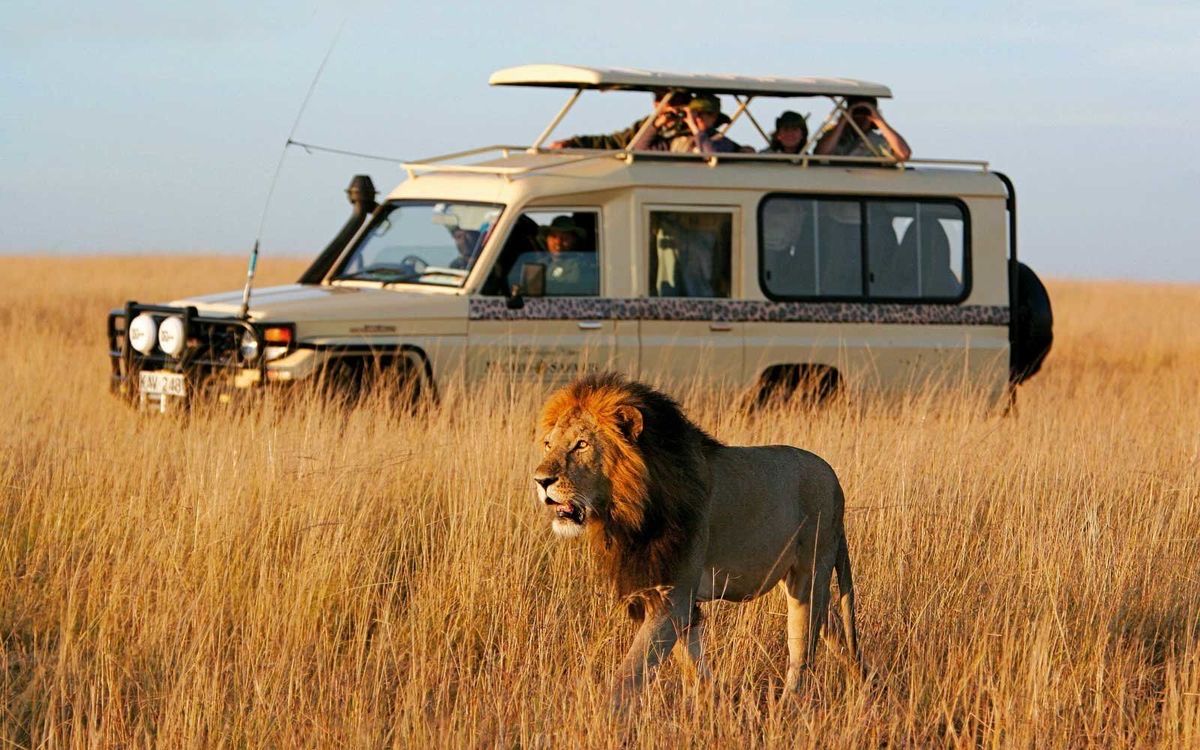 A pop-up roof lets you stand and photograph from the vehicle
Putting it together: your planning checklist
Once you have answered the eight questions above, planning the rest is straightforward. Here is the order I would work in.
- Decide your trip length and which parks matter most to you.
- Choose your comfort level: budget, mid-range or luxury.
- Pick your travel window based on what you most want to see.
- Decide private or group, and whether to add Zanzibar.
- Shortlist two or three licensed operators and compare honest, itemised quotes.
- Check what each quote includes, especially park fees, and confirm the booking terms.
That last step matters more than most people realise. For how to pick a trustworthy company and the red flags to avoid, read our guide to choosing a Tanzania tour operator.
Nervous about booking? The worries first-timers have, answered
Planning a first safari is daunting, and the same handful of worries come up again and again. They are reasonable fears. Here they are, with how to put each to rest, whichever operator you end up choosing.
"There are hundreds of operators. How do I choose, and why trust one?"
This is the number-one anxiety, and it is fair: Tanzania has over 300 licensed companies. Do not try to judge them all. Shortlist two or three on independent review sites, check each has a TALA licence, read recent reviews that name the company, and then judge how they treat you when you ask questions. Our guide to choosing a Tanzania tour operator walks through exactly how.
"Will anyone actually reply, and stay reachable?"
The most common relief travellers describe is simply that their operator answered quickly and stayed in touch throughout. Treat response speed as a test. If a company is slow or vague before you have paid, that rarely improves afterwards. You should be dealing with a named person who replies within hours, not an anonymous inbox.
"Can I trust paying a company I found online, from abroad, before I arrive?"
Yes, when you check the basics first: a TALA licence, verifiable reviews, and clear written deposit and balance terms. Pay a deposit to confirm and the balance before you travel, with everything in writing. Walk away from anyone who demands full payment by untraceable methods with no contract.
"Is the operator really local, or a foreign middleman?"
A fair question to ask directly, because some companies that look Tanzanian are overseas resellers. A genuinely local operator is accountable here, employs local guides, and keeps your money in the Tanzanian economy. If it matters to you, ask who owns the company.
"Am I overpaying?"
Compare two or three itemised quotes for the same trip, and make sure each one shows the park fees. Booking direct with an operator, rather than through a booking platform, often saves you the platform's commission for the very same trip.
"Will someone meet me at the airport, and will my guide be any good?"
Confirm your airport pickup in writing; you should never land in a new country to nothing. Ask who your guide will be and how long they have guided, because the guide makes or breaks a safari. A good operator answers both without hesitation.
"It is my honeymoon, or a once-in-a-lifetime trip. I cannot risk it."
Then weight your choice toward a track record over the lowest price. Tell your operator the occasion so they can plan for it, and choose a company whose recent reviews describe trips like yours going well.
"What if I don't see the animals, and can you handle changes to my dates?"
No honest operator guarantees specific wildlife, but the right month and route stack the odds heavily in your favour, so ask how they are planning around what you most want to see. And ask up front about flexibility and cancellation terms, so a change of dates is never a crisis.
Still have questions? Ask a Tanzanian who runs these trips
Tell me what you are thinking (your dates, your group, what you most want to see) and I will give you honest answers and a clear, itemised quote. You deal with me directly, not a call centre.
Message Justus on WhatsAppFrequently asked questions
Keep planning your safari
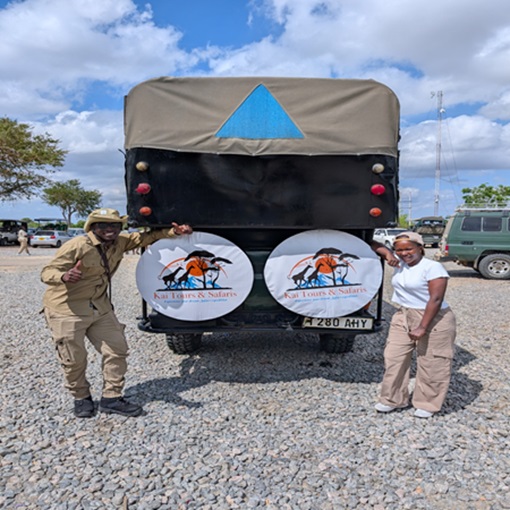
Justus Kahwa,
Founder and Operational Manager of Kai Tours and Safaris, based in Tanzania. Plans and runs Northern Circuit safaris himself, and would rather send you on the trip that fits you than the one that is easiest to sell.
Published 27 November 2026. Written for 2027 travel by Kai Tours and Safaris, a licensed Tanzanian operator (TALA licence no. 037664).
Kai Tours and Safaris is a licensed Tanzanian tour operator (TALA licence no. 037664). You deal directly with the people who plan and run your trip, from your first question to your last game drive.
Explore Tanzania Safari Packages
8-Day Mid-Range Safari
View & Book Safari
8-Day Budget Camping Safari
View & Book Safari
8-Day Luxury Northern Circuit Safari
View & Book Safari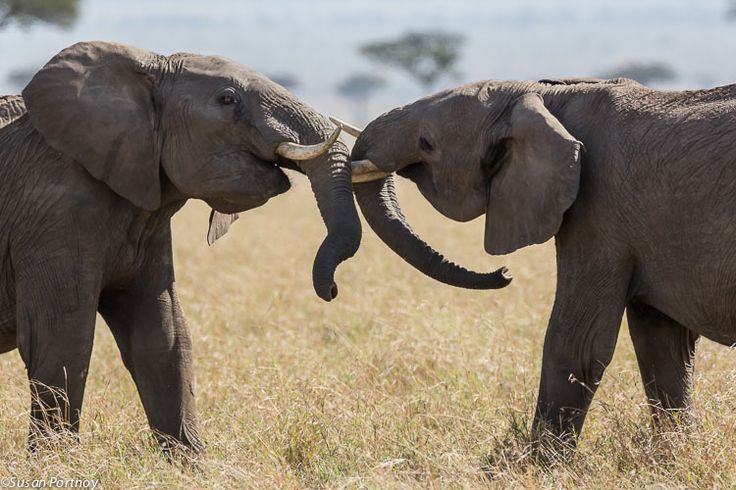
4-Day Northern Safari from Arusha
View & Book Safari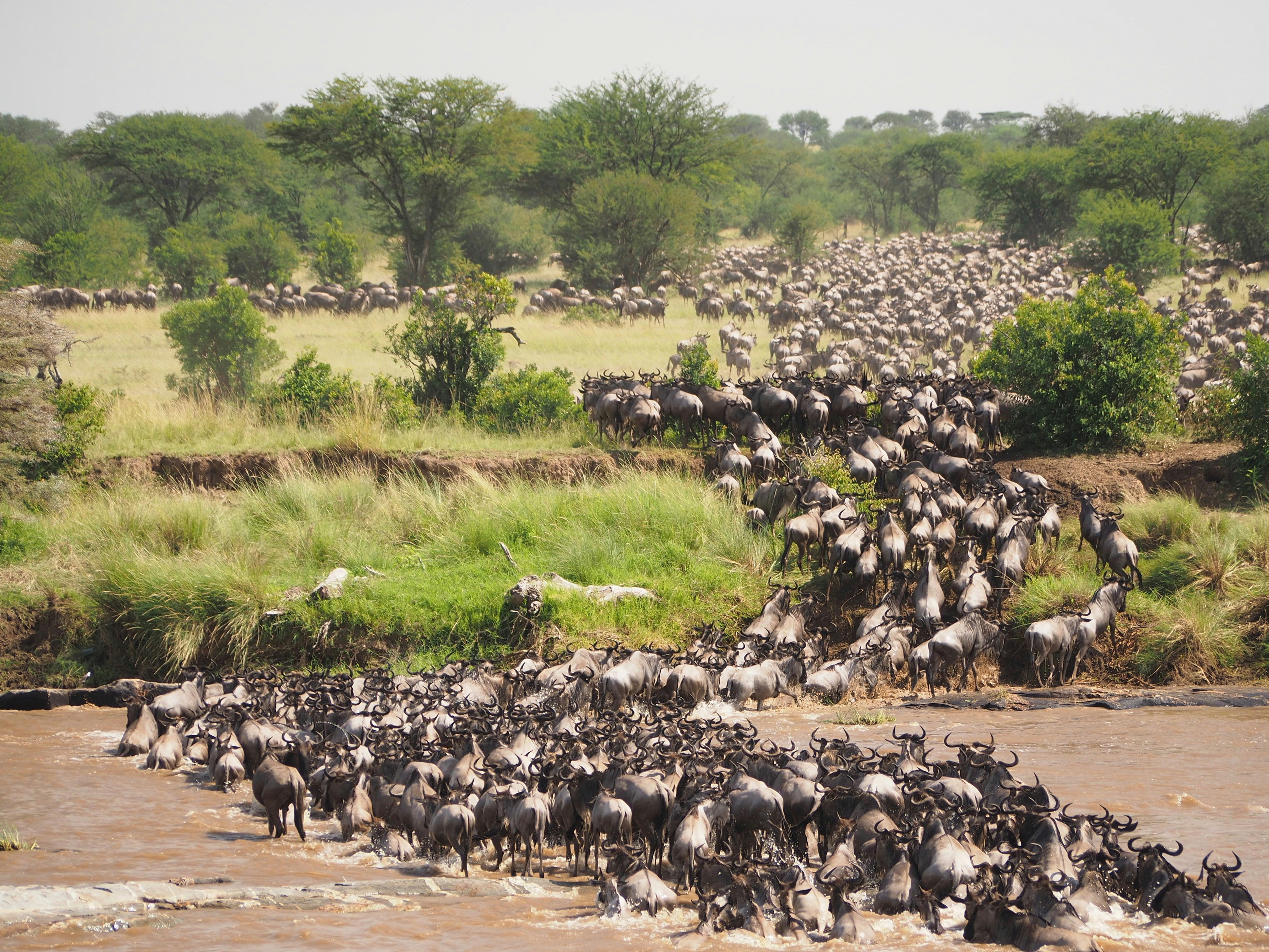
2-Day Serengeti Safari from Zanzibar
View & Book Safari