In Short
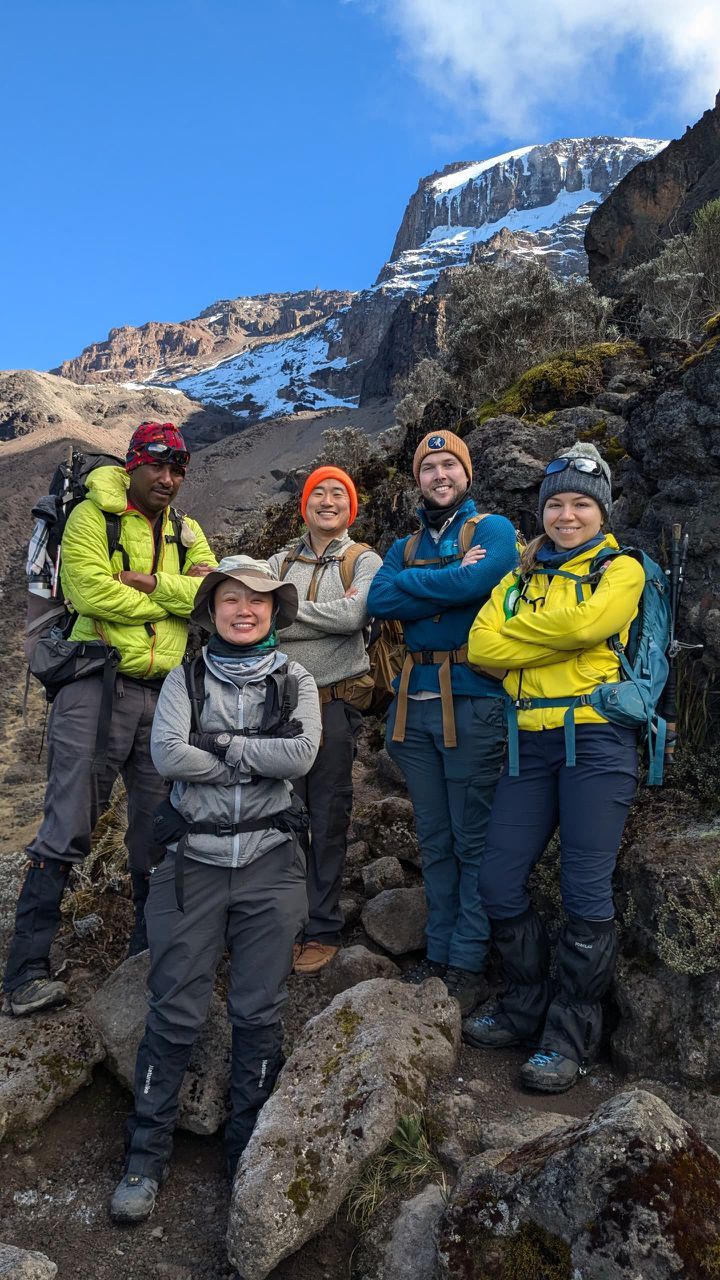
Tanzania, Kenya, and Uganda will co-host the Africa Cup of Nations (AFCON 2027) from June 19 to July 17, 2027, offering football fans a chance to combine match days with a climb up Mount Kilimanjaro. We run group-joining and private climbs on the Marangu, Machame and Lemosho routes, from 5 to 8 days, with park fees, mountain crew, meals and airport transfers included.
Want to Explore more: Know more about Kilimanjaro Climbing.
On This Page
AFCON 2027 and Kilimanjaro Climbing: How to Combine Them
The 2027 Africa Cup of Nations will be played across Kenya, Tanzania and Uganda from 19 June to 17 July 2027, with 24 teams. In Tanzania the planned venues are in Dar es Salaam (Benjamin Mkapa Stadium), Arusha (Samia Suluhu Hassan Stadium) and Zanzibar (Amaan Stadium and Fumba Stadium). Arusha is the closest of these to Mount Kilimanjaro, so it is the easiest base for fans who want to see a match and climb in the same trip.
June and July are also the middle of Kilimanjaro's main dry season, with the clearest skies and the most stable weather of the year. That makes the tournament window one of the busiest times on the mountain, so group departures and private dates fill early. Send us your match dates and we will plan the climb around them.
This page covers the six packages we run on the three most popular routes. Pick the route by how you want to sleep, how much time you have and how much you want to spend.
| Package | Days | Sleeping | Group joining (per person) | Private climb |
|---|---|---|---|---|
| 5-Day Marangu Route | 5 | Huts | $1,350 | Quote on request |
| 6-Day Marangu Route | 6 | Huts | $1,450 | Quote on request |
| 6-Day Machame Route | 6 | Tents | $1,450 | Quote on request |
| 7-Day Machame Route | 7 | Tents | From $1,520 | Quote on request |
| 7-Day Lemosho Route | 7 | Tents | From $1,700 | Quote on request |
| 8-Day Lemosho Route | 8 | Tents | From $2,200 | Quote on request |
Marangu Route (5 or 6 days)
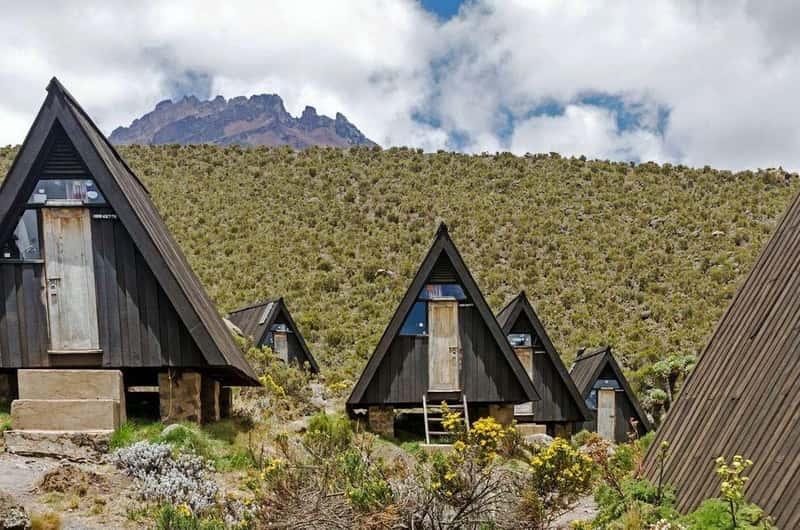
The oldest and simplest route, and the only one with sleeping huts, with bunk beds and a dining hall at each stop. It is the best choice if you do not want to camp. The 5-day version is the cheapest way up but has less time to adjust to the altitude, so the success rate is lower than on longer routes. The 6-day version adds an acclimatization day at Horombo Hut and gives you a much better chance of reaching the summit.
Machame Route (6 or 7 days)
The most popular route, known as the Whiskey Route, with changing scenery from rainforest to moorland, the Lava Tower and the Barranco Wall. You camp in tents. The 7-day version has an extra night on the Shira Plateau, which helps your body adjust and is the version we recommend.
Lemosho Route (7 or 8 days)
The quietest and most scenic route, starting from the western side through forest where you may see wildlife, then crossing the Shira Plateau. It has the best acclimatization profile and the highest success rate, which is why the 8-day version costs more. You camp in tents.

Want to Explore more: See all Kilimanjaro climbing packages.
Kilimanjaro climbing packages- Climb Africa's highest mountain, Uhuru Peak at 5,895 metres, during the AFCON 2027 tournament
- Choose group joining (minimum 2 climbers) or a private climb
- Three routes: Marangu with huts, or Machame and Lemosho with camping
- 5 to 8 day climbs, with the longer routes giving the best chance of summiting
- National park fees, rescue fee, guides, porters, cook, meals and drinking water included
- Round-trip airport transfers and hotel pick-up included
- Plan your climb around your match dates
- Dry-season climbing with the clearest views
- 5-Day Marangu Route: huts, group joining $1,350 per person
- 6-Day Marangu Route: huts, with an acclimatization day, group joining $1,450 per person
- 6-Day Machame Route: camping, group joining $1,450 per person
- 7-Day Machame Route: camping, group joining from $1,520 per person
- 7-Day Lemosho Route: camping, group joining from $1,700 per person
- 8-Day Lemosho Route: camping, group joining from $2,200 per person
Detailed itinerary
Route 1: Marangu Route (5 or 6 days)
Day 1: Marangu Gate to Mandara Hut
Meet your guides, cook and porters, then drive to Marangu Gate and register at the park. Walk through the rainforest to Mandara Hut (about 2,720 m), about five hours. Lunch is on the trail and dinner is at the hut.
Day 2: Mandara Hut to Horombo Hut
A long walking day out of the forest and across open moorland to Horombo Hut (about 3,720 m), with views of Mawenzi and Kibo. Full board at the hut.
Day 3: Acclimatization day at Horombo
A short hike towards Zebra Rocks (about 4,000 m) helps your body adjust, then you rest at the hut. The 5-day version skips this day and goes straight from Horombo to Kibo Hut.
Day 4: Horombo Hut to Kibo Hut
Walk across the barren "saddle" between Mawenzi and Kibo to Kibo Hut (about 4,700 m). Eat early and rest before the midnight summit start.
Day 5: Summit day: Uhuru Peak and down to Horombo
Start around midnight and climb to Gilman's Point (5,685 m) and on to Uhuru Peak (5,895 m) for sunrise. Descend to Kibo Hut for a short rest, then continue down to Horombo Hut. A very long day of about 13 hours.
Day 6: Horombo Hut to Marangu Gate
Walk down to Marangu Gate, collect your summit certificate and drive to your hotel in Moshi or Arusha.
Route 2: Machame Route (6 or 7 days)
Day 1: Machame Gate to Machame Camp
Drive to Machame Gate (about 1,800 m), register and walk through dense rainforest to Machame Camp (about 3,000 m), five to seven hours. Camp in tents with dinner prepared by your cook.
Day 2: Machame Camp to Shira 1 Camp
Climb steadily through heather and moorland to Shira 1 Camp (about 3,500 m). On the 6-day version you walk on to Shira 2 Camp (about 3,850 m) instead.
Day 3: Shira 1 to Lava Tower to Barranco Camp
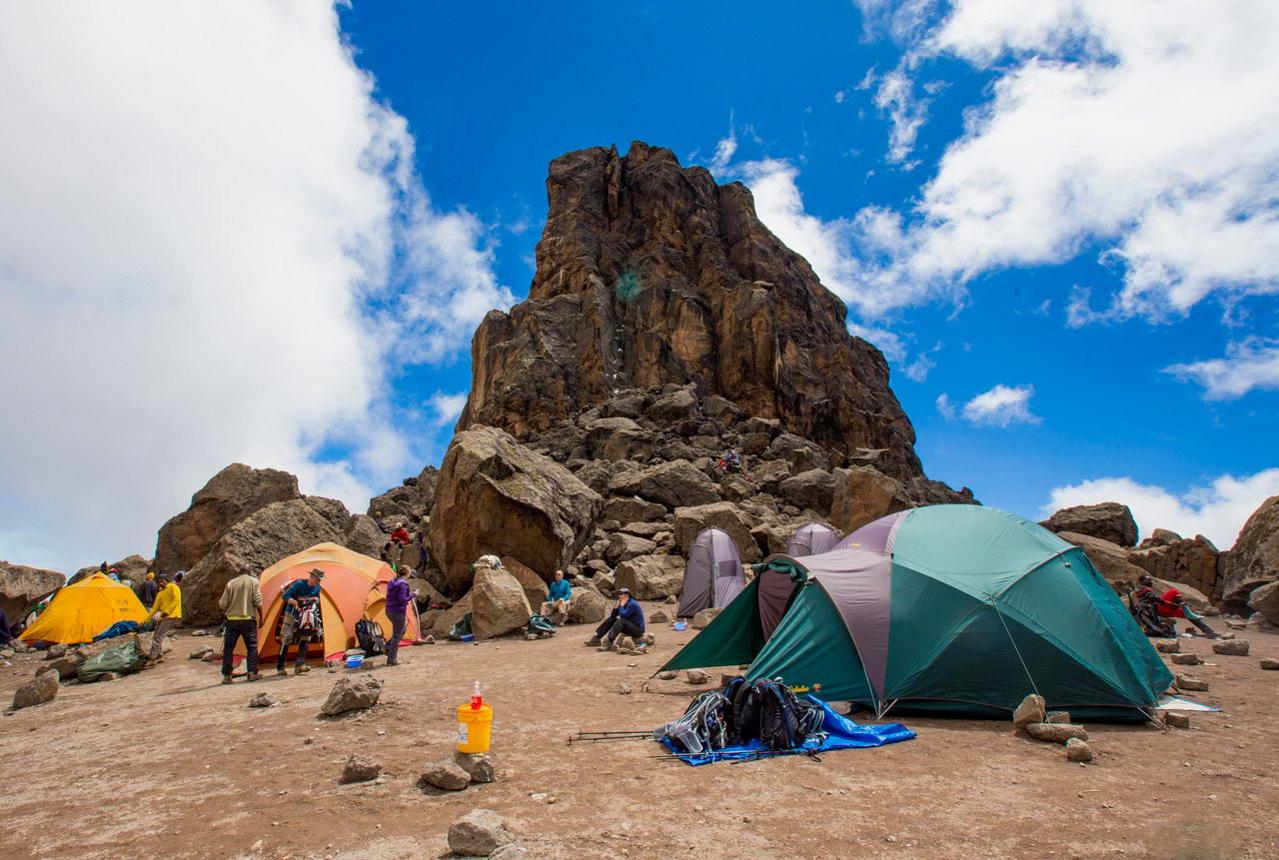
Walk up to the Lava Tower (about 4,600 m) for lunch, then descend to Barranco Camp (about 3,900 m). This climb-high, sleep-low day is the best acclimatization on the route.
Day 4: Barranco Camp to Karanga Camp
Scramble up the Barranco Wall, then cross valleys to Karanga Camp (about 4,000 m). A short day to rest and prepare for the summit.
Day 5: Karanga Camp to Barafu Camp
Walk up to Barafu Camp (about 4,600 m), eat early and sleep a few hours before the summit climb.
Day 6: Uhuru Peak and down to Mweka Camp Summit day
Leave around midnight for Stella Point (5,685 m) and Uhuru Peak (5,895 m) at sunrise. Descend to Barafu for a rest and a meal, then continue to Mweka Camp (about 3,100 m).
Day 7: Mweka Camp to Mweka Gate
Walk through the rainforest to Mweka Gate (about 1,640 m), collect your summit certificate and drive to your hotel in Moshi or Arusha.
Route 3: Lemosho Route (7 or 8 days)
Day 1: Lemosho Gate to Mti Mkubwa Camp
A long drive to Londorossi Gate on the western side, registration, then the transfer to Lemosho Gate and a short walk through forest to Mti Mkubwa Camp (about 2,800 m). You may see colobus monkeys and, rarely, buffalo or elephant.
Day 2: Mti Mkubwa to Shira 1 Camp
Climb out of the forest onto the Shira Plateau and Shira 1 Camp (about 3,500 m). On the 7-day version you go straight from Mti Mkubwa to Shira 2 Camp (about 3,850 m).
Day 3: Shira 1 to Shira 2 Camp
A gentle walk across the plateau to Shira 2 Camp (about 3,850 m), with wide views of Kibo and Mount Meru.
Day 4: Shira 2 to Lava Tower to Barranco Camp
Climb to the Lava Tower (about 4,600 m) for lunch, then descend to Barranco Camp (about 3,900 m) to sleep.
Day 5: Barranco Camp to Karanga Camp
Scramble up the Barranco Wall and cross valleys to Karanga Camp (about 4,000 m).
Day 6: Karanga Camp to Barafu Camp
A short walk to Barafu Camp (about 4,600 m). Rest and eat early before the summit climb.
Day 7: Uhuru Peak and down to Mweka Camp Summit day
Leave around midnight for Stella Point and Uhuru Peak (5,895 m) at sunrise, then descend to Barafu for a rest and on to Mweka Camp (about 3,100 m).
Day 8: Mweka Camp to Mweka Gate
Walk to Mweka Gate (about 1,640 m), collect your certificate and drive to your hotel in Moshi or Arusha.
Timings are a guide and flex with the season, road conditions and the wildlife.
AFCON 2027 Kilimanjaro climbing prices
Group-joining climbs share the guide team, cook, porters and park fees with other climbers on the same departure. A departure runs with a minimum of two climbers, and a solo climber is matched with others or offered a private quote. Private climbs run from one climber and are priced by group size.
| Group size | 5 Days Marangu | 6 Days Marangu | 6 Days Machame | 7 Days Machame | 7 Days Lemosho | 8 Days Lemosho |
|---|---|---|---|---|---|---|
| Group joining, per person (USD) | $1,350 | $1,450 | $1,450 | From $1,520 | From $1,700 | From $2,200 |
Private climbs: price per person depends on the number of climbers, so we send a quote by group size. Prices are per person, indicative for 2027 and include national park fees, the rescue fee, the mountain crew, camping or hut accommodation, meals and round-trip airport transfers. Park fees are reviewed every year, so we confirm the exact price when you book.
Want to Explore more: Read the Kilimanjaro Climb Costs Guide.
Accommodation and Transfers
On the mountain:
- Marangu Route: sleeping huts at Mandara, Horombo and Kibo, with bunk beds, mattresses and a shared dining hall
- Machame and Lemosho routes: sleeping tents with foam mattresses at each camp, plus a dining tent, set up and taken down by the crew
Before and after the climb: hotel nights in Moshi or Arusha are not included, so you can stay where you like or near your match. We can book a bed and breakfast hotel for you at your request.
Transfers: round-trip airport transfers from Kilimanjaro International Airport or Arusha Airport are included, together with hotel pick-up on the first day, the drive to the gate, and the drive back to your hotel after the climb.
Mountain crew: a lead guide and assistant guides, a cook and a team of porters who carry the camping gear, food and your main bag. For a pair of climbers the crew is typically 1 lead guide, 1 assistant guide, 1 cook and 6 to 7 porters, and it grows with the group.

What's included
- • Kilimanjaro National Park entry and conservation fees
- • Rescue fee
- • Professional lead guide and assistant guides
- • Cook and porter team, with porterage of your main bag
- • Hut accommodation (Marangu) or tents and sleeping mats (Machame and Lemosho)
- • All meals on the mountain and drinking water
- • Round-trip airport transfers and hotel pick-up and drop-off
- • All transport to and from the gates
- • Government taxes and VAT
- • Summit certificate
What's excluded
- • International flights
- • Tanzania visa fee
- • Tanzania mandatory inbound travel insurance
- • Personal travel and medical insurance
- • Hotel nights before and after the climb
- • Climbing gear (rental available)
- • Tips for the mountain crew
- • Personal expenses and drinks outside meals
- • Match tickets and transport to the stadium
Best time to climb Kilimanjaro during AFCON 2027.
Short answer
The AFCON 2027 tournament (19 June to 17 July) falls in the middle of Kilimanjaro's main dry season, so it is a very good time to climb. Skies are clear, the trails are drier and the views from the summit are at their best. The trade-off is that it is also the busiest and most popular time.
June to October: main dry season
The clearest, most stable weather of the year, with the best chance of a summit sunrise. Days are warm on the lower slopes and nights are cold, with temperatures well below freezing on summit night. Expect more climbers on the routes, especially on Machame, so groups and private dates fill early.
January to mid-March: second dry season
Warmer than the winter months, with good visibility and fewer climbers. A good alternative if the tournament dates do not suit you.
April to May: long rains
The wettest months, with cloud and rain on the lower slopes and snow on the summit. Trails are quiet but muddy. We do not recommend these months for first-time climbers.
November to December: short rains
Shorter showers and a mix of cloud and clear periods. It is quieter than the dry season, but the weather is less reliable.
Planning your climb around the matches
- Send us your team's match dates as soon as the fixtures are known, and we will schedule the climb before or after them.
- Allow a rest day between finishing the climb and a match, because your legs will be tired after the descent.
- Choose a 6-day or longer route if you have the time, since slower routes give the best chance of reaching the summit.
- Arrive in Arusha or Moshi at least one night before you start the climb to rest and get fitted with any rental gear.
Good to know
- Altitude sickness can affect anyone, and the longer routes with an acclimatization profile give the best chance of reaching the summit.
- Summit night starts around midnight and is the coldest part of the trek, so bring a warm down or synthetic jacket, gloves and a hat.
- Porters carry a maximum of 20 kg of crew and camping gear, so keep your main bag within the weight limit we send you.
- Tips are paid at the end of the climb and shared among the whole crew.
- Travel insurance that covers trekking up to 6,000 m is required.
- Group-joining departure dates are confirmed once you send us your preferred dates.
Frequently asked questions
Justus Kahwa
Plans Kilimanjaro climbing itineraries on a regular basis, sequencing each around the guest's flights and the season, and would rather send the route that fits than the one already on the shelf. This one includes climb Africa's highest mountain, Uhuru Peak at 5,895 metres, during the AFCON 2027 tournament.