Quick answer: Nyerere National Park (the former northern Selous) sits roughly 230 km / 143 miles south of Dar es Salaam by the main eastern road, a drive of about 5 to 5.5 hours to the Mtemere Gate. You have four realistic ways to get there: fly in (under an hour, and the fastest), drive in a private 4x4 (the most common for safari), take a public bus toward Mloka (cheapest, slowest, least convenient), or use the SGR train, which, honestly, suits Mikumi far better than Nyerere because the line runs the wrong way. The fastest route is flying. Two new things shape any 2027 trip: Tanzania's mandatory $44 inbound insurance (in force since 1 October 2026) and AFCON 2027 in June-July, when Dar es Salaam is a host city.
Where is Nyerere National Park, and how far is it from Dar es Salaam?
Nyerere National Park lies in south-eastern Tanzania, spread across the Pwani, Morogoro, Lindi and Ruvuma regions. It was gazetted in 2019 from the northern, photographic section of the former Selous Game Reserve, which is why so many travellers, and so many lodges, still say "Selous" out of habit. At well over 30,000 square kilometres, it is one of the largest national parks on the African continent, and the mighty Rufiji River runs right through it, feeding the lakes and channels that make Nyerere's famous boat safaris possible.
The honest answer to "how far is it?" is that there is no single number, because the park is enormous and has more than one entrance. The road distance from Dar es Salaam to the nearest entry point is commonly quoted at around 230 km, but depending on which gate you aim for it can be anywhere from about 184 km to 240 km. The two gates that matter for most visitors are:
- Mtemere Gate, the main eastern gate, nearest to Dar es Salaam and the most popular entrance. This is the one you reach via the direct southern road through Kibiti and Mloka.
- Matambwe Gate, on the north-western side, reached via Morogoro. It is further and slower from Dar, and tends to suit itineraries that approach from the Morogoro direction.
There are several airstrips inside the park too: Mtemere, Matambwe, Siwandu, Beho Beho and others, which is what makes the fly-in option so appealing. We will come back to each route in detail, but first, here is the orientation most people miss: Nyerere is south of Dar es Salaam, not west. That single fact decides almost everything about how you should travel there, and it is the reason the SGR train is less useful here than it is for Mikumi.
What you'll see when you get there
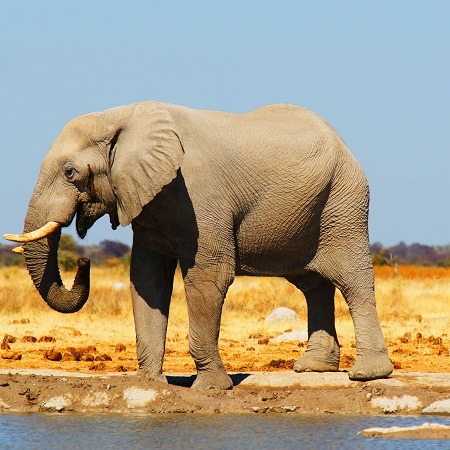
It helps to know what the journey is buying you. Nyerere is big-game country in the truest sense. On a typical visit you can expect elephants, giraffes, zebras, buffalo, hippos and crocodiles, with strong chances of lions and, for the lucky, leopards. The park is also one of the last great strongholds of the endangered African wild dog, and few places on the continent offer a better chance of seeing a pack on the move. Birdlife along the Rufiji is prolific, which is part of why the river attracts photographers year after year.
What truly sets Nyerere apart from Tanzania's northern parks is water-based safari. The Rufiji River and its lakes make boat safaris possible, drifting past hippos and crocodiles while elephants come down to drink, something you simply cannot do on the open Serengeti plains. Guided walking safaris with an armed ranger are also a regular feature here. Three different ways to experience wildlife (drive, boat and foot) in one park is a large part of Nyerere's appeal, and it is worth factoring into how long you stay once you have made the trip down from Dar.
Dar es Salaam to Nyerere: every route compared
Before the detail, here is the whole picture on one screen. Travel times are door-to-gate estimates for the Mtemere side and will vary with traffic leaving Dar, the season and your exact start and end points.
| Route | Approx. time | Distance | Rough cost band | Best for |
|---|---|---|---|---|
| Fly-in (fastest) | Under 1 hr flight (~45 min) + transfer | Direct by air | $4600 per pax (flight-inclusive) | Short trips, comfort, maximising game time |
| Private 4x4 road | ~5-5.5 hrs to Mtemere | ~230 km / 143 mi | $350 (shared or private vehicle per day) | Classic safari, scenery, flexibility, value |
If you take nothing else from this table, take this: fly for speed, drive for the classic safari experience, and skip the train and the bus unless you have a specific reason. The sections below explain exactly why.
Option 1: Fly in from Dar es Salaam (the fastest route)
The quickest way from Dar es Salaam to Nyerere is to fly. Scheduled light-aircraft flights leave Julius Nyerere International Airport (airport code DAR) and land at one of the park's bush airstrips (Mtemere, Siwandu, Matambwe or another, depending on where your camp is) in under an hour, usually around 45 minutes. From the airstrip, your lodge or guide meets you and you can be on a game drive almost immediately.
The appeal is obvious: a flight collapses a five-hour-plus road journey into a short hop, and it spares you the long, bumpy gravel section near the park. For a one-day or two-day safari, flying is what makes the trip worthwhile at all, because every hour saved on the road is an hour you spend watching wildlife instead. It is also the kinder option in the rainy months, when the final stretch of road can be slow or temporarily impassable.
Flying in from Zanzibar
One of Nyerere's quiet advantages is that you do not have to start in Dar at all. There are direct scheduled flights from Zanzibar to the park, which is why the fly-in day safari has become so popular with beach holidaymakers. You can be on a Zanzibar beach in the morning, on a game drive by mid-morning, and back on the island by evening. If you are island-based, see our dedicated Nyerere (Selous) day-trip fly-in safari from Zanzibar, which includes hotel pick-up and drop-off, or step up to the premium 3-day Nyerere luxury safari from Zanzibar for a lodge-based stay.
What flying costs you, and what it doesn't
The trade-off is money and scenery. Flying costs more than driving, and you miss the roadside slice of everyday Tanzanian life between the city and the bush. But for most short itineraries the maths favours the plane: you are paying to convert travel hours into safari hours. If your priority is speed and comfort, this is your route.
At a glance: fly in
Time: under 1 hour (≈45 min) from Dar; direct flights also from Zanzibar. Pros: fastest, most comfortable, best for short trips, avoids the gravel road. Cons: higher cost, small luggage limits on light aircraft, no roadside scenery.
Option 2: Private 4x4 road transfer (the classic safari way)
For a traditional safari, most visitors travel by road in a private 4x4 with a guide-driver, and this is the option we arrange most often at Kai Tours. The standard route from Dar es Salaam heads south and follows the eastern road through Kibiti and then Mloka, finishing at the Mtemere Gate. Plan on roughly 5 to 5.5 hours to Mtemere in good conditions; the Matambwe Gate on the north-western side is further, around 6 to 7 hours.
Be realistic about road quality. The first part of the drive is on decent tarmac, but the final stretch of about 75 km into the park is gravel, bumpy, dusty in the dry season and slow. During the heavy rains of April and May, that section can become genuinely difficult, which is one more reason the dry season is the easier time to drive in. A high-clearance 4x4 and an experienced driver are not luxuries on this road; they are the difference between a smooth arrival and a stressful one.
Why road still wins for many travellers
- Value: sharing a vehicle keeps the per-person cost well below flying, especially for groups.
- Flexibility: you can stop, combine parks, and carry more luggage than a light aircraft allows.
- The journey itself: the drive south is part of the experience: villages, roadside markets and the landscape slowly turning wild.
- Multi-park trips: road access makes it easy to pair Nyerere with Mikumi or a coastal extension.
If you want the full southern-circuit road experience, our 3 days Nyerere budget safari from Dar es Salaam is built around this route and includes the Rufiji boat safari and a walking safari, while the 2 days Dar to Selous safari is the shortest road option. If you have more time and want a relaxed, lodge-based trip, the 4-day Selous (Nyerere) safari from Dar es Salaam (from $1,200 per person, with three nights at Selous Safari Lodge) adds extra game drives alongside the Rufiji River boat safari and a guided walking safari.
At a glance: private 4x4
Time: ~5-5.5 hrs to Mtemere, ~6-7 hrs to Matambwe. Distance: ~230 km via Kibiti and Mloka. Pros: value, flexibility, luggage, scenery, easy park combos. Cons: long, the last ~75 km is gravel, tougher in the April-May rains.
The fastest route from Dar es Salaam to Nyerere in 2027
If speed is your single priority, flying is the fastest route, with no close competitor. A flight of under an hour replaces a drive of five hours or more and drops you at an airstrip inside the park, ready to start your game drive. For a one or two-day trip, flying is not just fastest. It is the only way to make a short safari genuinely worthwhile.
If you want the best balance of cost and experience rather than raw speed, the private 4x4 road transfer is the winner: slower, yes, but far better value, more flexible, and a proper part of the adventure. Our standing advice to clients is simple: fly if your days are precious, drive if your budget is. The SGR and the public bus are not in the running for Nyerere specifically, for the reasons above.
Nyerere vs Mikumi: which southern park is easier to reach?
Travellers choosing a southern safari from Dar es Salaam often weigh Nyerere against Mikumi, and access is a big part of that decision. Mikumi is the more accessible of the two by public transport, precisely because the SGR railway serves nearby Morogoro and the park sits close to the main highway, which is why a one-day Mikumi trip by train is so popular. Nyerere is wilder, larger and better for boat safaris, but its main gate is reached by the southern road or by air rather than by rail.
In practice: if you want the quickest, cheapest taste of a Tanzanian safari and don't mind a smaller park, Mikumi via the SGR is hard to beat. See our Dar es Salaam to Mikumi travel guide and the 1-day Mikumi safari by SGR. If you want the bigger, wilder experience with river safaris and more room to roam, Nyerere rewards the extra effort of getting there. Many of our guests do both on a single southern-circuit trip, and the road network between them makes that straightforward.
A note from Justus
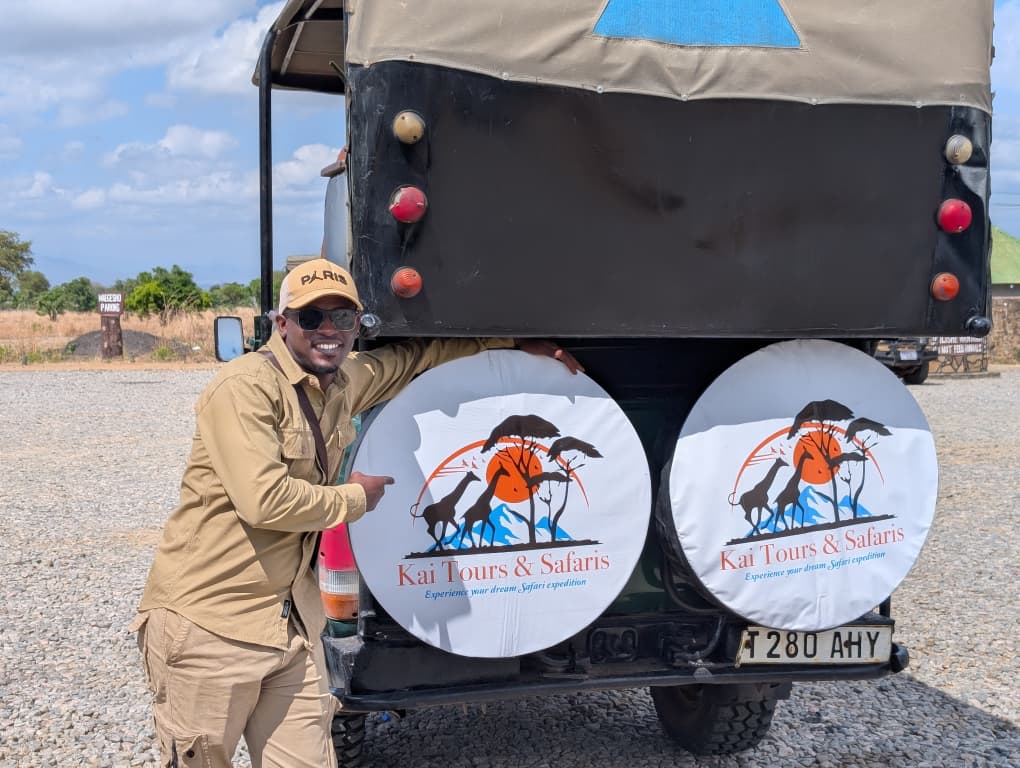
I arrange both the road and fly-in versions of this journey every week, and the question I'm asked most is whether the train works for Nyerere. It doesn't, really, and I'd rather lose the booking than put you on a route that wastes your day. If you tell me your dates, budget and whether you're coming from Dar or Zanzibar, I'll tell you honestly which option fits.
Written from direct operating experience · Updated 8 October 2026
New for every visitor: Tanzania's mandatory inbound insurance
This is the single most important update for anyone planning a 2027 trip, and many travellers who booked earlier have not yet heard about it. Since 1 October 2026, eligible foreign visitors entering mainland Tanzania by air, land or sea must hold a mandatory inbound travel insurance policy. It was introduced through the Inbound Travel Insurance Regulations for Foreign Visitors Entering Mainland Tanzania, published by the Ministry of Finance.
Here are the facts you actually need:
- Cost: about US$44 per visitor, paid in the Tanzanian shilling equivalent.
- Validity: up to 92 days from arrival, with multiple entries included.
- Where you buy it: visitors entering through the mainland obtain it from the state-owned National Insurance Corporation (NIC); visitors whose first point of entry is Zanzibar buy it from the Zanzibar Insurance Corporation (ZIC).
- You don't pay twice: travellers combining mainland Tanzania and Zanzibar on one trip buy the cover once, at their first point of entry.
- It is separate from your own policy: holding private international travel or medical insurance does not exempt you. This is a local entry requirement in its own right.
- Exemptions: residents of East African Community (EAC) and Southern African Development Community (SADC) partner states are among those exempt. Reduced rates have been reported for children and for larger groups.
Because you will fly into Dar es Salaam (or arrive via Zanzibar) before heading to Nyerere, this cover applies to you. Our practical advice: treat the roughly $44 as a fixed line in your trip budget, and sort it before or on arrival so it never becomes a hold-up at immigration. Always confirm the current cost and process on the official NIC or ZIC channels close to your travel date, since entry rules can be adjusted.
It is worth stressing why this catches people out. The requirement was announced only shortly before it took effect, so travellers who booked their Tanzania trip months earlier, long before October 2026, may have no idea it exists. If you are reading this while planning a 2027 safari, you are ahead of the curve: simply build it into your pre-departure checklist alongside your visa and vaccinations, and you will breeze through. The cover is a medical-emergency policy designed to guarantee that every visitor has access to emergency treatment while in the country, which is a reasonable thing to carry in any case when you are heading into a remote wilderness area like Nyerere, hours from the nearest major hospital.
Action point
Budget ~US$44 per person for mandatory inbound insurance, buy it from NIC (mainland) or ZIC (if entering via Zanzibar), and keep proof with your travel documents. One policy covers a combined mainland-and-island trip.
AFCON 2027: what it means for your Nyerere safari
Tanzania is co-hosting one of the biggest events in its history. The 2027 Africa Cup of Nations (AFCON) runs from 19 June to 17 July 2027 and is staged jointly by Tanzania, Kenya and Uganda, the first time three nations have co-hosted, and the tournament's return to East Africa after decades. In Tanzania, matches are set for Dar es Salaam (at the Benjamin Mkapa Stadium), Arusha and Zanzibar.
Since Dar es Salaam is both your likely arrival city and a host city, AFCON touches your travel plans in a few concrete ways:
- Book early. Flights into Dar, city hotels and domestic transfers will be in high demand during the tournament window. Lock in your safari, your fly-in seats and your Dar accommodation well ahead.
- The timing is perfect for safari. Mid-June to mid-July falls squarely in the dry season, which is prime game-viewing in Nyerere, when wildlife gathers along the Rufiji River. A football trip and a bush trip slot together naturally.
- Pair a match with a safari. Watch a game in Dar, then fly or drive south to Nyerere for two or three days of wildlife. It is one of the easiest "city plus safari" combinations in the country, and a once-in-a-generation reason to visit.
- Mind the insurance. The mandatory inbound insurance above applies to football fans exactly as it does to safari-goers, so factor it in regardless of why you're visiting.
If you are planning around AFCON, talk to us early, as the smartest itineraries in that window will be built months in advance, not weeks.
Why Nyerere is one of the best-value safaris right now
Beyond logistics, there is a reason to choose Nyerere that has nothing to do with how you get there: you can enjoy a genuinely world-class safari here at prices well below Tanzania's northern circuit. Nyerere still sees a fraction of the visitors that the Serengeti and Ngorongoro receive, which keeps costs down and sightings uncrowded.
Several things make it affordable without cutting the experience:
- Short, shared departures. A seat-in-vehicle day trip or a two to three-day group safari spreads fixed costs across travellers, which is how our Zanzibar day trip starts from just $470 per person.
- No long internal flights required. Unlike a northern-circuit trip from the coast, Nyerere is close enough to reach by a short flight or a single day's drive, so you spend less getting there.
- More in one place. A Rufiji boat safari, game drives and a walking safari are all possible in the same park, so you get variety without moving between distant parks.
- Southern-circuit pricing. Lodges and park logistics in the south are generally gentler on the budget than their northern equivalents for a comparable standard.
In short, Nyerere lets first-time and budget-conscious travellers experience big-game Africa (elephants, lions, hippos, crocodiles and the endangered African wild dog) for less, while keeping the door open to a full luxury lodge stay if that is what you want.
Pairing Nyerere with Tanzania's Northern Circuit
Nyerere belongs to Tanzania's southern circuit, which is quieter, wilder and heavier on boat and walking safaris. Many visitors pair it with the famous northern circuit (the Serengeti, the Ngorongoro Crater, Tarangire and Lake Manyara) to see both faces of the country in one trip. The two circuits sit at opposite ends of Tanzania, so combining them usually means an internal flight rather than a drive, but the contrast is spectacular: the Serengeti's endless migration plains on one side, Nyerere's riverine wilderness on the other.
If you are weighing a southern trip against a northern one, it helps to read about the northern parks directly: the Serengeti National Park, the Ngorongoro Crater and Lake Manyara National Park. Popular combinations include the 3-day Serengeti and Ngorongoro safari and the 3-day Tarangire and Lake Manyara safari, while beach travellers often prefer the 5-day luxury fly-in from Zanzibar. For a curated set of shorter high-end options, see our short northern Tanzania luxury safaris. A good rule of thumb: Nyerere for wilderness, water and value; the north for the migration and the classic Big-Five crater experience.
Best time to visit Nyerere National Park
The timing of your trip affects both the wildlife and the journey itself.
- Dry season (June-October): the best overall window. Water sources shrink, so animals concentrate near the Rufiji River and remaining pools, making game drives and boat safaris especially rewarding. Roads are at their easiest, and this period overlaps the AFCON 2027 dates.
- Short dry spell and green shoulder (late December-February): lush scenery, newborn animals and excellent birdlife, usually with fewer visitors.
- Long rains (April-May): the park is beautifully green but the gravel approach road can be difficult, and some camps reduce operations. Flying in makes more sense than driving in these months.
If your main aim is the classic big-game experience with the smoothest logistics, aim for the dry season, and if that means travelling during the AFCON window, book earlier rather than later.
Practical tips & pre-trip checklist
- Sort the mandatory inbound insurance (~$44) via NIC or ZIC and keep proof with your documents.
- Arrange your visa in advance through the official Tanzania e-visa system where applicable.
- Carry a Yellow Fever certificate if you are arriving from, or transiting, a country where it is required.
- Pack light for fly-in trips: light aircraft have strict, soft-bag luggage limits.
- Wear neutral colours and bring a hat, sunglasses, sunscreen, insect repellent and a light layer for early game drives.
- Choose your route by priority: fly if your days are short, drive if your budget is tighter.
- Book transfers and park logistics through a licensed operator, since a public bus cannot take you on safari inside the park.
- Travel in the dry season (June-October) for the best balance of wildlife and easy roads.