Key takeaways for first-timers
- Best time: June–October (dry, easy viewing); Mara River crossings July–October (north); calving Jan–March (south).
- How long: 3 days minimum, 4–5 days ideal.
- Cost: mid-range ≈ US$250–450 pp/day, all-inclusive.
- 2026 park fee: ≈ US$70.80 per adult per 24h (incl. VAT) + concession ≈ US$70.80/night.
- Getting there: drive or fly from Arusha/Moshi; fly via Arusha/Kilimanjaro from Zanzibar.
Visit Our faq's Page For More Information
History & geography of the Serengeti
The Serengeti takes its name from the Maasai word Siringet, meaning "endless plains." It became a national park in 1951 and a UNESCO World Heritage Site in 1981, and it forms the heart of the greater Serengeti–Mara ecosystem that stretches into Kenya's Maasai Mara.
Request For A QuoteA short history
Long inhabited by the Maasai, the region was set aside for conservation in the early 20th century and gazetted as a national park in 1951. Its global importance was recognised when UNESCO inscribed it as a World Heritage Site in 1981 and a Biosphere Reserve. Today it is managed by the Tanzania National Parks Authority (TANAPA).
Geography & the four regions
Covering about 14,750 km², the Serengeti is usually explored in four areas, each with a different character:
Central (Seronera) : year-round resident wildlife and excellent big-cat sightings; the most accessible base. Northern (Kogatende/Lobo) : the Mara River and its famous crossings, July–October. Western Corridor (Grumeti) : riverine forest and the Grumeti crossings around May–June. Southern plains (Ndutu) : short-grass plains that host the calving season from late January to March.
Ecosystem & wildlife: the Big Five and beyond
The Serengeti is home to all of the Big Five lion, leopard, elephant, buffalo and rhino along with cheetah, giraffe, hippo and over 500 bird species. Lion, elephant, buffalo and leopard are commonly seen; rhino are rare.
Lion
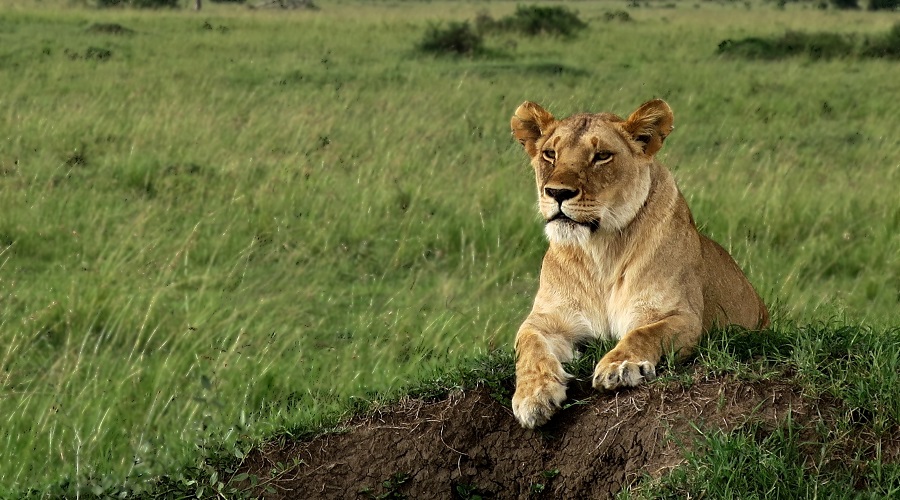
The Serengeti holds one of the largest lion populations in Africa, often seen on kopjes and in the Seronera valley.
Leopard
Elusive but regularly spotted resting in acacia trees along rivers.
Elephant
Common in the north and west.
Buffalo
Widespread in large herds.
Rhino
A small, protected black-rhino population makes this the rarest of the five to see.
Beyond the Big Five you can expect cheetah on the southern plains, spotted hyena, the occasional wild dog, plus zebra, giraffe, topi, eland, hippo and crocodile. Birdlife is exceptional, from ostrich and secretary birds to lilac-breasted rollers and flamingos on seasonal lakes.
The Great Wildebeest Migration
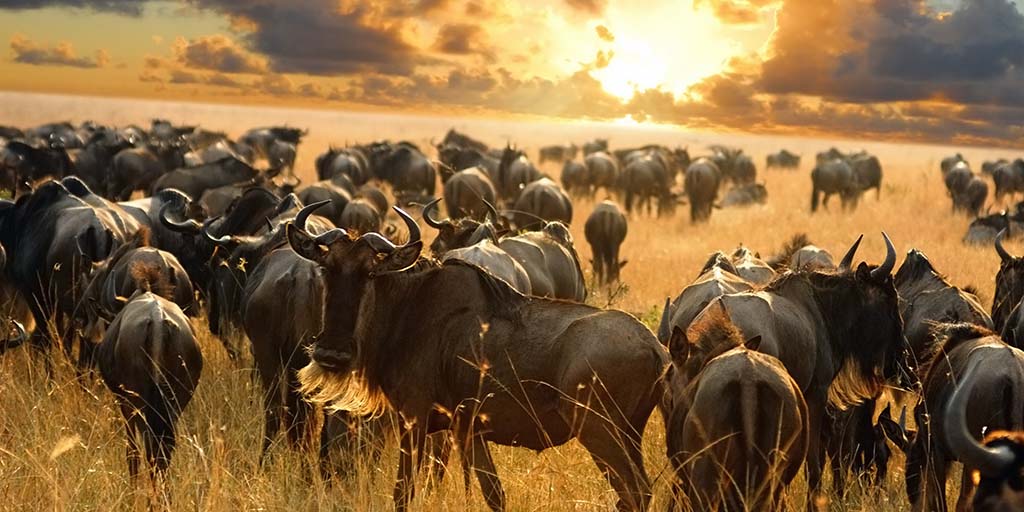
The Great Migration is the year-round, clockwise movement of around 1.5 million wildebeest and hundreds of thousands of zebra through the Serengeti–Mara ecosystem in search of fresh grazing. The two headline events are the calving season (Jan–March, south) and the Mara River crossings (July–October, north).
| Months | Where the herds are | Highlight |
|---|---|---|
| Dec–March | Southern Serengeti / Ndutu plains | Calving season (late Jan–Feb) |
| April–May | Central Serengeti, moving northwest | Herds on the move (green season) |
| May–June | Western Corridor / Grumeti | Grumeti River crossings |
| July–October | Northern Serengeti / Mara River | Dramatic Mara River crossings |
| November | Returning south through the east | Short rains, herds heading back |
Exact timing shifts each year with the rains, a good operator tracks herd movements and positions you accordingly.
Best Serengeti Safari PackagesBest time to visit the Serengeti
The best overall time to visit is the dry season, June to October, when wildlife gathers near water and roads are easy. Choose January–March for the calving season and big cats, July–October for the Mara River crossings, and the green season (March–May) for lush scenery, fewer crowds and lower prices.
| Season | Months | Best for | Crowds / price |
|---|---|---|---|
| Dry (peak) | Jun–Oct | Easy game viewing, river crossings | Busier, higher |
| Calving | Late Jan–Mar | Newborns, predator action (south) | Moderate |
| Green (low) | Mar–May | Scenery, birding, value | Quiet, lower |
| Short rains | Nov–Dec | Fresh landscapes, fewer vehicles | Moderate |
Getting to the Serengeti from Arusha, Moshi & Zanzibar
You can reach the Serengeti by road or by light aircraft. From Arusha it is roughly an 8-hour scenic drive via Ngorongoro, or about a 1-hour flight. From Moshi/Kilimanjaro add around an hour by road. From Zanzibar, fly via Arusha or Kilimanjaro, or take a scheduled flight to a Serengeti airstrip about 2 hours in the air.
From Arusha
Arusha is the classic gateway. Driving takes you through the Ngorongoro highlands and is cheaper and more scenic, but it is a long day each way. Flights from Arusha Airport (ARK) to airstrips such as Seronera take about an hour.
From Moshi / Kilimanjaro
Moshi sits beside Kilimanjaro International Airport (JRO), roughly an hour from Arusha. Most Moshi-based safaris drive via Arusha, or fly from JRO. This is ideal if you are also climbing Kilimanjaro.
From Zanzibar
From the island you fly to the mainland — either connecting through Arusha/Kilimanjaro or on a scheduled light-aircraft flight straight to a Serengeti airstrip. This fly-in approach powers the popular Serengeti safari and Zanzibar beach combination.
TANAPA park fees & concession fees (2026)
In 2026, non-resident adults pay about US$70.80 per person per 24 hours to enter the Serengeti (including 18% VAT), and children aged 5–15 about US$23.60. Staying overnight inside the park adds a concession fee of roughly US$70.80 per person per night. These fees are normally included in your safari package price.
| Fee (2026, incl. VAT) | Non-resident adult | Non-resident child (5–15) | EAC citizen |
|---|---|---|---|
| Park entry (per 24h) | ~$70.80 | ~$23.60 | TSh 10,000 |
| Concession / lodge fee (per night) | ~$70.80 | ~$12 | TSh 35,400 |
| Public campsite (per night) | ~$35.40 | ~$11.80 | — |
| Special campsite (per night) | ~$59 | ~$11.80 | — |
Also budget for: a Ngorongoro transit fee (~$71 per adult) if driving via the crater, the Ngorongoro Crater service fee (~$295 per vehicle per descent) if you go down, a safari-vehicle fee, and an optional balloon safari (~$500–$600 pp). Children under 5 enter free.
Important: TANAPA fees are based on the 2023/24 tariff still in force in 2026 and may change each July. Figures above include 18% VAT but vary slightly by season and source — always confirm current rates on the official TANAPA tariff before quoting.
Where to stay: 10 of the best Serengeti accommodations
| Lodge / camp | Region | Tier | Good for |
|---|---|---|---|
| Four Seasons Safari Lodge Serengeti | Central | Luxury | Families, first-timers, waterhole views |
| Singita Sabora / Faru Faru | West (Grumeti) | Luxury | Exclusive, high-end |
| Serengeti Serena Safari Lodge | Central | Mid-upper | Reliable comfort, great location |
| Serengeti Sopa Lodge | Central/South | Mid-range | Value, family rooms |
| Melia Serengeti Lodge | Central | Upper-mid | Style and views |
| Kubu Kubu Tented Lodge | Central | Mid-range | Tented comfort on a budget |
| Serengeti Migration Camp | North-central | Upper-mid | Classic tented camp feel |
| Sayari Camp (Asilia) | North (Kogatende) | Luxury | Mara River crossings |
| Ndutu Safari Lodge | South (Ndutu) | Mid-range | Calving season |
| Seronera / public campsites | Central | Budget | Camping safaris |
Mobile "migration" camps move seasonally to follow the herds ask which camp suits your travel dates.
Serengeti safari prices: mid-range packages, 2–5 days (2026)
A mid-range Serengeti safari costs roughly US$250–US$450 per person per day all-inclusive. From Arusha, expect about US$700 for 2 days up to US$1,750 for 5 days. Fly-in safaris from Zanzibar start at about US$1,800 for a 2-day trip, as they include return flights.
| Length | From Arusha (mid-range, pp) | From Zanzibar (fly-in, pp) |
|---|---|---|
| 2 days | from ~$700 | from $1,800 |
| 3 days | from ~$1,050 | from ~$2,200 |
| 4 days | from ~$1,400 | from ~$2,600 |
| 5 days | from ~$1,750 | from ~$3,000 |
Prices are per person sharing and include vehicle, guide, mid-range lodge, meals and park fees. The 2-day Zanzibar fly-in is our published rate; other figures are starting estimates contact us for an exact quote. Group and private rates differ.
Average Cost of Tanzania SafariHow to choose a Serengeti safari operator
The best Serengeti operator is a licensed, well-reviewed Tanzanian company with transparent pricing and genuine local knowledge. Look for TALA/TATO licensing, verified reviews on TripAdvisor and SafariBookings, clear inclusions, and a quick, honest response to your questions.
What to look for
Check for a valid Tanzania tour-operator (TALO/TALA) licence and TATO membership, read recent independent reviews, and make sure the quote spells out exactly what is included. Be wary of prices that look too cheap to be real, operators with no verifiable reviews, and high-pressure tactics.
Booking from Arusha, Moshi or Zanzibar
Arusha and Moshi based operators are closest to the Northern Circuit, while Zanzibar-based operators specialise in fly-in safari-and-beach trips. As a Tanzanian operator based in Moshi with a presence in Dar es Salaam and Zanzibar, Kai Tours & Safaris arranges Serengeti safaris from all three including combined safari and Zanzibar holidays.
First-timer practical tips
For a smooth first safari: arrange your e-visa before travel, see a travel clinic about malaria and any vaccines, pack light in neutral colours, bring some US-dollar cash for tips, and take out travel insurance that covers medical evacuation.
Before you go
Apply for your tourist e-visa online; carry a passport valid for six months. Visit a travel clinic 4–6 weeks ahead for malaria prophylaxis and to check whether a yellow-fever certificate applies to your route. Buy comprehensive travel and medical insurance.
On safari
Wear khaki, beige and olive; pack warm layers for cold dawns and a soft duffel within the ~15 kg light-aircraft limit. Bring binoculars, a good camera, sunscreen and repellent. Tip your guide around US$20–30 per day and contribute to camp staff tip boxes. Keep some cash for incidentals, as connectivity and ATMs are limited inside the park.
Serengeti FAQs: 20 questions first-timers ask
Plan your first Serengeti safari
Tell us your dates, group size and budget, and we'll send a tailored Serengeti itinerary and exact quote — including safari-and-Zanzibar combinations.
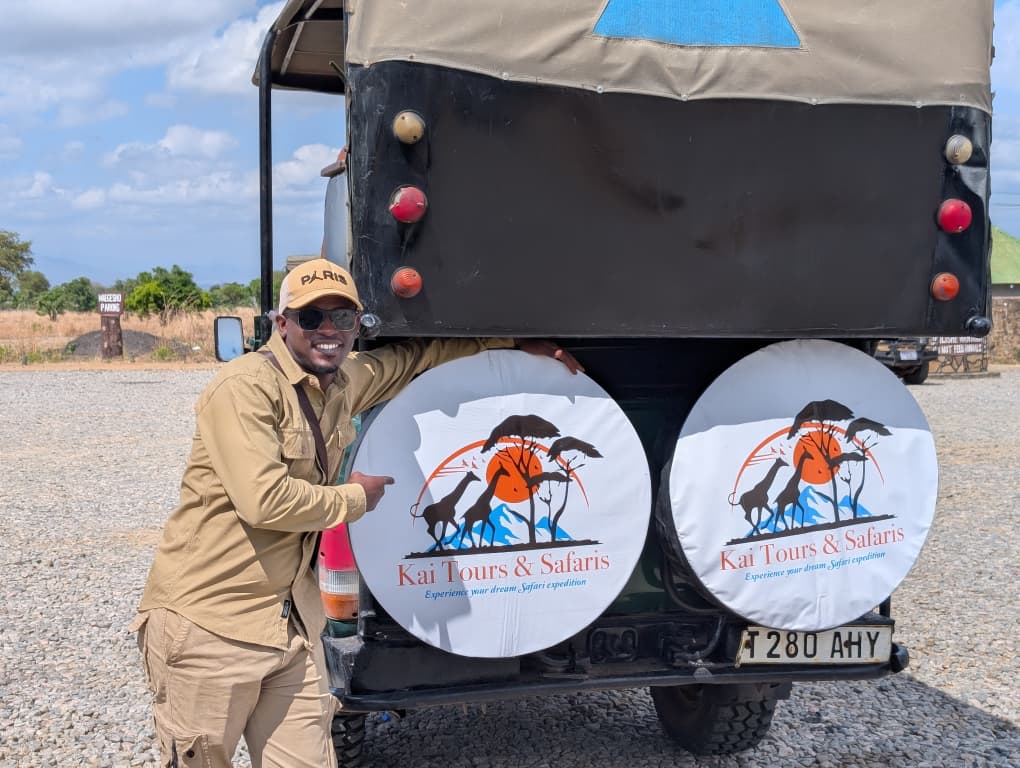
Justus Kahwa — Safari Operations Director, Kai Tours & Safaris
Plans Serengeti and Northern Circuit safaris, including safari-and-Zanzibar combinations, for first-time travellers.