Let me tell you something honestly, as someone who works in Tanzania's tourism industry and has watched Zanzibar grow into one of the world's most visited island destinations.
From the 1st of June 2026, the roads that most tourists use to discover Stone Town, reach Forodhani Gardens, find Darajani Market, and transfer from the airport or the ferry terminal are going to become construction zones. For approximately six months, three of the most strategically critical roads in Zanzibar Town — Benjamin Mkapa Road (formerly Creek Road), Darajani Road, and Malawi Road, will be under reconstruction as part of a major urban infrastructure project.
The construction is long overdue. These roads have needed proper rehabilitation for years. When it is finished, Zanzibar Town will have better drainage, smoother surfaces, and infrastructure that matches its status as a UNESCO World Heritage destination receiving nearly 800,000 visitors a year. I genuinely support that.
But in the six months between June and December 2026, if you have booked a hotel near Stone Town, are planning to take the ferry from Dar es Salaam, or are arriving by air and expecting a smooth transfer to your accommodation, you need to read this article before you go. Because nobody is going to tell you at the airport. Nobody is going to mention it when you check in. And by the time you realise how the construction has changed the experience you expected, you will already be stuck in traffic in the dark with your luggage and your tired children.
I am writing this so that does not happen to you.
Explore The Best Zanzibar Tour Packages
The Numbers Behind What's At Stake
Before we talk about the construction, it is important to understand how many people we are talking about. Because this is not a small situation.
Zanzibar received 260,644 visitors in 2020, 394,185 in 2021, 548,503 in 2022, 638,498 in 2023, and 736,755 in 2024. That is a consistent upward trajectory of approximately 15–16 percent growth every single year, even as the Zanzibar Commission for Tourism was already warning about infrastructure strain at the island's major entry points.
European tourists dominated Zanzibar's tourism landscape in 2024, accounting for 71.6 percent of total arrivals, that is 527,845 visitors from Europe in a single year. Italy emerged as the top source market, contributing 11.8 percent of all arrivals, followed closely by Germany at 9.7 percent, France at 9.4 percent, and Poland at 7 percent.
In January 2026 alone, Zanzibar recorded 100,216 visitors, a 19.2 percent year on year increase, with Europe accounting for 69.5 percent of arrivals.
Extrapolating these trends, the Zanzibar Commission for Tourism is projecting total 2026 arrivals to exceed 850,000 visitors for the full year. If that trajectory holds, then during the six months of construction from June through November 2026, approximately 400,000 to 430,000 international visitors will arrive in Zanzibar Town, most of whom will be attempting to move through, to, or around the three roads that will be partially or fully disrupted.
That is not a small number. That is the population of a medium sized European city, trying to navigate a construction zone in a UNESCO World Heritage site during peak season.
What These Three Roads Are, and Why They Matter
If you have not been to Zanzibar before, you might not understand why the reconstruction of three specific roads matters so much. Let me explain the geography first.
Benjamin Mkapa Road (Creek Road)
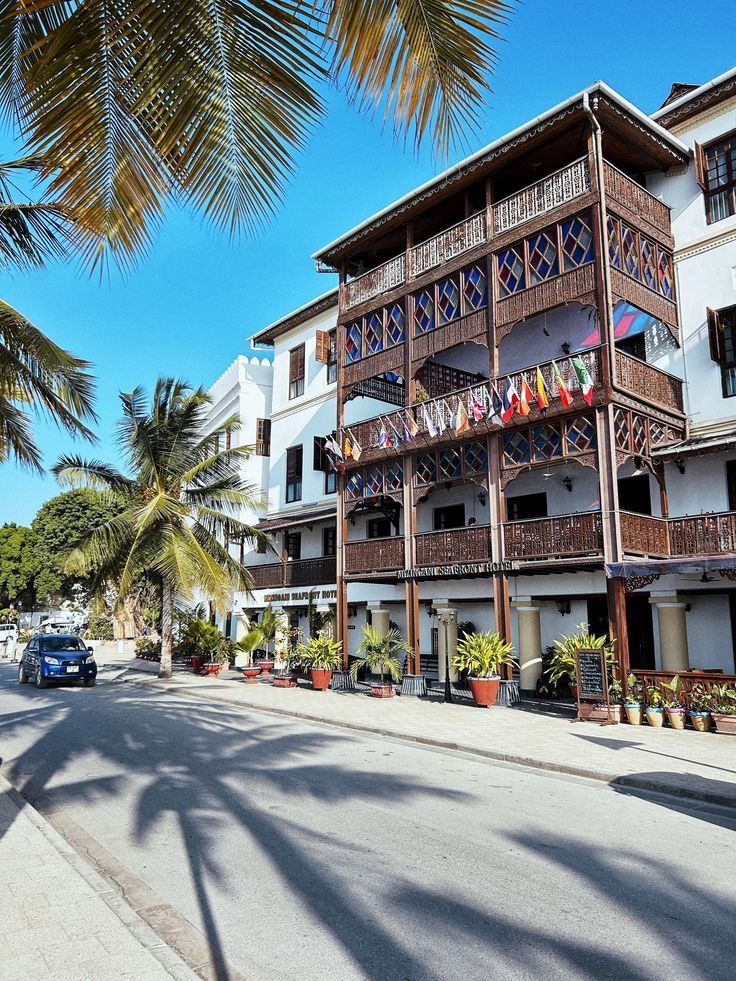
Benjamin Mkapa Road, most older residents still call it Creek Road, because it was built over a reclaimed tidal creek that historically separated Stone Town from the Ng'ambo district. It is the spine of Zanzibar Town. The road runs along what was once a natural waterway, and about halfway along it sits the Darajani Market, built in 1904, one of the most visited destinations in Zanzibar.
This road is the primary artery connecting:
- The airport transfer corridor — most vehicles from Abeid Amani Karume International Airport reach Stone Town hotels via Benjamin Mkapa Road
- The ferry terminal corridor — passengers arriving from Dar es Salaam on the Azam Marine, ZanFast Ferries, or Coastal Aviation services pass through this road network to reach their accommodation
- Forodhani Gardens — the famous seaside gardens and street food market, accessible from the northern end of Benjamin Mkapa Road via Mizingani Road
- The Peace Memorial Museum — located directly on Benjamin Mkapa Road, this is a key attraction for tourists exploring Stone Town's rich and complex history
- All daladalas (minibuses) and taxis heading into the Stone Town core.
When construction begins on Benjamin Mkapa Road, every vehicle, taxi, private transfer, tour bus, hotel shuttle, airport taxi, that currently uses this road as its primary route to Stone Town will need to find an alternative. In a town where the alternative streets are centuries old, often less than four meters wide, and frequently blocked by vendors, hand carts, and pedestrians, that is not a straightforward detour.
Darajani Road and the Darajani Market Area
The Darajani Market : is the main bazaar in Stone Town. Located on Darajani Road in the surroundings of the Anglican Cathedral of Christ, it was built in 1904 and has operated continuously for over 120 years.
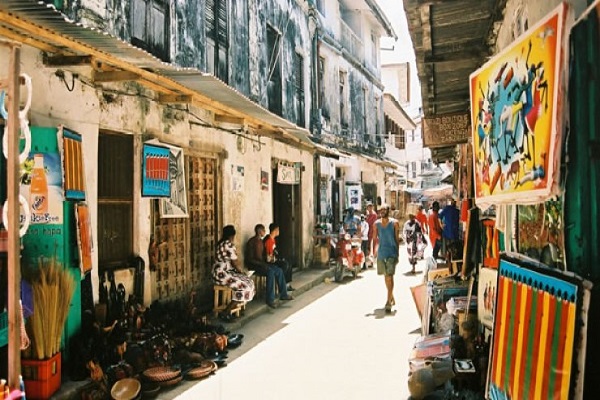
For tourists, Darajani Market is not simply a shopping destination. It is the gateway to Stone Town for the majority of visitors arriving from the eastern side of the city. The daladalas that connect the airport, the northern beaches, and the southern coastline to Stone Town all terminate near Darajani. The chaos, the colour, the spices, the fresh fish auction at dawn for many visitors, this is their first real encounter with Zanzibar's living culture.
The reconstruction of Darajani Road, which runs directly alongside the market's main entrance and serves as the primary pedestrian and vehicle flow corridor for the entire eastern approach to Stone Town, will compress every vehicle and pedestrian into narrower secondary routes. At peak times (morning ferry arrivals, afternoon charter flights, evening tourist returns from the northern beaches), the gridlock this creates is predictable and significant.
Explore & Book 1 Day Zanzibar Tour PackagesMalawi Road
Malawi Road, running north of Stone Town, provides access to the Mtoni Palace Ruins, built between 1828 and 1832 by Sultan Sa'id bin Sultan and historically the official residence of one of Zanzibar's most powerful sultans. It is also part of the primary vehicle routing for tourists moving between Stone Town and Zanzibar's northern beaches at Nungwi, Kendwa, and Matemwe.
Malawi and Karume Roads are the main public transport corridors in Zanzibar Town, serving the central Darajani terminus that connects the city with the rest of the island. When Malawi Road is under reconstruction, the ripple effect extends beyond Stone Town. Beach transfers heading north, spice tour vehicles leaving in the morning, and airport shuttles connecting with late evening flights all use this corridor. Even a 45 minute delay on this route causes missed ferries, late airport arrivals, and frustrated hotel transfers.
The Six Logistical Crises That Will Define the Construction Period
1. Airport Transfers: Longer, Slower, Less Predictable
Abeid Amani Karume International Airport is located approximately 8 kilometres southeast of Stone Town. Under normal traffic conditions, an airport transfer to a hotel in Stone Town takes 20–30 minutes. During the construction period, with Benjamin Mkapa Road partially or fully closed at various sections, the same journey will almost certainly take 45–90 minutes, and during peak arrival periods, international charter flights typically land in batches in the evening and mid-morning, could extend to two hours.
Here is the specific problem: Zanzibar receives a high proportion of international flights from Europe, particularly from Italy (its largest market), Germany, Poland, and the UK. Many of these flights arrive after a 9–10 hour overnight journey, landing at 06:00–08:00 AM. Passengers are tired, they have luggage, they have children with them. They have been promised a seamless transfer to their hotel. When that transfer takes 90 minutes through construction traffic with noise, dust, and diversions through the narrow alleys of Ng'ambo, the first impression of Zanzibar is not what anyone planned.
What tourists should do: Confirm your exact transfer route with your hotel or operator before travelling. Ask specifically: "How does the construction on Benjamin Mkapa Road affect my airport transfer?" If they cannot answer that question specifically, that tells you something important about how prepared they are for the disruption.
2. Ferry Terminal Logistics: The Bottleneck Nobody is Talking About
The Malindi Ferry Terminal in Stone Town is where all high-speed ferries from Dar es Salaam dock. Azam Marine and Zanzibar Fast Ferries,all operate multiple daily departures, and during peak season, a single ferry can carry 200–250 passengers. The terminal is located at the northern edge of Stone Town, accessible via Malindi Road which connects back to Benjamin Mkapa Road.
When multiple ferries arrive within the same two hour window, which is standard scheduling during peak season, the road outside the terminal fills with taxis, daladalas, hotel shuttles, and waiting private vehicles. Under normal conditions, this creates temporary congestion that dissipates within 20–30 minutes. With construction restricting the primary exit routes, that congestion will not dissipate in 30 minutes. It may not dissipate for two hours.
If you have a connecting flight from Zanzibar and you are arriving on the morning ferry, the construction period adds a genuine risk of missing that flight. I am not being dramatic. This is arithmetic: a ferry that arrives at 10:00 AM, a 90-minute transfer window (normal), plus a possible 60–90 minute construction delay, equals an arrival time at the airport of 13:00–13:30. If your flight departs at 14:00, you are already in trouble before you start.
What tourists should do: During the construction period, do not book flights departing within four hours of a ferry arrival. Build in a minimum three-hour buffer, or better, travel on separate days. Consider flying in and ferrying out (or vice versa) to avoid the double risk of construction disruption on arrival and departure.
3. Hotel Transfers Within Stone Town: The Luggage Problem
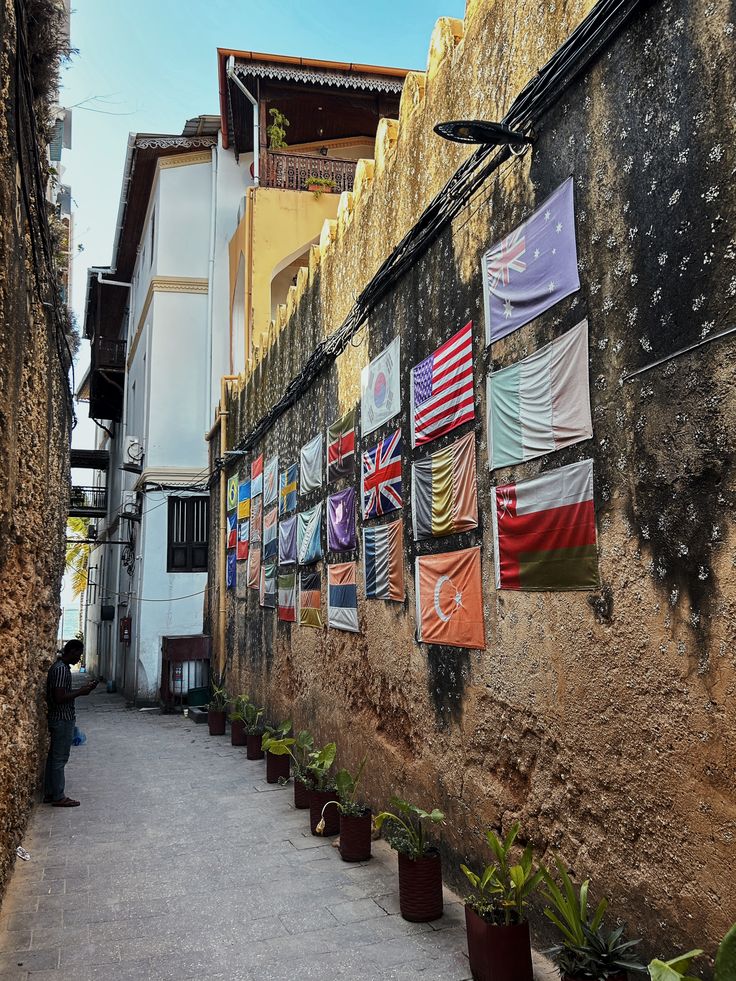
Stone Town's streets are famously narrow, cars are often too wide to penetrate the maze of branching streets in the historic quarter. Most hotels within Stone Town itself are only accessible by foot or by small vehicles for the final 100–300 meters. This means that hotel transfers typically involve a vehicle dropping guests at a road-accessible point, and a hotel porter (or the guest themselves) carrying luggage on foot through the alleyways.
When the roads feeding those drop-off points are under construction, two things happen. First, the drop-off point changes, often to a location further from the hotel than normal, adding 5–15 minutes of luggage-carrying through unfamiliar alleys at night or in the midday heat. Second, and more seriously, the vehicle cannot wait while you navigate, it is blocking construction traffic, meaning that if you get lost in Stone Town's labyrinthine lanes (which is extremely easy to do on a first visit at night), there is nobody waiting to help you.
Several hotels in Stone Town that currently offer direct vehicle access, including some properties on or adjacent to Benjamin Mkapa Road, may be physically inaccessible by vehicle during active construction phases. Hotels rarely mention this in booking confirmations because they do not want to lose the booking. You need to ask.
What tourists should do: When booking any hotel in or near Stone Town for the June–November 2026 period, ask these specific questions:
- "How is access to your hotel affected by the Benjamin Mkapa Road and Darajani Road reconstruction?"
- "Where exactly will our airport transfer drop us, and how far is the walking distance to the hotel with luggage?"
- "Is there a construction noise consideration for rooms facing the road?"
- "Do you have an alternative transfer arrangement during the construction period?"
If the hotel cannot answer these questions directly, that is a signal to reconsider your booking or to negotiate a room upgrade to a quieter, more accessible part of the property.
4. Forodhani Gardens and the Evening Tourist Economy
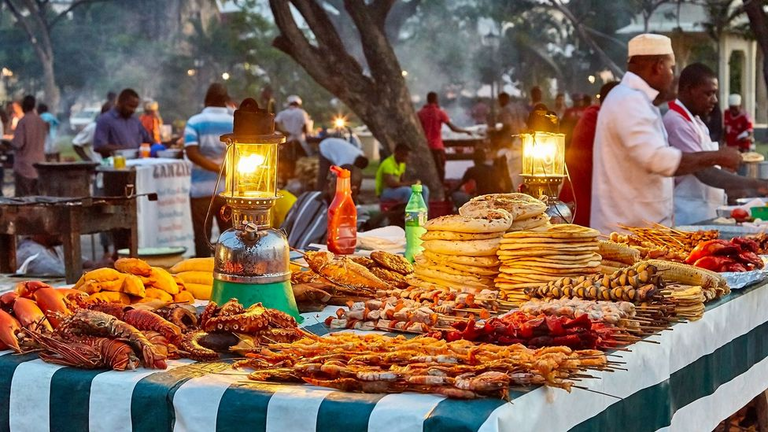
Forodhani Gardens : the seafront park where dozens of food vendors set up every evening selling Zanzibar's famous street food (octopus skewers, Zanzibar pizza, fresh sugarcane juice, lobster), is one of the most visited tourist spaces in all of East Africa. During peak season, it draws 3,000–5,000 visitors on a single evening, not counting the local residents who also use the space.
Access to Forodhani from most Stone Town hotels involves walking through the Stone Town lanes to Mizingani Road, then north along the seafront. The primary vehicle approach for tour groups, hotel shuttles, and daladalas dropping tourists runs via Benjamin Mkapa Road and the northern roundabout.
With Benjamin Mkapa Road under construction, vehicle access to the Forodhani area will be restricted and rerouted. The evening street food economy, which represents direct income for hundreds of vendors, not just tourism revenue for hotels, will be impacted by reduced tourist flow during the construction's worst phases, particularly when active excavation or repaving closes sections of road entirely.
For tourists, this means: the walk to Forodhani from your Stone Town hotel may be longer, through a different route, and past active construction sites with poor lighting in the evening hours. Navigation apps will give you routes along roads that no longer exist in their current form, because Google Maps and Apple Maps are not going to update their data in real time during a six-month Zanzibar road reconstruction project.
5. Darajani Market: The Cultural Heart Under Scaffolding
For many European tourists, particularly those visiting Zanzibar for cultural reasons rather than simply for beach holidays, the morning at Darajani Market is the activity they most anticipate. The fish auction at dawn. The piles of cardamom and cloves. The vendors who have been selling fresh coconuts from the same spot for twenty years.
During the reconstruction of Darajani Road, the access routes to the market will be compromised. Vendors may be temporarily relocated. Pedestrian flow will be redirected through alternative alleys. The atmospheric approach that most tourists photograph, walking up the wide Darajani Road with the market entrance ahead and the minaret of the nearby mosque to one side — may look very different when there are excavators and temporary safety barriers on either side.
This is worth knowing not because it means you should not visit Darajani Market, but because you should not arrive expecting the Darajani experience of 2024 or 2025 and find 2026's construction reality instead. Go knowing what to expect. The market will still be there. The spices will still smell extraordinary. But the approach will be dustier, louder, and more chaotic than the photographs on Instagram.
6. Noise, Dust, and the Guest Experience at Stone Town Hotels
This is the problem that no hotel review site will warn you about ahead of time, and that no hotel is going to mention proactively when you are deciding whether to book.
Road reconstruction in Zanzibar Town typically involves heavy machinery operating from early morning, in my experience, 07:00 AM or earlier through to early evening. Stone Town's buildings are made of coral limestone and the internal walls are not thick. A hotel room facing Benjamin Mkapa Road will hear every compactor, every excavator, every truck reversing with its alert beeping. The dust from road works in Zanzibar's climate, the northeast monsoon blowing off the Indian Ocean from November onward, will settle on every surface facing the affected roads.
For a tourist who has paid €150–€300 per night for a heritage hotel in Stone Town and is sleeping off a 10-hour overnight flight, waking at 07:00 AM to road construction outside their window is not an acceptable experience. And unlike a beach resort where you can simply go to the pool and forget the noise, in Stone Town the noise follows you through the narrow lanes.
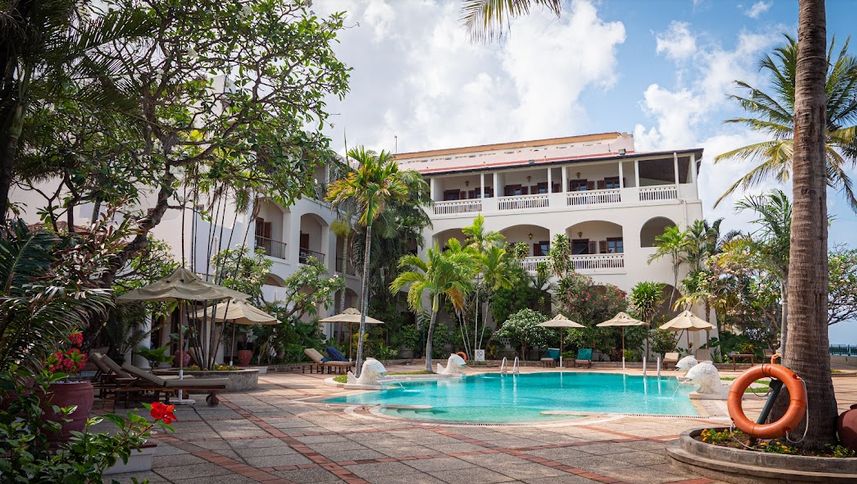
What tourists should do: Ask hotels specifically which direction their recommended rooms face, and whether any rooms face away from the three affected roads. For hotels on or adjacent to Benjamin Mkapa Road, Darajani Road, or Malawi Road, request a courtyard-facing or interior room. Pay extra for it if necessary. Write it into your booking request as a confirmed requirement, not a preference.
What the World's Heritage Cities Teach Us About Construction During Peak Season
Zanzibar is not the first UNESCO World Heritage city to face this tension between necessary infrastructure investment and high-season tourism. The experiences of other destinations offer both cautionary tales and practical lessons.
Dubrovnik, Croatia: Traffic Regulation as a Crisis Tool
In Dubrovnik, when the city implemented new traffic regulations for a restricted zone around key historic sites, the city decreased the volume of daily vehicle access and drastically reduced transit times. When road access to the Old Town's Pile Gate was compromised by construction and congestion, the city responded by staggering cruise ship arrival schedules, setting daily visitor limits to the walled city, and redirecting tourist flow to alternative entry points.
The lesson for Zanzibar: managing vehicle flow into the affected areas requires proactive regulation, not just reactive traffic management. Without a coordinated system of timed vehicle access and mandatory pedestrian routing, the natural tendency will be for every tour operator, every taxi, and every private vehicle to attempt the same route at the same time, creating the gridlock that makes the construction impact exponentially worse than necessary.
Venice, Italy: When Heritage Cities Mismanage Infrastructure, UNESCO Notices
Venice's tourism crisis deepened as UNESCO issued warnings that the city had not done enough to protect its cultural sites amid surging post-pandemic tourism. The first half of 2022 saw an almost 250 percent increase in passenger volumes from 2021, and 2023 showed no slowdown.
The Venice parallel is directly relevant to Zanzibar because Stone Town is a UNESCO World Heritage Site (reference 173) that is actively managed amid booming tourism and climate pressures, with the government allocating 11 billion TZS (approximately $4.3 million USD) in 2026 for restoration of 20+ buildings, streets, and public spaces. The 2026 road reconstruction is part of this same restoration programme but the simultaneous pressure of record-high tourist arrivals and major infrastructure disruption is precisely the scenario that UNESCO has flagged as a risk factor for heritage site integrity.
Barcelona, Spain: The Tour Group Problem
Barcelona banned tour groups from entering the historic La Boqueria market during peak shopping times specifically because the combination of narrow historic streets and large organised tour groups created an experience that damaged both the cultural authenticity and the physical fabric of the site.
The Darajani Market situation in June–November 2026 carries exactly this risk. If large organised tour groups which represent a significant proportion of Zanzibar's Italian, German, and Polish charter tourists, attempt to navigate the Darajani area simultaneously with active road construction, the resulting congestion will be damaging both to the tourist experience and to the ability of local vendors and residents to use the space normally.
The Month by Month Risk Calendar (June–November 2026)
Based on Zanzibar's established tourism patterns and the known construction timeline, here is an honest assessment of when each phase of disruption will be worst.
June 2026 — Construction Begins: Initial Chaos Phase
The first weeks of any major road construction are always the most chaotic. Equipment arrives, temporary diversion signs go up (often late), contractors establish site boundaries, and the traffic patterns that everyone relied on yesterday suddenly do not work. July historically accounts for 98,370 visitors and August for 105,506, meaning the peak of disruption coincides almost exactly with the peak of arrivals. June is the ramp-up month, but construction start delays in Tanzania are common, meaning disruption could begin before proper alternative routing is in place.
Risk level: HIGH — the unknowns are greatest in the first four weeks.
July–August 2026 — Peak Season Meets Peak Construction
This is the period of maximum concern. These are Zanzibar's highest arrival months, the peak of European summer holidays, and also based on typical construction project timelines, the period when the most disruptive phases of road excavation are likely to be underway. Italian families with children, German couples on honeymoon, Polish tour groups arriving on charter flights: all will be attempting to navigate a Stone Town in partial construction shutdown simultaneously.
Risk level: CRITICAL — every logistical problem described in this article is most acute during these months.
September–October 2026 — Shoulder Season Disruption
September historically records 84,154 arrivals, lower than July–August but still high. By this phase, some sections of the affected roads may be closer to completion while others are still active. The pattern of partial access, some sections open, others not, is in some ways harder to navigate than a complete closure, because it creates false confidence that the route is clear.
Risk level: MODERATE-HIGH — less volume, but potentially more confusing conditions.
November 2026 — Project Completion Phase
The construction is expected to complete within six months of the June 1 start date, meaning November 2026 is the target completion month. If the project runs on schedule (and major road reconstruction projects in Tanzania's urban environment should always be given a buffer of several weeks for weather delays during the October–November short rains), the worst will be over by this point.
Risk level: MODERATE — construction should be finishing, but confirm before booking.
Practical Advisory: What Every Tourist Booking Zanzibar in 2026 Must Do
Before You Book Your Hotel
- Check the map. Look up your shortlisted hotel in Google Maps and check whether it is located on or directly adjacent to Benjamin Mkapa Road, Darajani Road, or Malawi Road. Hotels with addresses on these streets face direct construction exposure.
- Ask the hotel directly about the construction. Send an email or WhatsApp message to your hotel with this specific question: "How does the June–November 2026 road reconstruction on Benjamin Mkapa Road and Darajani Road affect access to your hotel, and what alternative transfer arrangements do you have?" A hotel that cannot answer this question has not prepared adequately.
- Consider hotels away from the Stone Town core. Properties in the Shangani area (western peninsula), the seafront hotels on Mizingani Road's northern section, or hotels in the Vuga and Kelele Square areas may have less direct construction impact than properties facing the main affected roads directly.
- Request a courtyard room or interior-facing room. If your hotel is on or near the affected roads, specifically request a room that does not face the construction corridor.
Before You Arrange Transfers
- Allow double the normal transfer time for all airport, ferry, and hotel transfers during June–November 2026. If the airport is normally 25 minutes from your hotel, budget 50–70 minutes during peak construction periods.
- Never book a flight or ferry connection with less than three hours of buffer during this period. The normal Zanzibar ferry-to-flight or flight-to-ferry connection time recommendations of 90 minutes are not sufficient when Benjamin Mkapa Road and Malawi Road are partially closed.
- Confirm your transfer operator has a construction contingency route. Ask specifically: "What alternative route will you use if Benjamin Mkapa Road is closed at the time of our transfer?"
When You Are In Zanzibar
- Use OpenStreetMap rather than Google Maps for navigation. OpenStreetMap tends to update faster for road closures and diversions in African cities.
- Walk more, drive less. In the construction period, being on foot in Stone Town's historic lanes will often be faster than sitting in a vehicle waiting for a diversion to clear. Stone Town is compact — most major sites are within 15–20 minutes' walk from each other.
- Visit Darajani Market early. Go at 07:00–08:00 AM before construction activity intensifies and before tour group traffic builds up. The morning fish auction, which is the most authentic and least-crowded time to be at Darajani, is best experienced before 08:30 AM regardless of construction.
- Ask your hotel for daily construction updates. Roads that are open in the morning may be closed in the afternoon. Hotels in Stone Town, if they are managing this period well, should be receiving daily briefings from the Zanzibar Municipal Council about active work zones.
The Bigger Picture: Why This Construction Matters for Zanzibar's Future
I want to end this article with something important, because I do not want it to read as purely negative. It is not.
Zanzibar's roads, drainage systems, and urban infrastructure have been under genuine strain for years. The Stone Town Conservation and Development Authority has identified challenges including the fact that approximately 80 percent of the 1,709 buildings in Stone Town need maintenance, with rising sea levels eroding foundations through saltwater intrusion and tourism straining traffic and land use. The Benjamin Mkapa Road reconstruction, the Darajani area improvements, and the Malawi Road upgrade are part of a broader 2026 government investment programme funded in part by a TZS 11 billion allocation aimed at protecting a UNESCO World Heritage site that is genuinely at risk of physical deterioration if infrastructure investment is further delayed.
When these roads are finished, when the drainage beneath Benjamin Mkapa Road properly handles the Indian Ocean rainfall that currently floods into Stone Town during the November rains, when the repaved road surface no longer vibrates through the coral stone walls of buildings that are 150 years old, when the Darajani area has proper pedestrian pathways and lighting, Zanzibar Town will be a significantly better place to visit than it is today.
The disruption is the price of improvement. That does not make it less inconvenient for the visitors arriving in July 2026. But it does mean that if you are planning a Zanzibar trip and have flexibility, booking for early 2027 when the roads are newly completed, the dust has settled, and the heritage city looks its best in years, may be the wisest decision of all.
And if you are booking for June through November 2026, the advice in this article is your preparation. Go with your eyes open, build extra time into every transfer, ask the right questions of your hotel, and understand that the chaos you encounter is temporary, in service of something permanent and worthwhile.
Zanzibar is worth it. It always has been. It always will be.
It is just going to be a little louder than usual for the rest of 2026.
Planning Your Zanzibar Visit Around the Construction: Resources
Best Ferry operators serving Dar es Salaam — Zanzibar:
- Azam Marine: azammarine.com
Useful construction updates: Follow the Zanzibar Commission for Tourism on their official channels and the Revolutionary Government of Zanzibar's official social media for road closure advisories as they are issued.
Planning a safari before or after your Zanzibar visit? The combination of a mainland Tanzania wildlife safari from Dar es Salaam with a Zanzibar beach stay remains one of the world's finest holiday combinations and the Mikumi National Park safari by SGR train offers an accessible, affordable wildlife experience that requires no flight connection.
Explore our Mikumi safari packages
Kai Tours and Safaris is a TANAPA-licensed tour operator based in Dar es Salaam, Tanzania, operating safaris, Zanzibar tours, and Kilimanjaro climbs. The construction information in this article is based on publicly available planning documentation and local industry knowledge current as of May 2026. Travellers should confirm the latest road status directly with their accommodation and transport providers before travel.
Recommended Zanzibar Holiday Packages
Best Zanzibar Tour Packages 2026-2027
Experience the magic of Zanzibar with our expert guides. Perfect for beach relaxation and cultural discovery in Stone Town.
VIEW ALL ZANZIBAR TOURS WHATSAPP USContact our Zanzibar Specialist:
Call: +255 672 530 415 |
Email: info@kaitoursandsafaris.com

Written By:
Justus Kahwa (@mr_jmasterz)
Why Kai Tours?
Kai Tours and Safaris is the premier local touring company in Tanzania. We pride ourselves on deep local expertise, professional service, and a passion for showing you the true heart of Africa.