Breaking: Kenya's Transport Sector Fuel Strike, 18 May 2026, tourism transport included. Tanzania diesel up 33% since March. Safarilink introduces a $20 fuel surcharge. Four people killed in Nairobi protests.
I have been working in Tanzania's tourism industry for long enough to know when something is genuinely different from the usual seasonal fluctuations. What is happening right now across Kenya, Tanzania, Uganda is completely different.
It started on February 28, 2026, when the United States and Israel launched military strikes against Iran. Within days, Iran retaliated by restricting shipping through the Strait of Hormuz. Global crude prices surged. Within weeks, fuel prices had risen in 106 countries. East Africa, which imports almost all of its petroleum from the Gulf, felt the impact faster and harder than most.
What followed has been, for the tourism industry specifically, a cascade of consequences that most booking websites and travel agencies are not yet explaining clearly to their customers. However, this article is going to explain why.
Tanzania Tours & Safari Articles
The Geopolitical Trigger: How the Iran War Broke East Africa's Fuel Supply Chain
The US–Israel attack on Iran on 28 February 2026 did not just spike oil prices. It restructured the global energy supply chain in ways that disproportionately affect countries like Kenya, Tanzania, and Uganda, which have no domestic oil production and depend entirely on Gulf imports routed through the Indian Ocean.
Iran's counter attacks on US military installations across the Middle East and the mutual escalation that followed triggered a surge in global crude oil prices, particularly after Iran restricted shipping through the Strait of Hormuz, crippling energy supply chains and driving up prices in 106 countries within three weeks of the war's outbreak.
The crisis was first triggered by US-Israel attacks on Iran on February 28 and worsened as Iran retaliated against US installations in Gulf countries. Kenya, Tanzania, and Uganda had assured consumers of sufficient reserves, but these were only expected to last until mid-May.
That mid-May deadline has now passed. And the consequences for East Africa's roads, airports, and tourism infrastructure are not theoretical. They are being experienced right now by tourists on the ground.
Kenya Explodes: The Largest Transport Strike in the Country's History
On Sunday 17 May 2026, the Transport Sector Alliance, representing every major transport category in Kenya, issued a statement that sent shockwaves through the regional tourism industry.
"Following a high level consultative meeting on Sunday, May 17 2026, all stakeholders in Kenya's transport sector have unanimously reaffirmed that no vehicle shall move starting midnight today. The nationwide Transport Sector Fuel Strike scheduled for Monday, May 18, 2026, is fully on. The Alliance confirms that all transport subsectors, covering passenger transport, cargo and logistics, ride hailing, motorcycle transport, tourism transport, driving schools, school buses, and private motorists, have resolved to stand together in one of the largest coordinated industrial actions in Kenya's history."
You head it right. Tourism transport. Specifically included. Every safari vehicle, every airport transfer, every Maasai Mara game drive Land Cruiser operated by a Kenyan company was part of this strike.
Kenya's Energy and Petroleum Regulatory Authority had raised retail fuel prices by as much as 23.5 percent, after hiking them by 24.2 percent the previous month, as the conflict in the Middle East squeezed global oil and gas supplies. Petrol in Nairobi was pushed to 214.25 Kenyan shillings ($1.66) per litre, while diesel rose to 242.92 shillings ($1.88) from 196.63, representing an increase of 23.5 percent in a single pricing cycle.
Protests spread across multiple Kenyan towns. Four people were killed in Nairobi during fuel protests on Monday 18 May. Officers fired teargas as demonstrators blocked roads, burned tyres, and clashed with police in smoke-filled streets.
In coastal areas, tourism operators feared the timing could affect early week visitors arriving at Moi International Airport. That fear was justified. European tourists arriving in Mombasa on Monday 18 May found no transfers waiting, no taxis operating, and no reliable way to reach their hotels on Kenya's coast.
The strike was described by the Alliance as "one of the largest coordinated industrial actions in Kenya's history." It was not an exaggeration.
Tanzania Safety : Complete Guide 2026-2027The Numbers: What Fuel Now Costs Across East Africa
Tanzania's Energy and Water Utility Regulatory Authority set a new petrol price cap of 3,820 Tanzanian shillings ($1.49) per litre in Dar es Salaam, up 33 percent from March. Diesel also rose 33 percent to 3,802 shillings.
In Tanzania, petrol was at 2,885 Tanzania shillings per litre before the war but shot to 3,820 shillings shortly after the war broke out. As a cost saving measure, President Samia Suluhu Hassan cut the size of her motorcade and shifted officials to shared buses to conserve fuel. "The ongoing global crisis linked to tensions involving the United States, Israel and Iran has disrupted the oil supply chain and triggered rising fuel costs worldwide," she said at an event in Dodoma on April 8.
The US–Iran war and ongoing Middle East conflicts have heavily restricted global oil traffic through the Strait of Hormuz, crippling energy supply chains and driving up global fuel prices. In Kenya, the high diesel prices are expected to continue pushing up transport and commodity costs, as diesel remains the main fuel used by public transport vehicles, cargo transporters, and industries.
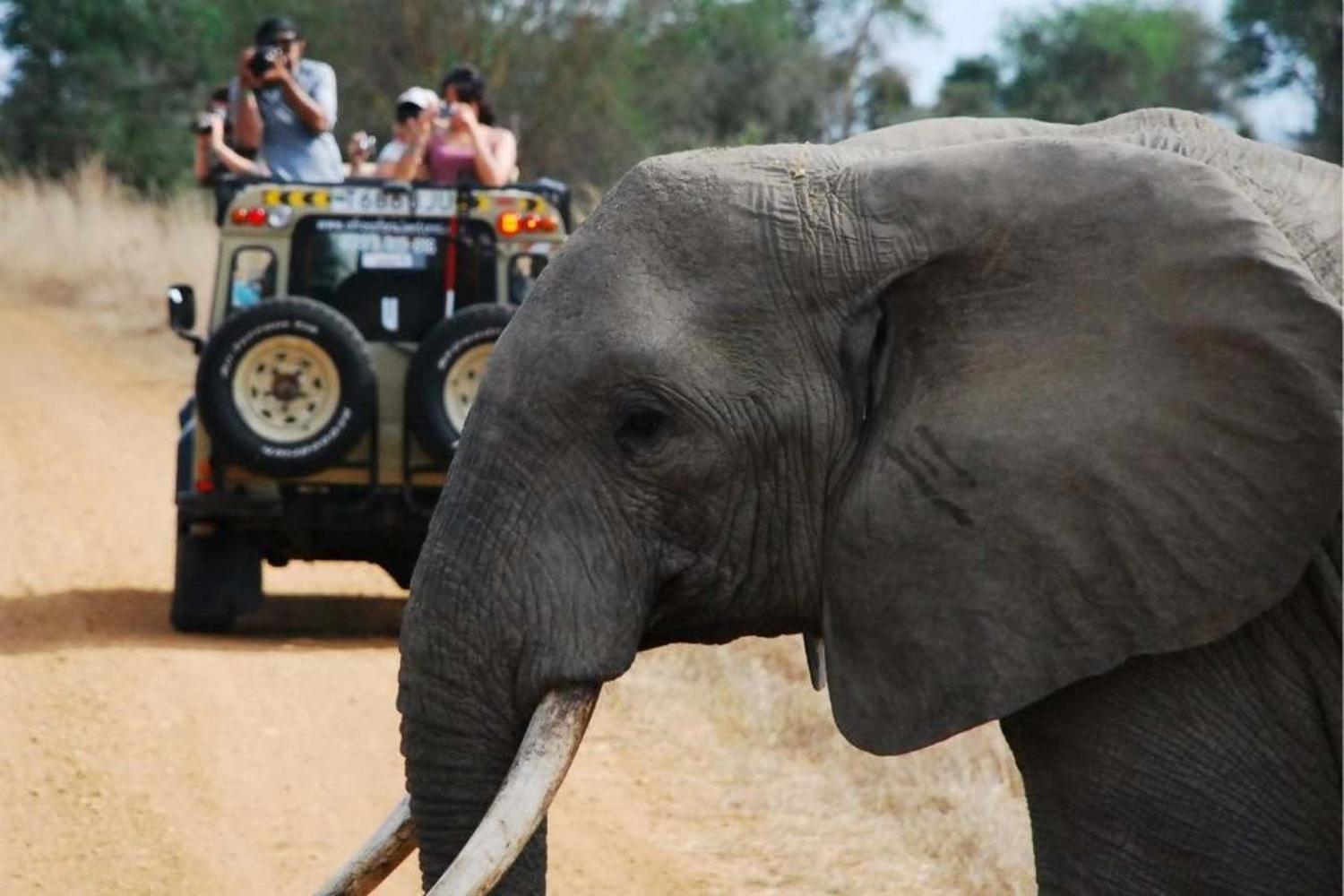
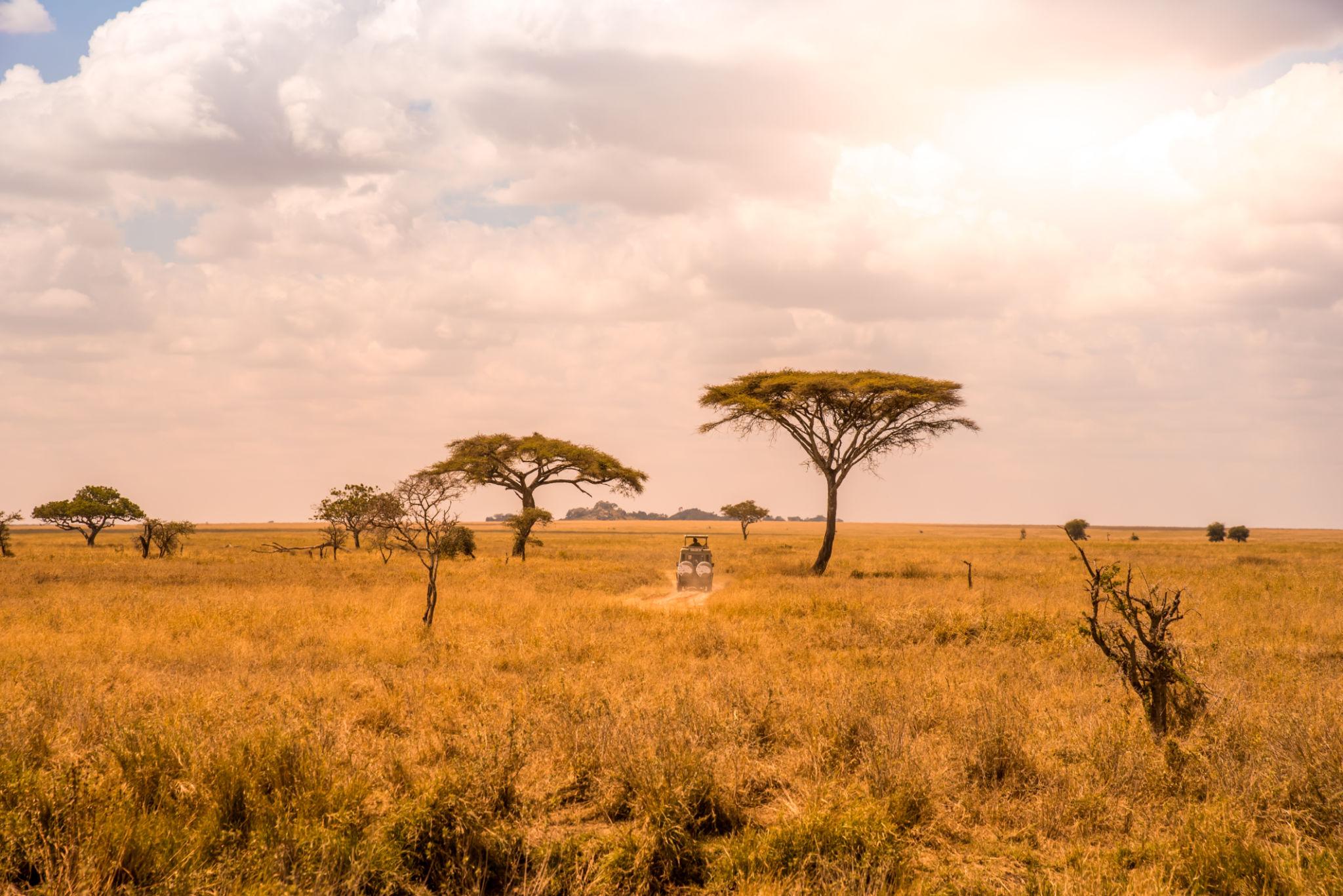
To put these numbers in the context that matters for safari travellers: diesel is the fuel that powers virtually every safari vehicle in East Africa. A 4x4 Land Cruiser doing a full day's game drive in the Serengeti or the Maasai Mara consumes 25–35 litres of diesel. A 33 percent increase in diesel prices adds approximately $18–$25 per vehicle per game drive day in Tanzania alone. Across a 7-day safari with two vehicles, that is $250–$350 in additional fuel cost that was not in any operator's budget three months ago.
The Aviation Industry's Response: Safarilink's $20 Fuel Surcharge
While road transport operators took to the streets, aviation responded differently, with a surcharge.
Safarilink Aviation introduced a $20 USD fuel surcharge from April 2026, directly affecting East Africa travel pricing and tourism packages. For tourists booking multi leg flights to explore Kenya's national parks or neighbouring safari destinations, the surcharge could add a cumulative cost, potentially affecting the attractiveness of certain tourism packages. Agents and tour operators may need to revise their tourism packages to ensure they remain competitive while reflecting the additional costs.
For tourists planning travel after April 2026, tickets booked for flights during this period need to be reissued to include the surcharge.
What this means practically: if you booked a fly-in Maasai Mara safari before April 2026, your ticket pricing no longer reflects the current fare. Every flight leg, Nairobi to the Mara, Nairobi to Amboseli, Nairobi to the Serengeti, Arusha to Zanzibar, carries an additional $20 charge per person per segment. On a 5-day safari with four flight segments for a couple, that is $160 in unplanned additional cost that no booking confirmation prepared you for.
Safarilink's move has already been followed by other East Africa aviation operators adjusting their pricing structures. The broader aviation impact is that fly-in safaris, which were already the most expensive tier of the East Africa safari market, have become measurably more expensive in the past six weeks.
How Tanzania's Safari Prices Are Being Affected Right Now
Tanzania has been somewhat more shielded from the immediate consumer price shock than Kenya, partly because President Samia's government moved quickly to assure fuel supply continuity and partly because Tanzania's regulatory approach to fuel pricing involves government coordination with oil companies that absorbs some of the volatility.
But the shielding is partial and temporary. Fuel is the heartbeat of every safari operation in Tanzania. From the moment guests are picked up at the airport until the final drop-off after their adventure, almost every safari service depends directly or indirectly on fuel. When fuel prices rise globally or locally, safari companies, lodges, camps, transfer operators, and downstream services all face operational cost increases. In remote camps deep inside the Serengeti ecosystem, fuel delivery itself can become extremely expensive, luxury camps especially depend on fuel to maintain their operations.
The specific impacts visible in Tanzania's safari pricing right now:
- Vehicle and fuel costs: Vehicle operating costs within parks, fuel, maintenance, insurance, run approximately $80–$120 per vehicle per day depending on distances covered. This cost divides among passengers, making shared vehicles significantly cheaper per person. With fuel costs up 33 percent, the upper end of that range is now conservative.
- Hidden surcharges appearing in quotes: Multiple safari operators across Tanzania and Kenya have begun adding fuel surcharge line items to quotes issued after April 2026, surcharges that were not present in pricing published earlier in the year. Travellers comparing a quote received in January 2026 with a new quote for the same itinerary in May 2026 are encountering unexplained price increases of 8–15 percent.
- Luxury camp pricing under particular pressure: In remote camps deep inside the Serengeti ecosystem, fuel delivery itself can become extremely expensive. Luxury camps depend on fuel to maintain generator power, food refrigeration, water pumping, and vehicle operations, all of which are affected simultaneously by price increases. The premium tier of the safari market, camps costing $800–$3,000 per person per night, is absorbing these costs at a level that will eventually be passed to guests through 2026–2027 price revisions.
- Online complaints and review patterns: Across TripAdvisor, SafariBookings, and travel forums including TripAdvisor's East Africa Safari forum and Reddit's r/Tanzania community, a pattern of complaints has emerged in May 2026 around unexpected fuel surcharges added to existing bookings, transfers that took 50–100 percent longer than quoted due to strike disruptions in Kenya, and fly-in packages where the aviation surcharge was applied to pre-booked tickets without adequate notice.

The Impact on Zanzibar Tourism Specifically
For Zanzibar, which we have covered extensively in recent articles and which is midway through its strongest year of growth with arrivals on track to exceed 850,000 in 2026, the fuel price crisis creates specific logistical vulnerabilities.
- Ferry services from Dar es Salaam: The high speed ferries operated by Azam Marine, ZanFast Ferries on diesel. A 33 percent increase in diesel costs adds operational pressure to ferry operators who are already managing high volume season scheduling. While ferry tickets have not yet seen price revisions at the time of publication, industry contacts in Dar es Salaam indicate that fare reviews are being discussed. Any fare increase on the Dar–Zanzibar route directly affects the cost of the most common European traveller routing for Tanzania's southern tourism product.
- Airport taxi and transfer costs from Abeid Amani Karume International Airport: Zanzibar's taxi drivers and transfer operators, like their mainland counterparts, have seen operating costs rise sharply. Visitors arriving expecting a $15–$20 airport transfer to Stone Town are encountering revised fare requests in the $22–$28 range. This is not price gouging, it reflects genuine operating cost increases, but it represents a trust friction point for European tourists who booked an all-inclusive package and arrive finding their transfer costs don't match the operator's quoted price.
- The Stone Town construction compound effect: For visitors whose hotels are near the Benjamin Mkapa Road construction zone (scheduled to begin 1 June 2026), the combination of extended transfer times due to fuel-related slowdowns and construction diversion routes compounds the impact. A transfer that normally takes 25 minutes may take 70–90 minutes in late June or July 2026 under both conditions simultaneously.
The Safari Vehicle Economics: Why Short Safaris Now Make More Sense Than Long Ones
This is the part of the story that most tourism articles will not tell you directly, because operators are understandably reluctant to recommend shorter, less expensive itineraries during a period when margins are already under pressure.
But the honest advice, the advice I would give a friend, is this: in the current fuel price environment, a short, focused safari offers significantly better value-per-experience than a longer safari padded with transit days.
Here is the arithmetic. A standard 7-day Tanzania Northern Circuit safari involves:
- Day 1: Airport to Tarangire (approximately 4 hours of driving, 180km)
- Days 2–3: Tarangire game drives
- Day 4: Tarangire to Serengeti (approximately 6 hours, 270km)
- Days 5–6: Serengeti game drives
- Day 7: Serengeti to Ngorongoro to airport (approximately 7 hours, 310km)
Best Northern Safari Packages From Zanzibar
Total driving distance: approximately 760km. At a consumption rate of 12 litres per 100km for a diesel Land Cruiser on East African roads, that is approximately 91 litres of diesel for transit alone, not counting in-park game drives. At Tanzania's current diesel price of approximately $1.48 per litre (3,802 TZS), that is $135 in fuel purely for transit driving. Before the Iran war, that same fuel cost $100. A $35 increase per vehicle sounds manageable until you recognise that most safari operators are running 3–6 vehicles simultaneously across multiple itineraries, adding hundreds of dollars per week in unbudgeted fuel costs.
Now compare this to a 2-day Mikumi safari from Dar es Salaam by SGR train:
- Transit: SGR train (electric, no fuel cost) from Dar to Morogoro, then a 2.5-hour (120km) road transfer to Mikumi
- Total driving: approximately 240km across the entire 2-day trip
- In-park fuel cost: approximately 30 litres for two game drives
- Total fuel exposure: approximately 58 litres at $1.48 = $86 for the entire 2-day experience
Best Tanzania Companies Offering Dar to Mikumi Safaris
The short Mikumi safari uses roughly 60 percent less diesel than the long Northern Circuit safari. At current prices, that saving is modest in absolute terms. But the direction of the saving matters: on a short safari, the proportion of your cost that is fuel-sensitive is smaller. The safari is more resilient to further fuel price increases because more of the cost is fixed (park fees, accommodation, guide wages) and less of it is variable (fuel).
Unlike typical vacations, safaris involve long-distance travel between national parks and extensive game drives inside wildlife reserves. Most safari vehicles are 4x4 Land Cruisers designed to handle rough terrain and remote locations, these vehicles consume more fuel than standard cars. As fuel prices rise globally, safari operators must adjust transportation costs to maintain high quality safari services.
The implication for travellers is clear: in the current environment, a 2–3 day focused safari in a single park accessed by efficient transport (SGR train, short road transfer) offers a more price-stable booking than a multi-park, multi-day overland safari that is heavily exposed to fuel price variability.
Why Luxury Safaris Are Under the Most Pressure
The luxury safari segment, camps priced at $800–$3,000 per person per night, is experiencing the most structural pressure from the current fuel crisis, for reasons that go beyond simple diesel costs.
- Generator dependency: Remote luxury camps in the Serengeti, Ruaha, Nyerere, and the Maasai Mara run entirely on diesel generators for electricity. Luxury camps especially depend on fuel to maintain generator power, food refrigeration, water pumping, and vehicle operations, all of which are affected simultaneously by fuel price increases. A camp with six tents and a central lodge facility may run generators consuming 80–120 litres of diesel per day. At pre-war prices, that was approximately $120–$175 per day. At current prices, it is $160–$230. Across a 30-day month, that is an additional $1,200–$1,650 in monthly operational costs and this is before vehicle fuel is factored in.
- Fly-in dependency: The most exclusive luxury camps in Tanzania and Kenya's remote areas are accessible only by light aircraft. These camps are therefore doubly exposed: their own operational fuel costs have risen 33 percent, and the cost of the charter flights that bring guests to them has also increased through aviation fuel surcharges. The total cost increase for a 5-day fly-in luxury safari in remote Tanzania, from Safarilink or Coastal Aviation flights plus camp fuel charges, is conservatively $200–$400 per person above 2025 pricing.
- Camp staff transportation: Luxury camps staff are typically transported from regional towns to remote locations by road. With fuel at 33 percent above March levels, staff transportation adds to the operational cost structure in ways that are not visible to the guest but are entirely visible to the camp's operating budget.
The practical implication for travellers considering luxury safaris: ask your operator specifically whether the quoted price includes a fuel surcharge or whether the quote is valid only for a limited period. Quotes issued before April 2026 should be reconfirmed. Any luxury safari operator who cannot tell you whether their pricing reflects current fuel costs is not managing their cost structure transparently.
What Travellers Should Do Right Now: A Practical Booking Guide
Given everything above, here are the specific steps every traveller planning an East Africa safari in 2026 should take immediately.
Frequently Asked Questions: Fuel Prices and East Africa Safari 2026
The Broader Picture: What Happens to East Africa Tourism if Fuel Prices Stay High
The question that every tourism professional in this region is asking privately is the one I will ask publicly: what happens to East Africa's extraordinary tourism growth trajectory if the Iran war continues, the Strait of Hormuz remains constrained, and fuel prices in Kenya and Tanzania remain 33 percent above pre-war levels through the peak July–October safari season?
The honest answer is: the trajectory slows, but it does not reverse.
Tanzania's tourism growth has been driven by product quality, strategic celebrity marketing, conservation success, and infrastructure investment, none of which is undermined by fuel prices. The Serengeti is still the Serengeti. Kilimanjaro is still Kilimanjaro. Zanzibar's beaches are not affected by diesel costs. The Rio Ferdinand appointment still reaches 20 million followers. AFCON 2027 still arrives in June next year.
What fuel prices do is redistribute demand within the market: away from long, expensive multi-park road safaris toward shorter, more focused experiences; away from fly-in luxury camps toward land-based mid-range properties; away from Kenya's coast (currently complicated by the strike's aftermath) toward Tanzania's more price stable tourism product.
For travellers who approach this period with clear eyes, good information, and the practical steps outlined in this article, East Africa in 2026 remains one of the world's great travel experiences. The lions did not read the EPRA fuel price announcement. The elephants at Mikumi are at the waterhole regardless of what diesel costs in Dar es Salaam. The Great Migration happens on a schedule set by rainfall, not geopolitics.
What matters is arriving prepared, with realistic expectations, flexible timing, and a booking contract that protects you if conditions change further.
Book your Tanzania safari with price certainty, directly, with no surcharge surprises
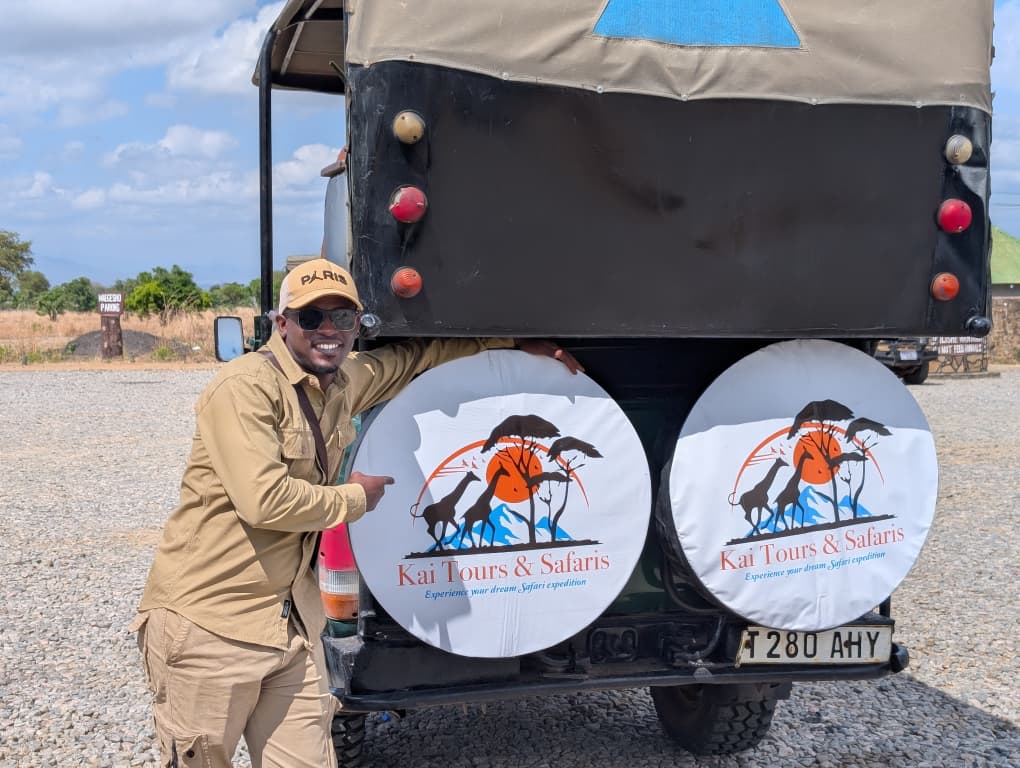
Kai Tours and Safaris provides written, itemised quotes with full price protection for bookings confirmed before further fuel price revisions. All Mikumi safari packages from Dar es Salaam use the SGR electric train — the fuel price insulated route.
WhatsApp: +255 672 530 415 Email: info@kaitoursandsafaris.comExplore price-protected itineraries:
2-Day Mikumi Safari by SGR Train | 3-Day Cultural Safari: Uluguru + Maasai + Mikumi | Serengeti Packages 2026–2027
Sources: CNBC Africa, Reuters, The East African, Pan African Visions, DropSite News, The Kenya Times, People Daily Kenya, The Star Kenya, Citizen Digital Kenya, Travel and Tour World, Traford Safaris, Joagro Safaris, Tanzania EWURA fuel price announcements, Kenya EPRA May 2026 fuel review. All statistics and prices current as of 25 May 2026. This article is intended for tourism planning and consumer information purposes. Kai Tours and Safaris is a TANAPA-licensed operator based in Dar es Salaam, Tanzania.
Report By:
The Kai Tours and Safaris Advisory Team
Why Kai Tours?
Kai Tours and Safaris is your local expert for navigating Tanzania's diverse safari parks. We ensure high quality service, expert guides, and seamless logistics via the fuel-insulated SGR train.
Best Recommended Tour Operator in Tanzania 2026-2027